
- Type
- Legumes
- Difficulty
- Moderate
- Season
- Summer
- Sowing
- From seed
Peanut
Arachis hypogaea
Unsaturated fats and plant protein for heart and lung health
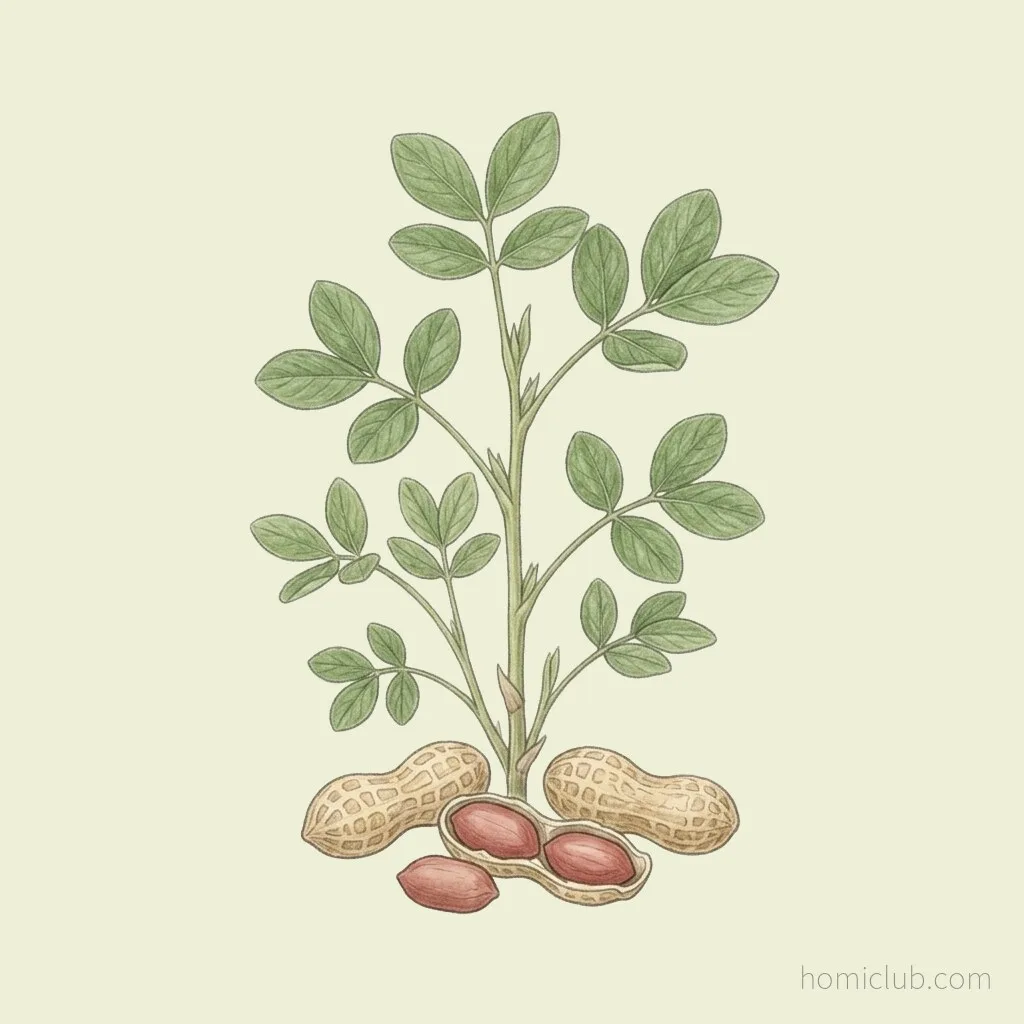
The peanut is a legume with a curious habit: after its flowers fade, the stalk bends down and the pod burrows into the soil to mature underground. That trait gives the plant its Korean name, nakhwasaeng (落花生), literally "fallen-flower fruit." In traditional Korean medicine, peanuts were valued as a nourishing food that strengthens the digestion, soothes the lungs, and helps clear phlegm. Nutritionally, the heart of the peanut is its unsaturated fats, such as oleic and linoleic acid, along with plant protein and vitamin E, and research on nut consumption and cardiovascular health continues to build. One important caution: peanuts are among the most common food allergens, so they should be handled with care.
Year-Round Calendar
- 1
- 2
- 3
- 4
- 5
- 6
- 7
- 8
- 9
- 10
- 11
- 12
- 5
- 9
- 10
Health Benefits
Nourishing and lung-soothing (traditional). In traditional Korean medicine, the peanut (nakhwasaeng) was regarded as a nourishing food that tonifies the spleen and stomach, soothes the lungs, and helps dispel phlegm.
Unsaturated fats and nuts (preliminary). Peanuts are rich in unsaturated fats and vitamin E, and they figure in research on nuts and cardiovascular health. That said, human evidence for peanuts on their own is limited and largely falls under broader studies of nuts in general.
Nutrition
- Unsaturated fats (oleic and linoleic acid) (Rich, savory fats) — Supports blood vessels and provides antioxidant action
- Plant protein and vitamin E — Supports muscle and provides antioxidant action
Pairings
○ Anchovies (ttangkong-myeolchi-bokkeum) — Stir-fried with tiny dried anchovies, peanuts make ttangkong-myeolchi-bokkeum, a classic Korean side dish where calcium from the anchovies meets the nut's rich, savory fat.
○ Soy-braised peanuts (ganjang-jorim) — Simmered whole in soy sauce, peanuts make a savory braise that works as both a rice side dish and a snack.
○ Roasted as a snack — Roasted and eaten in moderate amounts, peanuts make a satisfying, filling snack.
△ Nut allergy warning — Peanuts are one of the most common allergy triggers. For anyone with a peanut allergy, even a trace amount can set off a severe reaction, so they should be avoided entirely.
Source: Rural Development Administration (Nongsaro) · traditional herbal texts (nakhwasaeng, the herbal name for peanut)