탕액편 · Vegetables
芋 토란 (우)
 Related Crop · Taro (Toran) →
Original, read line by line 東醫寶鑑 · 탕액편 권2
-
性平一云冷, 味辛, 有毒.
성평일운랭, 미신, 유독.
Taro is neutral in nature, though some say it is cold. Its taste is pungent, and it is considered toxic in its raw state.
-
寬腸胃, 充肌膚, 滑中, 破宿血, 去死肌.
관장위, 충기부, 활중, 파숙혈, 거사기.
It relaxes and opens the intestines and stomach, fills out flesh and skin, lubricates the digestive tract, breaks up old blood stasis, and removes dead tissue.
-
一名土芝, 處處有之.
일명토지, 처처유지.
Another name for taro is toji, meaning earth lingzhi, a mushroom of the soil. It grows commonly everywhere.
-
生則有毒, 薟不可食.
생즉유독, 험불가식.
Raw taro is toxic and acrid, irritating the mouth, so it must not be eaten uncooked. This matches the calcium oxalate sting known today.
-
性滑.
성활.
Its nature is slippery, referring to the characteristic mucilage that taro releases when handled or cooked.
-
熟則無毒, 甚補益.
숙즉무독, 심보익.
Once cooked, it loses its toxicity and becomes deeply nourishing. This is why taro is always eaten cooked.
-
和鯽魚作羹, 尤良. 《本草》
화즉어작갱, 우량. 《본초》
Cooking taro into a soup with crucian carp is said to be especially beneficial, an early ancestor of today's Korean taro soup. (From the Bencao)
-
園圃中種者可食, 野芋有毒, 不堪啖.
원포중종자가식, 야우유독, 불감담.
Taro cultivated in gardens is edible, but wild taro is toxic and unfit to eat, a clear warning to distinguish cultivated from wild plants.
-
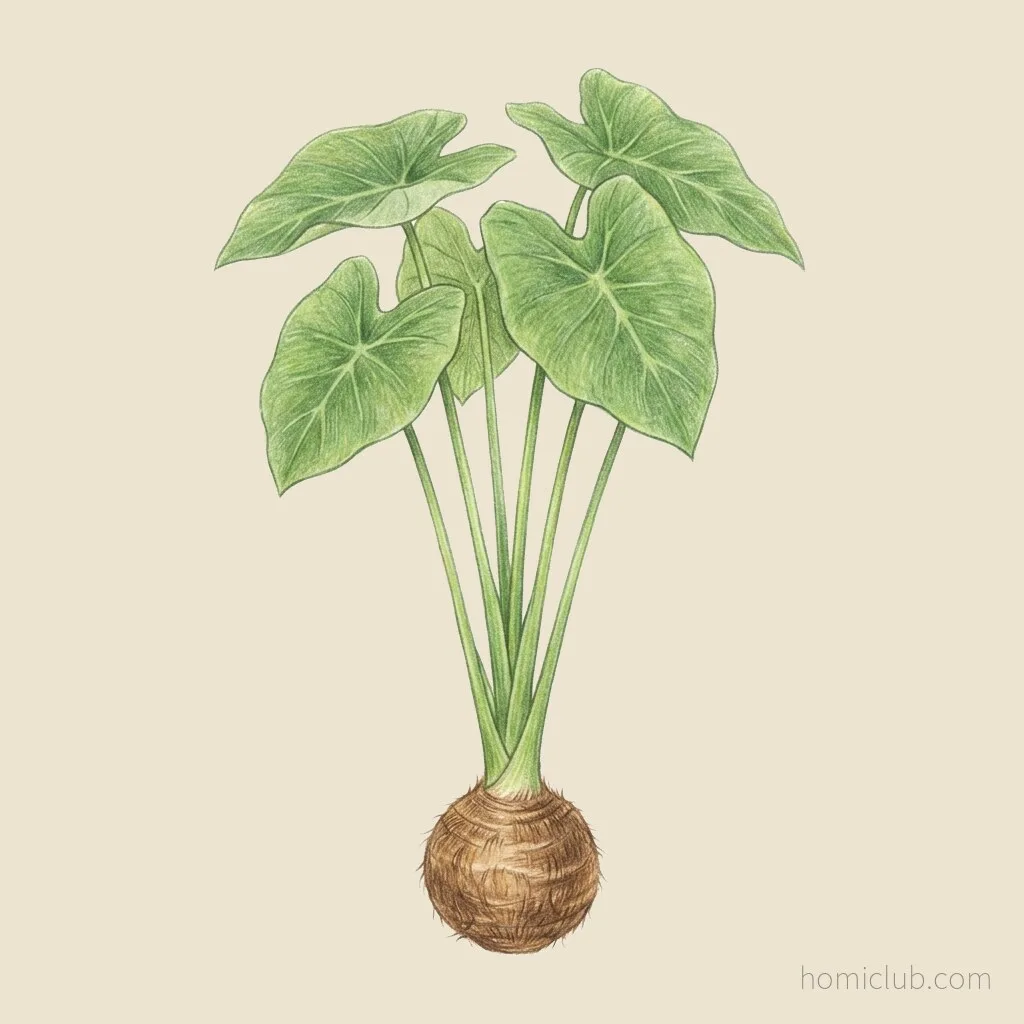
當中出苗者爲芋頭, 四面附芋頭而生者爲芋子. 《本草》
당중출묘자위우두, 사면부우두이생자위우자. 《본초》
The large central corm from which the sprout emerges is the mother taro (utu), and the small corms clustered around it are the daughter taros (uja), the same distinction farmers use today. (From the Bencao)
-
今人呼爲土蓮. 《俗方》
금인호위토련. 《속방》
People of the time called it toryeon, the lotus of the earth, after its broad lotus-like leaves; this is the root of the modern Korean word toran. (From folk prescriptions)
-
葉
엽
The following section concerns the taro leaf, which the Donguibogam treats separately from the corm.
-
性冷, 無毒.
성랭, 무독.
The leaf is cold in nature and non-toxic, classified as milder than the raw corm.
-
除煩, 止瀉.
제번, 지사.
It relieves beon, a feeling of feverish restlessness in the chest, and stops diarrhea, its cold nature thought to cool internal heat.
-
療姙婦胎動心煩. 《本草》
요임부태동심번. 《본초》
It treats restless fetal movement and chest agitation in pregnant women, a remedy for what traditional medicine calls unstable fetal stirring. (From the Bencao)
Related Crop
Taro (Toran) →
Readings are Homiclub’s own. Consult a professional for medical decisions. · 동의보감(자체 풀이)