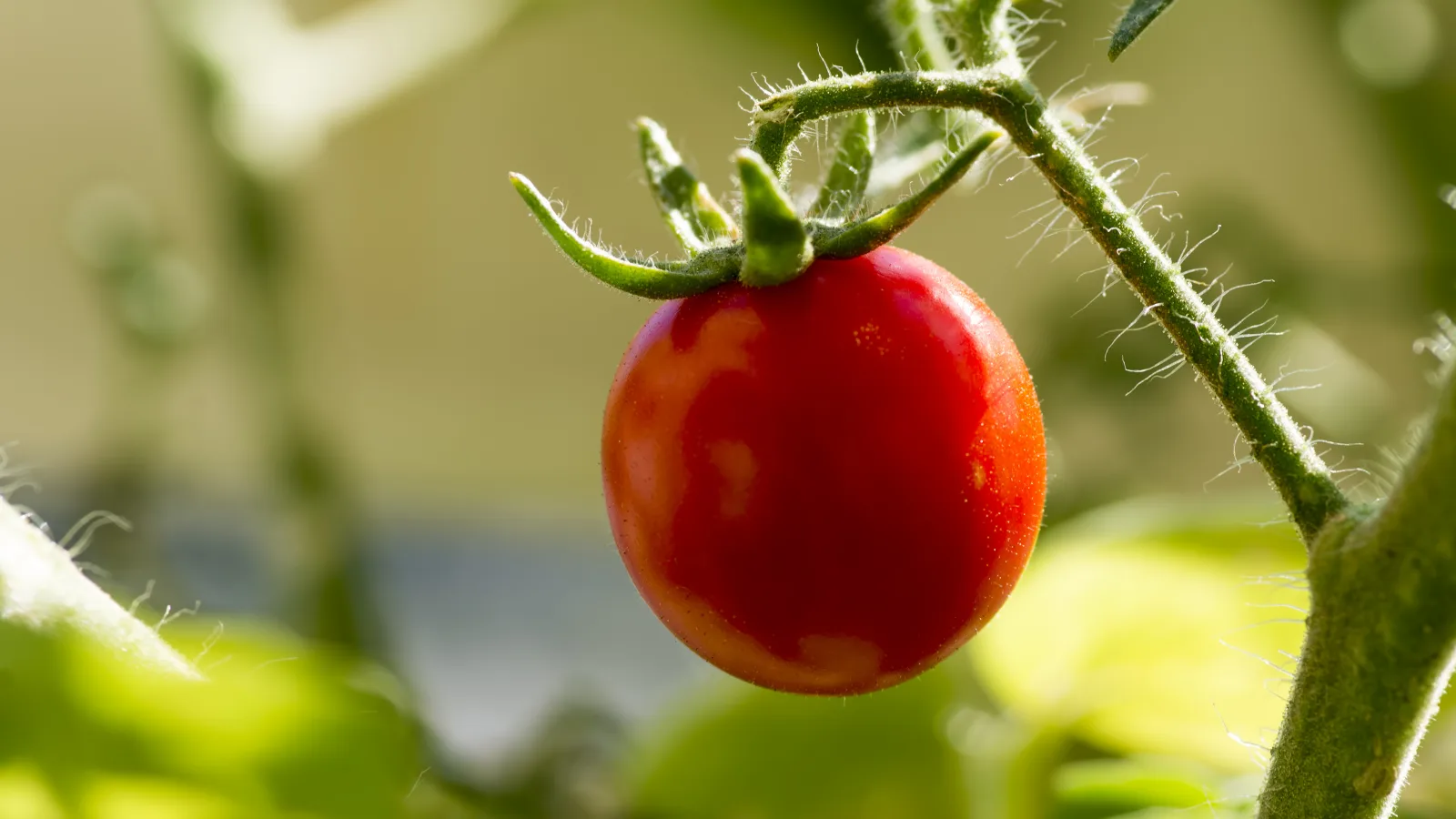
If you filled a whole row of your garden with cherry tomatoes this summer, you probably watched the fruit ripen all at once over a few days—faster than you could pick it, until some went soft on the vine. Or, when disease swept through that year, the entire row went down together. When you hand all your space to a single crop, your harvest rises and falls with the weather and with whatever blight happens to come around. A German agricultural institute decided to run the numbers on this very problem, at the scale of a full field.
Put It All on One Crop, and Your Income Swings
Planting one crop across a wide area is easy to manage. You can line everything up—one time to plant, one time to harvest, one way to tend it. But if that summer turns unusually hot or rainy, or a particular disease starts spreading, the loss lands on that one crop and carries straight through to the whole field's income. In a home garden that just means an empty dish at dinner; on a farm that depends on the harvest for a living, it can mean a much leaner year.
The researchers built models of farms laid out in different ways and compared how much each one's income rose and fell. The more a farm leaned on a single crop, the wider the gap between its good years and its bad ones.
Split It Up and Rotate, and the Risk Drops
Here is what the study recommends:
- Divide the plot into small sections and plant several crops together.
- Strip planting—alternating crops in narrow bands.
- Crop rotation—changing what you plant from one year to the next.
Farms that diversified their fields this way saw their income swing noticeably less. The principle is simple. When one crop has a poor year, a neighboring crop pulling its weight keeps the total income from falling as far—because every crop has its own tolerance for heat, drought, and disease. It is the same logic you see in a backyard plot: just as your lettuce is wilting in the heat, the perilla (an aromatic leafy green) or chili peppers planted right beside it are hitting their stride.
It's Not Just Yield That Swings—Prices Do Too
There is one more thing this study kept an eye on. Farming risk has long been measured mostly by "how much you harvest," yet a farm's actual income depends just as much on "what price you sell it for." Even in a bumper year, if that crop's price falls, the money in your hand shrinks. When you plant a mix of crops, one whose price has climbed makes up for the losses on another whose price has dropped. In effect, you lower the harvest risk and the price risk at the same time.
The same approach works at garden scale. Instead of packing one row with a single crop, split it among two or three and shift things around each season. If you are getting ready for this fall's kimjang—the yearly big batch of winter kimchi—try bringing in Korean radish and scallions alongside your napa cabbage. When one crop underperforms, your table still won't go empty, and disease in the garden eases off as well.
Source: a study by Germany's Leibniz Centre for Agricultural Landscape Research (ZALF), published in the journal Agricultural Systems.