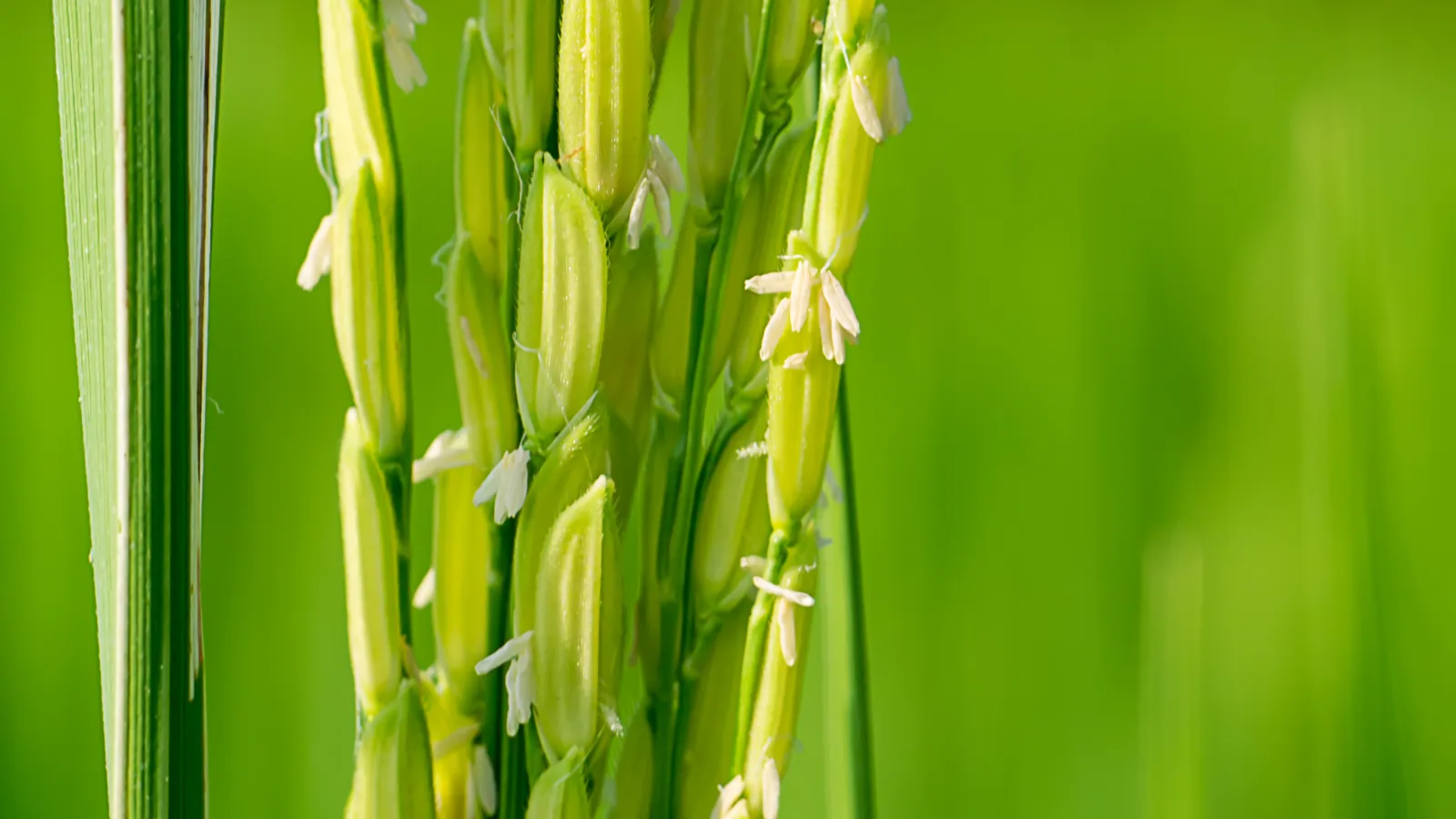
As summer deepens, rice plants come into flower. The blossoms are small, white, and quick to fade. A single one stays open for two hours at the most, and within that brief window pollination takes place and one grain settles into its spot.
Over the past few years, as midsummer temperatures have climbed, days when the morning hours—just when rice flowers open—top 95°F (35°C) have grown more common. At that temperature, the pollen can't do its job. Fertilization rates fall, and when grains drop away before they fill out, the harvest shrinks by exactly that much.
The Gene That Opens Flowers at Dawn
Research teams at Japan's National Agriculture and Food Research Organization (NARO) and the International Rice Research Institute (IRRI) have confirmed that rice can adjust its own flowering time. The gene that drives that adjustment is EMF3 (Early Morning Flowering 3).
Rice flowers normally open between nine and ten in the morning. In varieties where EMF3 is switched on, the flowers opened around 7:30 a.m.—roughly an hour and a half earlier. In the early morning, the temperature often still sits below 86°F (30°C), warm enough for pollen to work the way it should.
The researchers explained that pulling flowering time forward with this gene could blunt heat-driven yield losses in tropical and subtropical regions. Their findings appeared in the journal Plant Biotechnology Journal.
Why Flowering Time Shifts
The hour at which a rice flower opens isn't set in stone from the start. It shifts a little with temperature, with the amount of light, and with the particular mix of genes at work. Within that mix, EMF3 is what fixes the flowering time.
How active the gene is varies from one variety to the next. Some rice varieties have long been seen to flower early, and this study pinned down the gene behind it. From here on, breeders can use that gene to develop varieties that bloom earlier and more reliably. With El Niño keeping summer temperatures on a rising trend, fine-tuning flowering time is likely to come up more and more often in rice breeding.
If You're Growing Rice in Your Garden
When you raise rice on a small scale at home, the conditions during flowering have a real say in the harvest. Once early-flowering varieties reach the market, fertilization should succeed more often even in places where midsummer heat waves are routine.
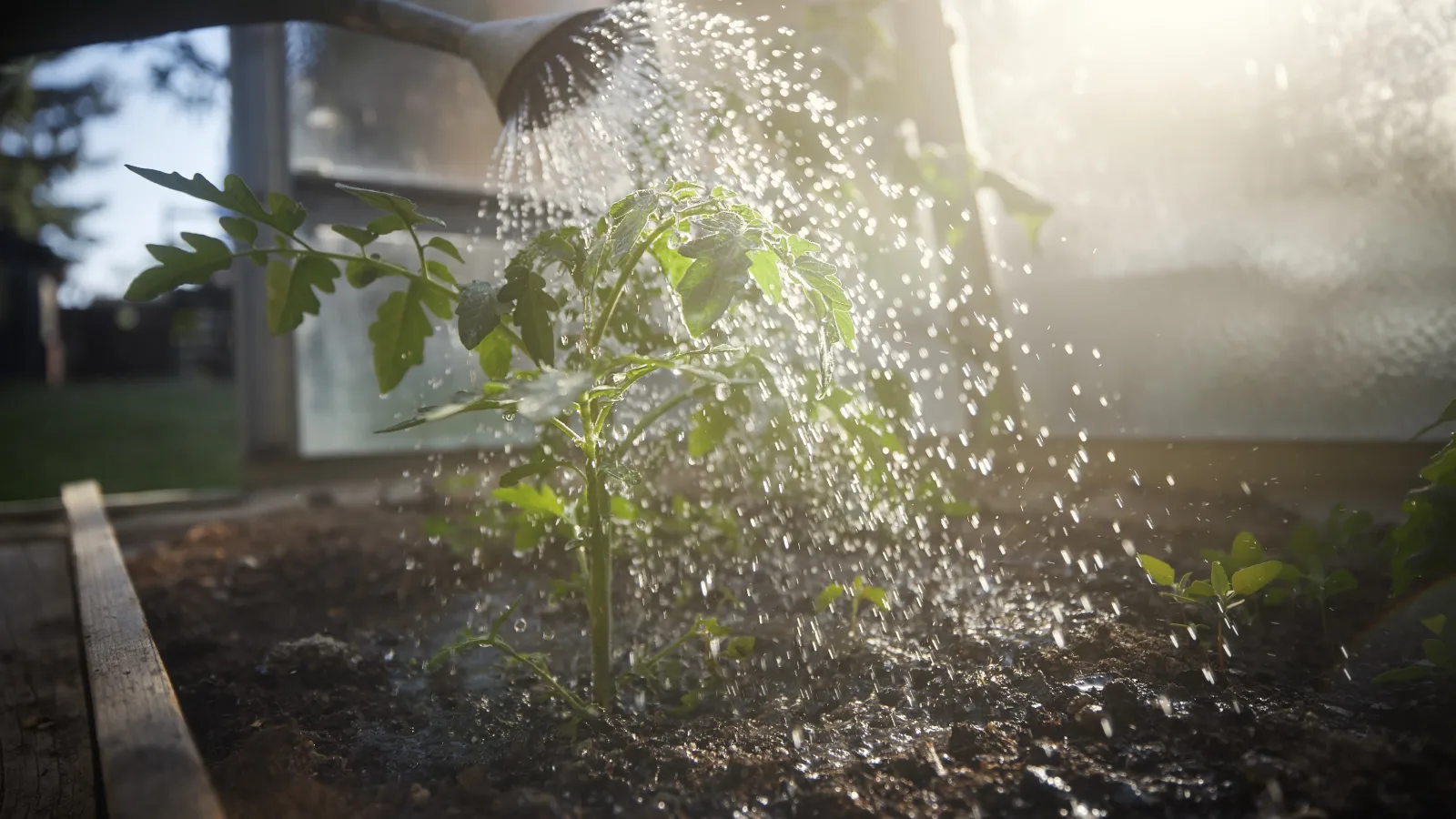
What you can do right now is keep an eye on the plot during flowering. Look closely at the rice heads early in the morning. You can catch the very moment a tiny flower opens and the pollen spills out. On days with a heat wave in the forecast, fill the furrows generously with water to bring the ground temperature down. It tips the balance for fertilization, even if only a little.
From a single rice plant to a filled-out grain, flowering is the most fragile moment of all. And science is working out how to move that moment into a cooler stretch of the day.
Sources: Japan's National Agriculture and Food Research Organization (NARO) and the International Rice Research Institute (IRRI); Plant Biotechnology Journal