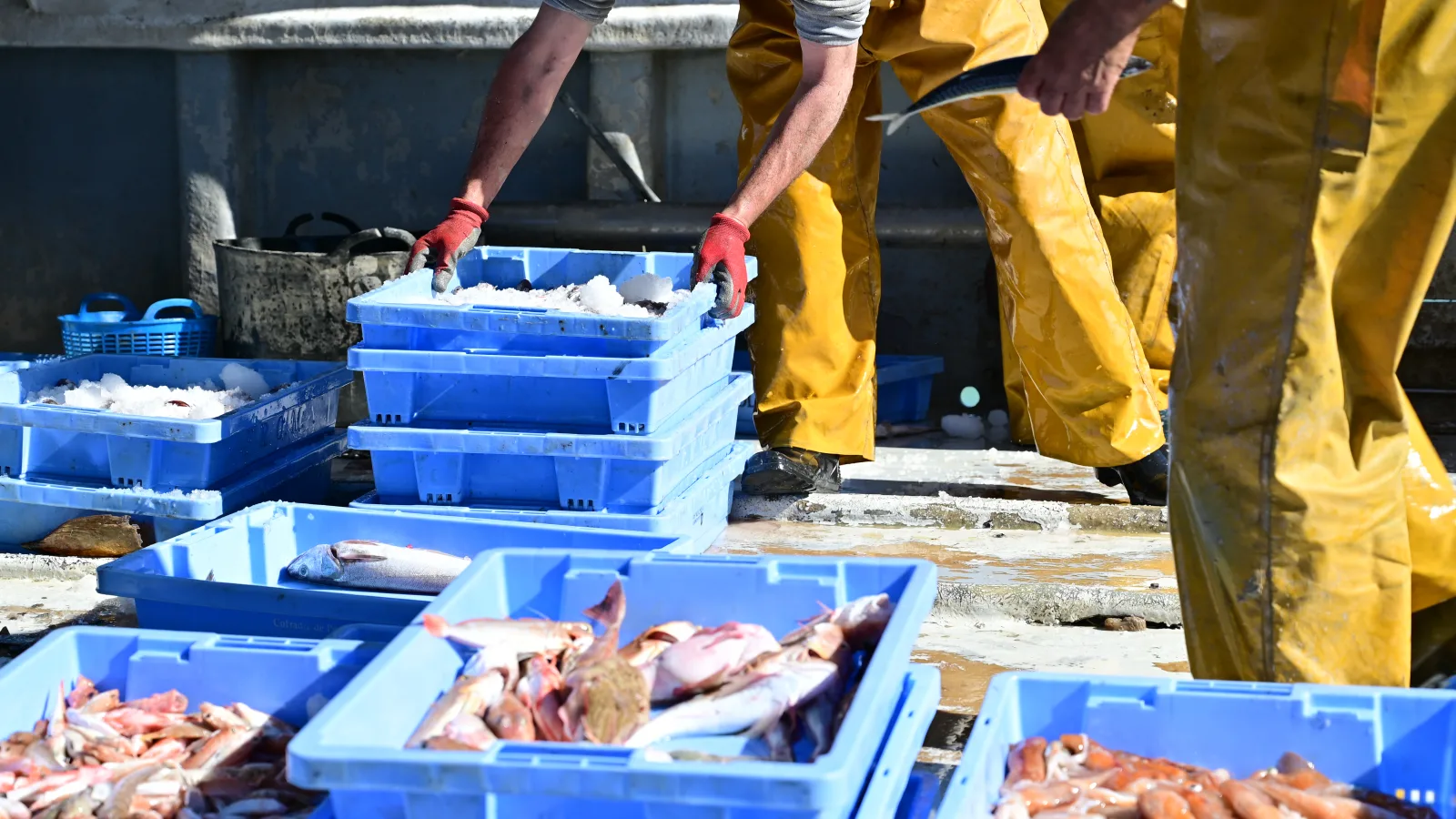
You pick a handful of cherry tomatoes from the garden, and that evening you grill a mackerel for dinner. The vegetables you grow yourself, you know by hand from seed to harvest—which soil you planted them in, how much you watered them, whether you picked them at just the right moment. It all stays with you. The fish on your plate is another matter. Where it was caught, how many hands it passed through to get here—none of that is written anywhere on the packaging.
Migrant Workers Aboard
Across the world's seafood supply chains, a large share of the fishing labor is done by migrant workers from Southeast Asia. Many of them pay steep recruitment fees just to board a foreign vessel. They sign a contract before the ship leaves port, but once the voyage begins, the terms can shift. Overtime that was never in the contract gets demanded, wages get cut—and out at sea, there is often no way to report it or reach anyone for help.
Some workers board without ever receiving a copy of their contract. If a dispute arises later, they have no way to check what they actually signed, and in an environment cut off from land, claiming your rights becomes harder still. These are the conditions that have made labor exploitation in seafood supply chains possible for so long.
IKAN, a Tool for Tracking Rights
In 2020, the International Seafood Sustainability Foundation (ISSF) teamed up with Stanford University's Center for Ocean Solutions to examine the social sustainability of seafood supply chains. It didn't end as a short-term study. Over several years, working through discussions and field trials with a range of on-the-ground partners, they built a digital platform called IKAN.
IKAN is designed to help migrant fishing workers understand their rights, track whether their contract terms are actually being honored, and—when something goes wrong—verify the facts and ask for support. The terms of a contract can be recorded digitally, then checked against real working conditions later, and there is a channel for reporting problems when they arise. Once the platform is in use aboard fishing vessels, whether contracts are being fulfilled becomes data. And that data gives fishing companies, distributors, and certification bodies a concrete basis for supply-chain accountability.
It Starts With the Questions a Shopper Asks
Tend a garden long enough and you grow particular about where your food comes from. You start choosing seeds by which company grew them, and compost by what went into it. That same attention can carry over to the seafood counter. Next time you're picking out fish at the store, look for the MSC (Marine Stewardship Council) certification mark. It appears on products that meet sustainable-fishing standards, and it's one way to check for accountability in the supply chain.
When shoppers start asking where their fish came from, distributors have to build the systems to answer. And once tools like IKAN take hold on fishing vessels, a supply chain that can answer those questions with data slowly begins to form. The more a record of contract compliance builds up behind our seafood, the more consumers can know—and choose—with open eyes.
The next time you shop, give the fish a second look, too. Where it came from, and who caught it.
Source: International Seafood Sustainability Foundation · Stanford University Center for Ocean Solutions, IKAN platform development reports (2020–)