탕액편 · Vegetables
菠薐 시금치 (파릉)
 Related Crop · Spinach →
Notes
## Spinach (菠薐, poreung)
Nature and flavor. In Korean traditional medicine, every food and herb is classified by its energetic "nature" (warming, cooling, or neutral) and its "flavor" (sweet, bitter, sour, pungent, salty), which together predict how it will act inside the body. Spinach is cooling in nature and sweet in flavor, with no toxicity — meaning it gently lowers internal heat and is safe to eat regularly.
Channels it enters. Korean and Chinese medicine also describe which organs an ingredient "travels to" — its meridian tropism (귀경). Spinach is said to act on the large intestine, stomach, liver, and kidneys.
Main effects.
- Clears pathogenic influences from the five viscera — a general restorative and detoxifying action.
- Relieves the effects of alcohol (解酒). Seasoned spinach (muchim) and spinach soup are the traditional Korean and Chinese remedies for the morning after drinking.
- Lubricates the intestines and eases bowel movement (潤腸通便), thanks to its abundant fiber and mucilaginous texture.
- Helps food move downward (下食) — that is, it supports digestion.
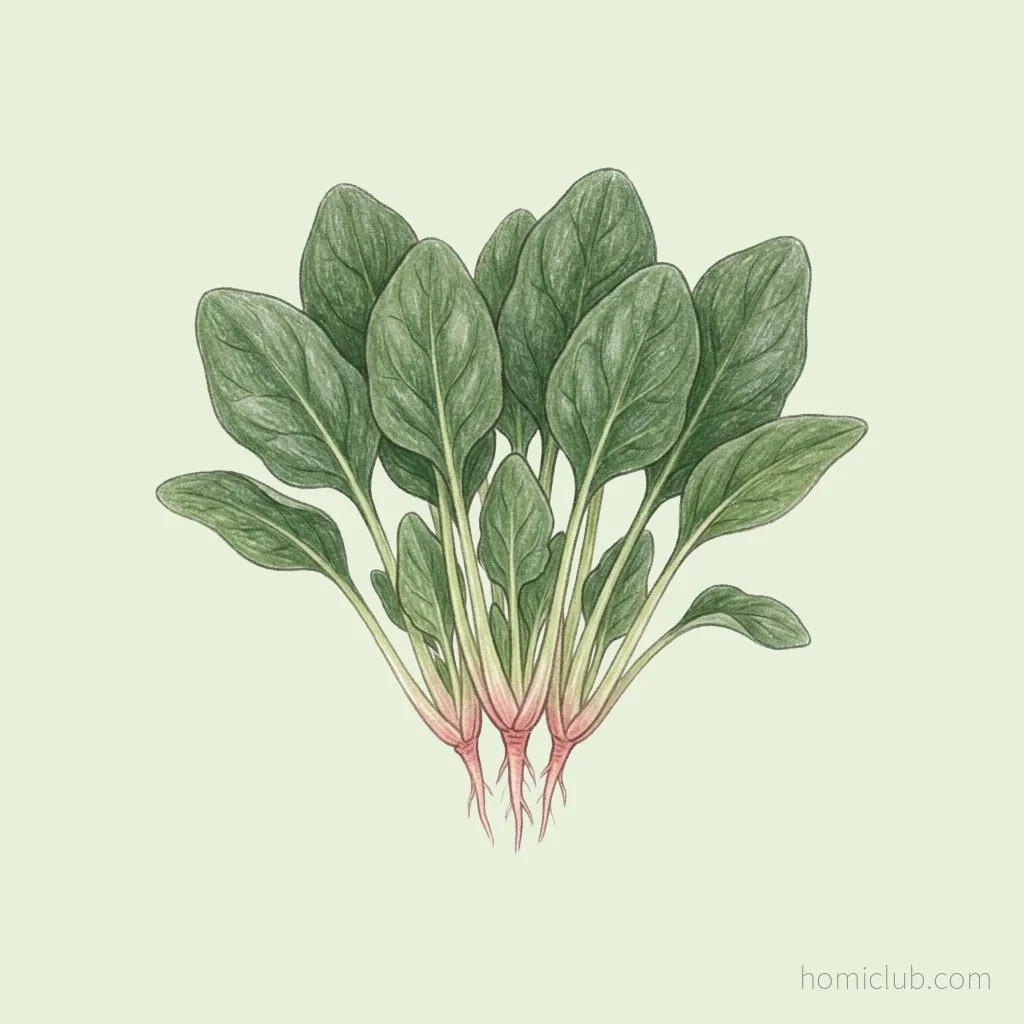
- Nourishes the liver. Spinach was historically called jeokgeunchae (赤根菜), "red-rooted vegetable," and in traditional reasoning the reddish root was linked to blood-building and liver-supporting effects.
How it is used. Blanched and dressed as a side dish, in soups, in savory pancakes (jeon), or steamed.
Cautions. Because spinach is cooling, those with weak or cold kidneys and a tendency toward loose stools should go easy on it. The Dongui Bogam warns that eating large amounts over long periods can cause a cold, achy sensation in the legs and lower back. From a modern standpoint, spinach is also high in oxalates, so anyone with a history of kidney stones should limit intake.
Related Crop
Spinach →
Readings are Homiclub’s own. Consult a professional for medical decisions. · 동의보감(자체 풀이)