탕액편 · Vegetables
山藥 마 (산약)
 Related Crop · Chinese Yam (Ma / Sanyak) →
Notes
## Nature and Flavor
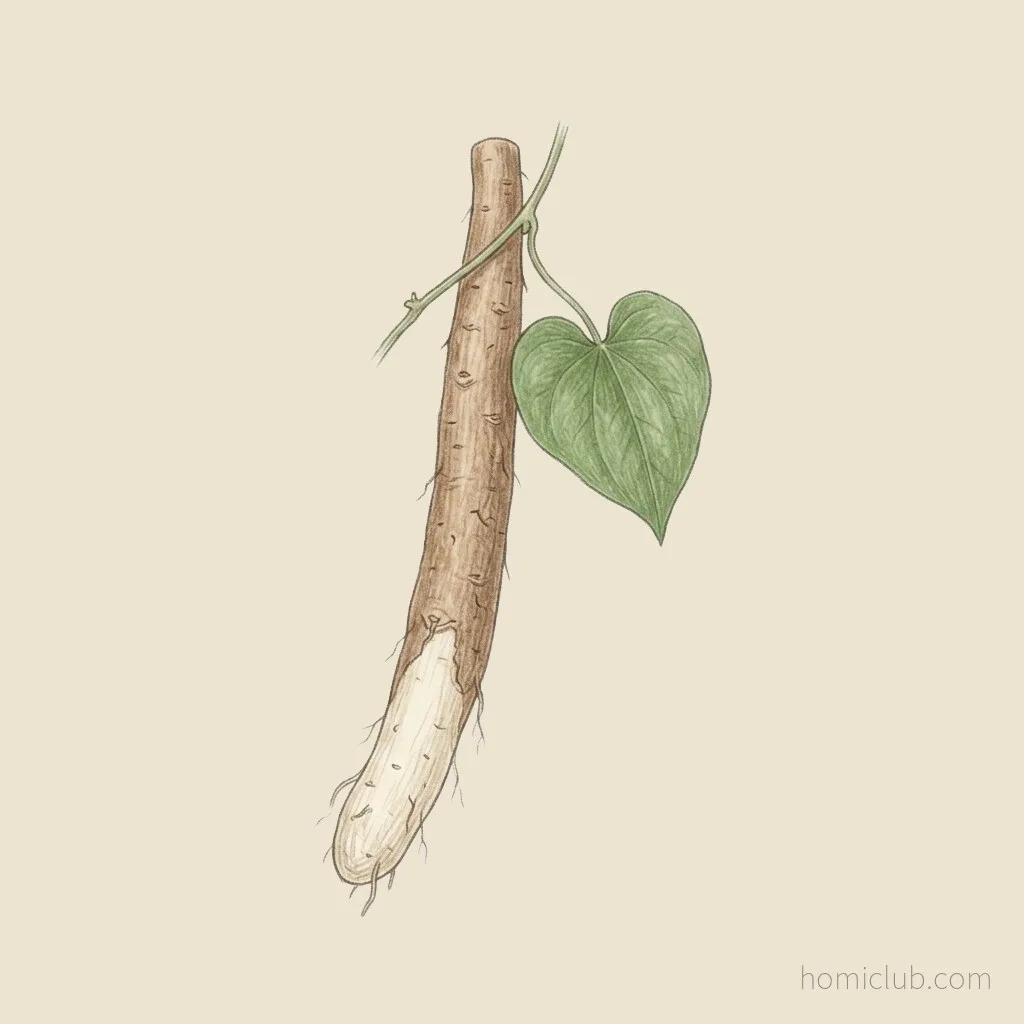
The Shennong Bencao Jing — the foundational Chinese herbal classic that Korean medicine inherited — classifies Korean yam (seoyeo, also called sanyak; the tuber of Dioscorea polystachya) as sweet in flavor and warm, or sometimes neutral, in nature. In East Asian medicine, every herb is described by these two qualities: "flavor" points to its taste and the type of action it tends to produce, while "nature" describes whether it warms or cools the body. Sweet, warm-to-neutral herbs are generally nourishing and gentle, which is why the classic placed Korean yam in the highest tier of medicinal substances — the sangpum, or "upper grade," reserved for foods and herbs safe enough for long-term daily use.
## What It Was Used For
Traditional sources describe Korean yam as a tonic that fortifies the center of the body, replenishes what has grown depleted, dispels lingering disturbances of heat and cold, builds vital energy, and helps the body put on flesh. Taken together, these are the qualities of a classic restorative — an herb given to people who are weakened, undernourished, or recovering. Long-term use, the old texts add, was said to sharpen the ears and eyes.
## A Modern View
Contemporary interest centers on a few components. The slippery mucilage that appears when the tuber is grated contains mucin-type compounds, which have been discussed in connection with protecting the stomach lining and easing digestion. Researchers have also looked at diosgenin saponins and possible effects on blood sugar. Most of this work, however, remains at the preclinical stage — laboratory and animal studies rather than firm clinical evidence — so it is more honest to ground any present-day use in the traditional reputation of Korean yam as a gentle nourishing and digestive food, rather than as a treatment for specific conditions.
Related Crop
Chinese Yam (Ma / Sanyak) →
Readings are Homiclub’s own. Consult a professional for medical decisions. · 동의보감(자체 풀이)