- Type
- Leafy Greens
- Difficulty
- Easy
- Season
- Spring·Summer·Fall
- Sowing
- Direct sow
Young Summer Radish (Yeolmu)
Raphanus sativus L.
The star of summer kimchi, a fast-growing baby radish
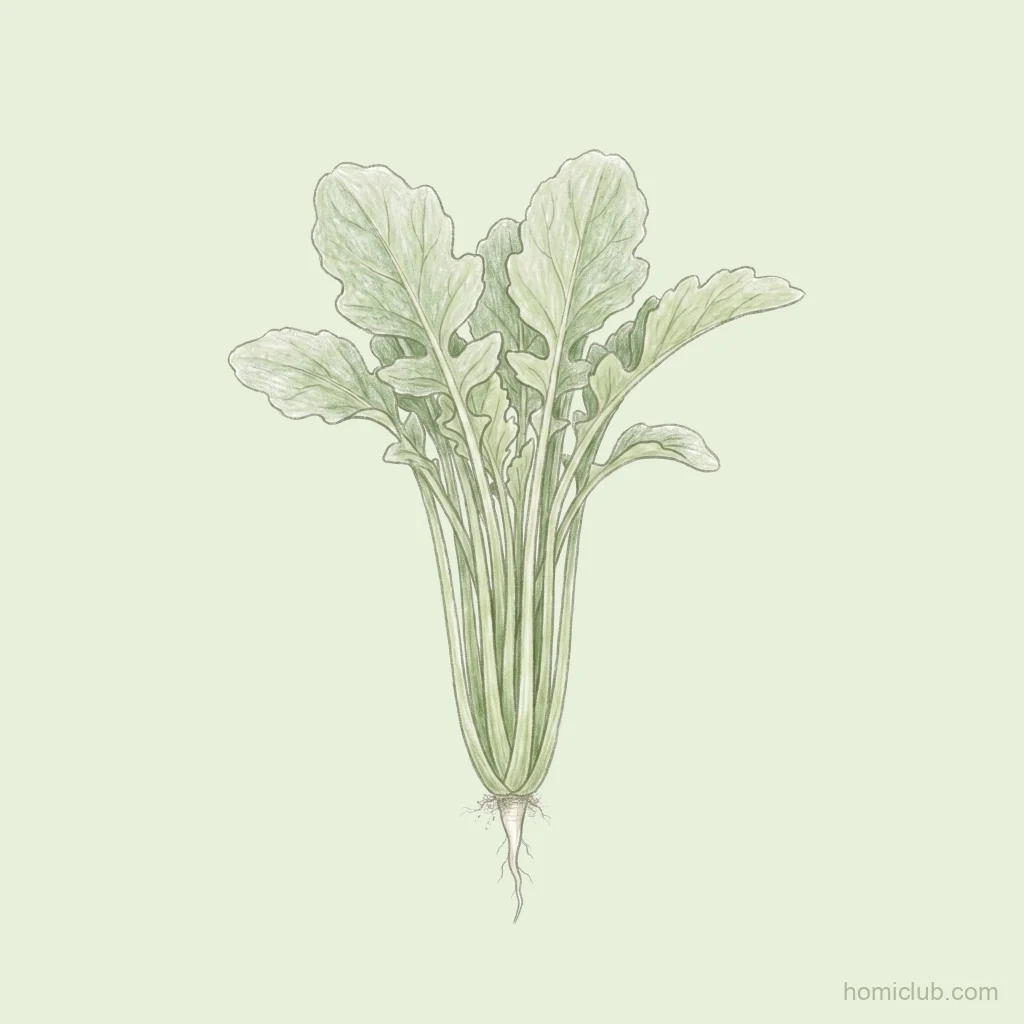
Yeolmu is a radish grown not for its root but for its tender young leaves and stems, harvested before the root has a chance to thicken. The name comes from the Korean for "tender radish" (yeorin mu); the common translation of "summer radish" is actually a misreading. It grows fast enough to harvest just 25 to 30 days after sowing, which makes it a great pick for cramped city plots or balcony pots. It prefers cool weather but can be sown in staggered batches from spring through fall, giving you several harvests in a single year. Made into yeolmu-kimchi or a watery mul-kimchi, the freshly cut leaves bring a cool, refreshing note to the summer table.
Year-Round Calendar
- 1
- 2
- 3
- 4
- 5
- 6
- 7
- 8
- 9
- 10
- 11
- 12
- 3
- 4
- 5
- 8
- 9
- 5
- 6
- 7
- 10
- 11
Health Benefits
Antioxidant support. Contains beta-carotene and vitamin C, which contribute to antioxidant activity.
Digestion and regularity. Dietary fiber and starch-digesting enzymes aid digestion and help prevent constipation.
Eye health. Beta-carotene converts to vitamin A in the body, supporting eye health.
Blood pressure regulation. Potassium helps the body excrete sodium, which may aid in regulating blood pressure.
Nutrition
- Vitamin C (about 7.25 mg/100g) — Antioxidant activity
- Calcium (about 156 mg/100g) — Builds bones and teeth
- Beta-carotene (about 2,698 µg/100g) — Converts to vitamin A; supports eye health
- Dietary fiber (about 1.3 g/100g) — Promotes digestion and prevents constipation
- Potassium — Excretes sodium; helps regulate blood pressure
Pairings
○ Yeolmu-kimchi — The most popular way to use the tender leaves and stems, this kimchi whets the appetite during the hot summer months.
○ Yeolmu mul-kimchi — A watery kimchi made with plenty of brine for a cool, refreshing result. It is a great companion to naengmyeon (cold noodles) and bibim-guksu (spicy mixed noodles).
○ Mixed with barley rice — Yeolmu-kimchi and gang-doenjang (a thick seasoned soybean paste) are stirred into bori-bap (barley rice) and eaten together. Barley rice raises blood sugar more gently, making it a nutritionally good match.
○ Bibim-guksu and naengmyeon — Topping these noodle dishes with yeolmu-kimchi makes them taste noticeably cooler and more refreshing.
Varieties
- Seoul-mu — Heirloom landrace
- Jinju Daepyeong — Heirloom landrace
- Altari-mu — A small radish (also known as ponytail radish), used for yeolmu
- Seoul Bom-mu — A small radish
- Naeseo-seong and Manchudae-seong cultivars — Choose cultivars bred to resist bolting (flower-stalk formation) in summer heat
Source: Rural Development Administration (Nongsaro, https://www.nongsaro.go.kr)