- Type
- Tubers
- Difficulty
- Easy
- Season
- Spring
- Sowing
- From seed
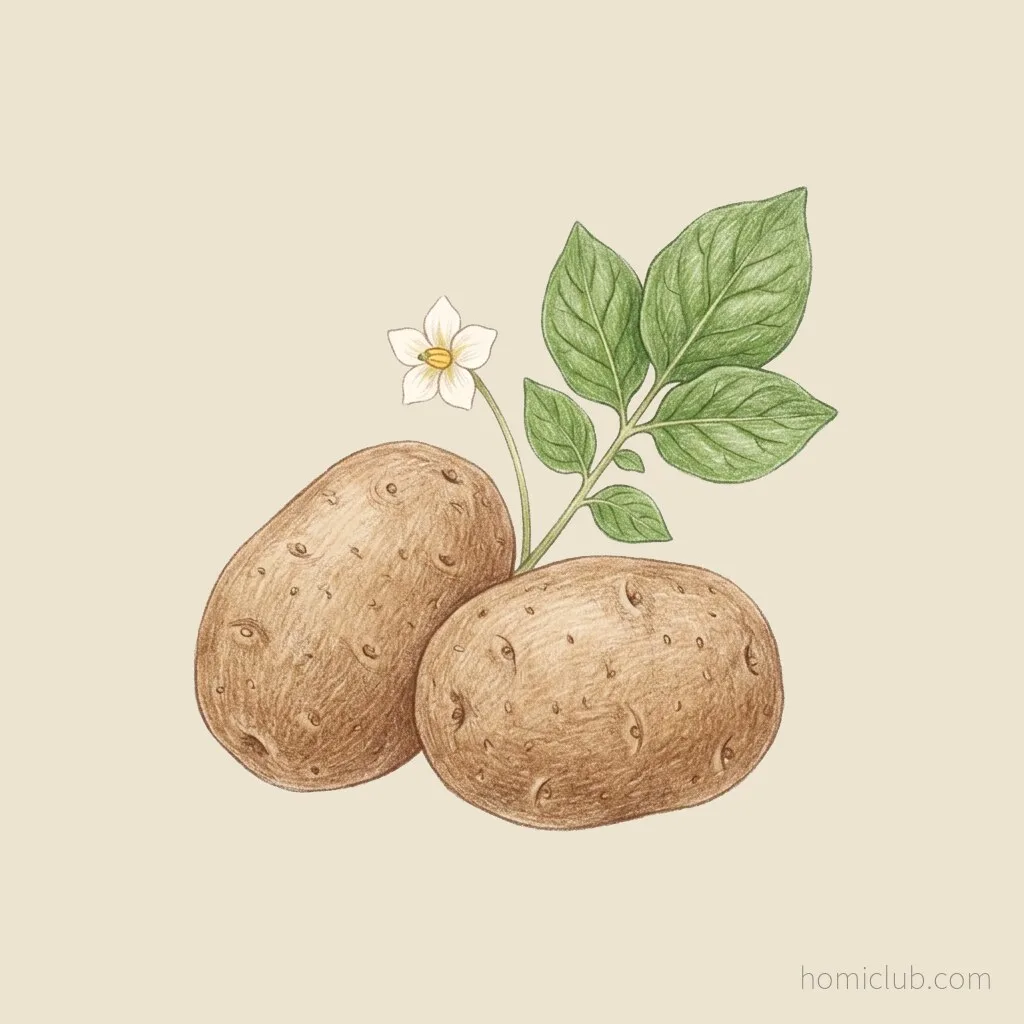
Potato
Solanum tuberosum
Vitamin C and potassium - a hearty, filling staple crop
The potato is a dependable staple whose vitamin C, cushioned inside its starch, survives cooking relatively well. It's rich in potassium, which helps regulate blood pressure, and because its complex carbohydrates digest slowly, it keeps you feeling full for a long time. Plant seed potatoes in March and April for a June-to-July harvest - even a beginner gardener can pull off a big yield with relative ease.
Year-Round Calendar
- 1
- 2
- 3
- 4
- 5
- 6
- 7
- 8
- 9
- 10
- 11
- 12
- 3
- 4
- 6
- 7
Health Benefits
Blood-sugar response and resistant starch. A 2023 meta-analysis of 36 RCTs (982 participants) confirmed that eating resistant starch (especially the RS1 and RS2 types) significantly lowers acute post-meal blood glucose and insulin response. Chilled potatoes contain roughly 50% more resistant starch than warm ones, so the way you cook and store them determines their effect on blood sugar.
Metabolic syndrome and insulin resistance. A 2020 meta-analysis of RCTs in patients with metabolic syndrome reported that resistant-starch supplementation significantly lowered HbA1c and fasting blood glucose. Potatoes rank as a major dietary source of resistant starch, and using a cool-then-reheat cycle is considered a key factor for clinical application.
Cardiovascular risk and all-cause mortality. A 2020 meta-analysis of 20 prospective cohort studies found no significant association between total potato intake and all-cause, cancer, or cardiovascular mortality. That said, french fries showed a consistent signal of raising hypertension risk by about 10%, underscoring that cooking method drives the health impact.
Post-meal insulin and satiety. In an RCT of healthy adults who ate a potato-based resistant-starch bar, post-meal blood glucose and insulin responses were significantly blunted. The short-chain fatty acids produced when resistant starch ferments in the large intestine are thought to stimulate satiety hormones, helping with appetite control as well.
Personalized nutrition and weight management. In a precision-nutrition modeling study of overweight women, blood-glucose variability after eating chilled potatoes (13.7 g of resistant starch) was significantly smaller than after warm potatoes. Because the same food produces a different glucose curve depending on how it is cooked and its temperature, this is shaping up as a variable in individualized diet design.
Nutrition
- Vitamin C (Well preserved even after cooking) — Immunity and antioxidant support
- Potassium (Abundant) — Blood-pressure regulation and sodium excretion
- Complex carbohydrates (Main component) — Satiety and energy
Pairings
○ Beef, pork, and chicken — Adding meat to potatoes naturally balances protein with carbohydrates. Traditional dishes like curry, stew, and jjimdak (braised chicken) are prime examples, delivering both nutrition and a satisfying fullness in a single bowl.
○ Onion and carrot — Pairing potatoes with onion and carrot is the basic building block of curry, japchae, and braised potatoes. The natural sweetness of all three vegetables blends into a mellow flavor, while carotenoids and sulfur compounds add to the nutrition.
○ Olive oil — Mediterranean-style roasted potatoes are simply potatoes baked in olive oil. The fat in the oil helps the body absorb the potato's polyphenols, and the surface crisps up for deeper flavor.
○ Butter and cheese — Mashed potatoes and gratin are the classic Western way to combine butter and cheese with potatoes. The protein and calcium from the dairy complement the potato's soft texture, making it more than capable of standing on its own as a meal.
○ Rosemary and thyme — Adding rosemary and thyme to roasted potatoes is a staple of Western herb cooking. The bold aroma of both herbs brings out the potato's otherwise plain flavor, and antioxidant polyphenols come along for the ride.
○ Gochujang and doenjang — Serving gochujang (fermented red-chili paste) and doenjang (fermented soybean paste) with potato pancakes or braised potatoes is a classic of Korean seasoning. The savory depth of these fermented condiments lifts the potato's mild sweetness, and probiotics are an added bonus.
△ Frying or heavy butter — French fries or potatoes cooked with lots of butter pile on calories and trans fats. The same potato can land on either side of the line between health food and junk food depending on how it's cooked, so baking or steaming is the safer route.
△ Kidney failure — Potatoes are rich in potassium, so patients with kidney failure should limit them or boil them first to leach out the potassium. When the kidneys can no longer excrete potassium properly, excess intake can lead to a risk of arrhythmia.
△ Green potatoes — Potatoes that have turned green have concentrated solanine and should never be eaten. Even if only part of the potato is green, cut that area away deeply and always remove any sprouts to prevent food poisoning.
Source: Rural Development Administration · Food and Nutrition Information