- Type
- Fruiting Vegetables
- Difficulty
- Moderate
- Season
- Summer
- Sowing
- Transplant
Okra
Abelmoschus esculentus
Mucilage and dietary fiber in a slender, slippery pod
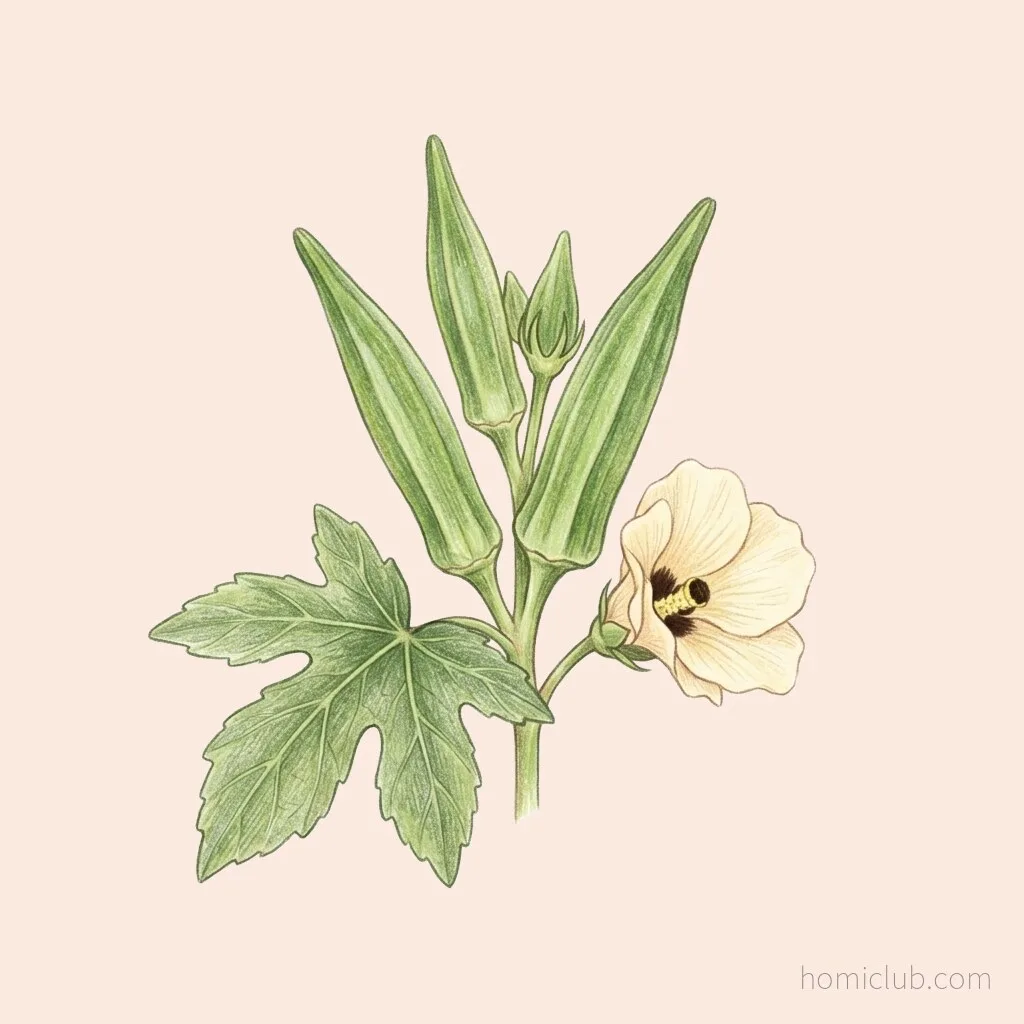
Okra is a member of the mallow family that originated in Africa, grown for its young pods, which release a slippery mucilage when sliced. That mucilage is made up of soluble dietary fiber such as mucin and pectin, often discussed in connection with gut health and blood-sugar buffering. The cross-section is star-shaped, and okra is blanched, stir-fried, or added to stews and curries, where it lends a natural thickness. It's a relatively new crop in Korea, with no entries in traditional Korean medical texts.
Year-Round Calendar
- 1
- 2
- 3
- 4
- 5
- 6
- 7
- 8
- 9
- 10
- 11
- 12
- 4
- 5
- 7
- 8
- 9
Health Benefits
Mucilage and dietary fiber (modern view). Okra's slippery mucilage is a soluble dietary fiber made up of compounds like mucin and pectin. It's frequently mentioned in connection with gut health and blood-sugar buffering, though the human evidence remains limited.
Nutrition
- Mucilage (mucin and pectin) (Slippery texture) — Said to buffer the gut and blood sugar
- Dietary fiber and vitamin C — Gut support and antioxidant activity
Pairings
○ Bonito flakes and soy sauce — Blanched okra tossed with bonito flakes (katsuobushi) and soy sauce, a Japanese-style side dish that plays up the pods' slippery texture.
○ Curry and stew — Added to a curry or stew, okra's mucilage gives the dish a natural body and thickness.
○ Blanched with chojang — Quickly blanched and dipped in chojang, a tangy Korean red-pepper-and-vinegar sauce, for a texture that's both crisp and silky.
Source: Rural Development Administration (Nongsaro)