- Type
- Root Vegetables
- Difficulty
- Easy
- Season
- Spring·Fall
- Sowing
- Transplant
Kohlrabi
Brassica oleracea
High in vitamin C, low in calories, and crisp like a turnip-cabbage cross.
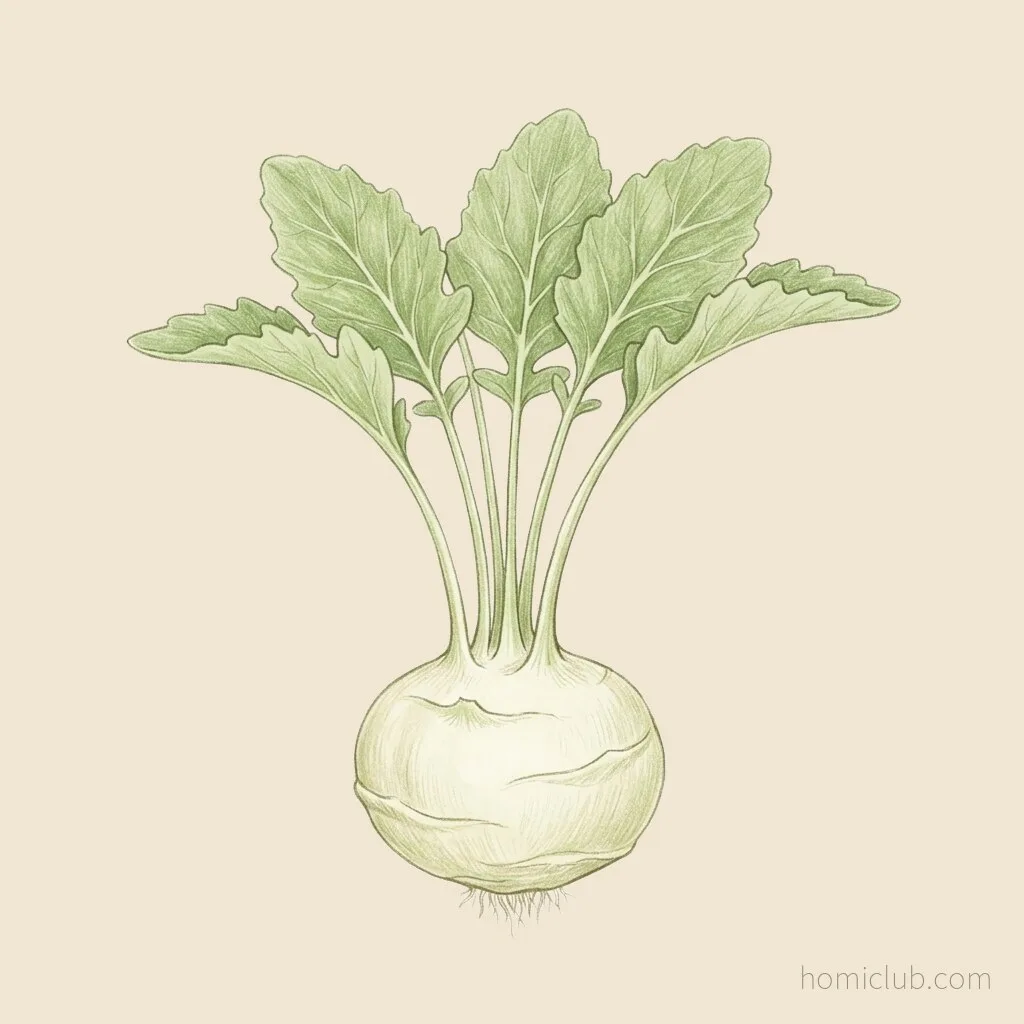
Kohlrabi is a vegetable that combines the qualities of cabbage and turnip, prized for being rich in vitamin C and low in calories, which makes it a popular choice for weight-conscious eating. It's crunchy with a mild sweetness, so you can simply peel and eat it raw or toss it into a salad. Its fiber and potassium support gut health and help with blood pressure regulation. Kohlrabi grows best in the cool weather of spring and fall.
Year-Round Calendar
- 1
- 2
- 3
- 4
- 5
- 6
- 7
- 8
- 9
- 10
- 11
- 12
- 3
- 8
- 6
- 11
Health Benefits
A source of glucoraphanin and sulforaphane. Kohlrabi (Brassica oleracea var. gongylodes) is a variety within the same species as broccoli and cauliflower, and it concentrates the glucosinolates glucoraphanin and erucin. After hydrolysis by the enzyme myrosinase, it is considered a dietary candidate for generating anti-cancer isothiocyanates.
Cruciferous signal and cancer risk. Meta-analyses of cruciferous vegetables involving some 730,000 people, published in 2024 and 2025, consistently report an inverse association: higher intake is linked to meaningfully lower risk of overall cancer as well as stomach, lung, prostate, and colorectal cancers. Kohlrabi sits within this dietary pattern as one of the cruciferous vegetables contributing to that signal.
Hydrolysis products vary by plant part. Analysis of glucosinolate hydrolysis products in different parts of kohlrabi found that the leaves and stems yield highly active isothiocyanates, while the swollen bulb mainly produces less-active nitriles. This means the bioactive effect depends on which part you eat and how you cook it.
No standalone human trials yet. No randomized controlled trial of kohlrabi on its own appears in PubMed. Kohlrabi has been included only as part of broader research, such as 28 human cruciferous-vegetable intervention studies tracking glucosinolate metabolism and bioavailability; dedicated clinical efficacy data for kohlrabi alone remains a task for future research.
Nutrition profile and vitamin C. Kohlrabi contains about 62 mg of vitamin C per 100 g, higher than the average leafy green, and it is also a low-calorie vegetable rich in fiber and potassium. While single-crop clinical efficacy data is lacking, its nutrient density and role as a source of cruciferous glucosinolates make it a strong candidate for dietary variety.
Nutrition
- Vitamin C (abundant (about 62 mg/100 g)) — immunity, skin, antioxidant
- Dietary fiber (abundant) — gut health and satiety
- Potassium (present) — blood pressure regulation
Pairings
○ Apple and carrot — Julienned kohlrabi tossed with apple and carrot makes a coleslaw-style salad. All three are rich in vitamin C, so they work in synergy, and the crisp texture and natural sweetness come together in a satisfying light dish.
○ Olive oil and lemon — Thinly sliced kohlrabi dressed with olive oil and a squeeze of lemon is the simplest salad you can make. The lemon's acidity smooths out kohlrabi's faint bitterness, while the fat in olive oil helps your body absorb fat-soluble nutrients.
○ Yogurt and cheese — Eaten with yogurt or cheese, kohlrabi gains the protein and calcium it otherwise lacks. Using a yogurt dressing as a dip lets you keep the vegetable's natural flavor while rounding out the nutritional balance.
○ Meat — Kohlrabi-muchim (a seasoned salad) or kohlrabi kimchi are Korean-style takes that pair well alongside meat dishes. The spicy seasoning cuts through the richness of the meat, while kohlrabi's crisp texture refreshes the palate.
○ Garlic and vinegar — Pickled with garlic and vinegar, kohlrabi becomes jangajji, a Korean-style preserved side dish. It keeps well for long storage, and the allicin in garlic along with the tang of vinegar elevate the vegetable's flavor a notch.
△ Thyroid conditions and blood thinners — Like other cruciferous vegetables, kohlrabi contains glucosinolates that can partially interfere with thyroid hormone production when eaten in large amounts, and its abundant vitamin K can affect anticoagulant medications. Normal dietary amounts are fine, but if you have hypothyroidism or take warfarin, keep your intake consistent.
△ Kidney failure — Kohlrabi is relatively high in potassium, so people with kidney failure should limit it. When the kidneys can't clear potassium properly, it builds up in the body and raises the risk of complications, including irregular heart rhythms.
Source: Food and Nutrition Information