- Type
- Alliums
- Difficulty
- Easy
- Season
- Fall
- Sowing
- Transplant
Jjokpa (Korean Bunching Onion)
Allicin and vitamins — the workhorse of Korean seasoning greens
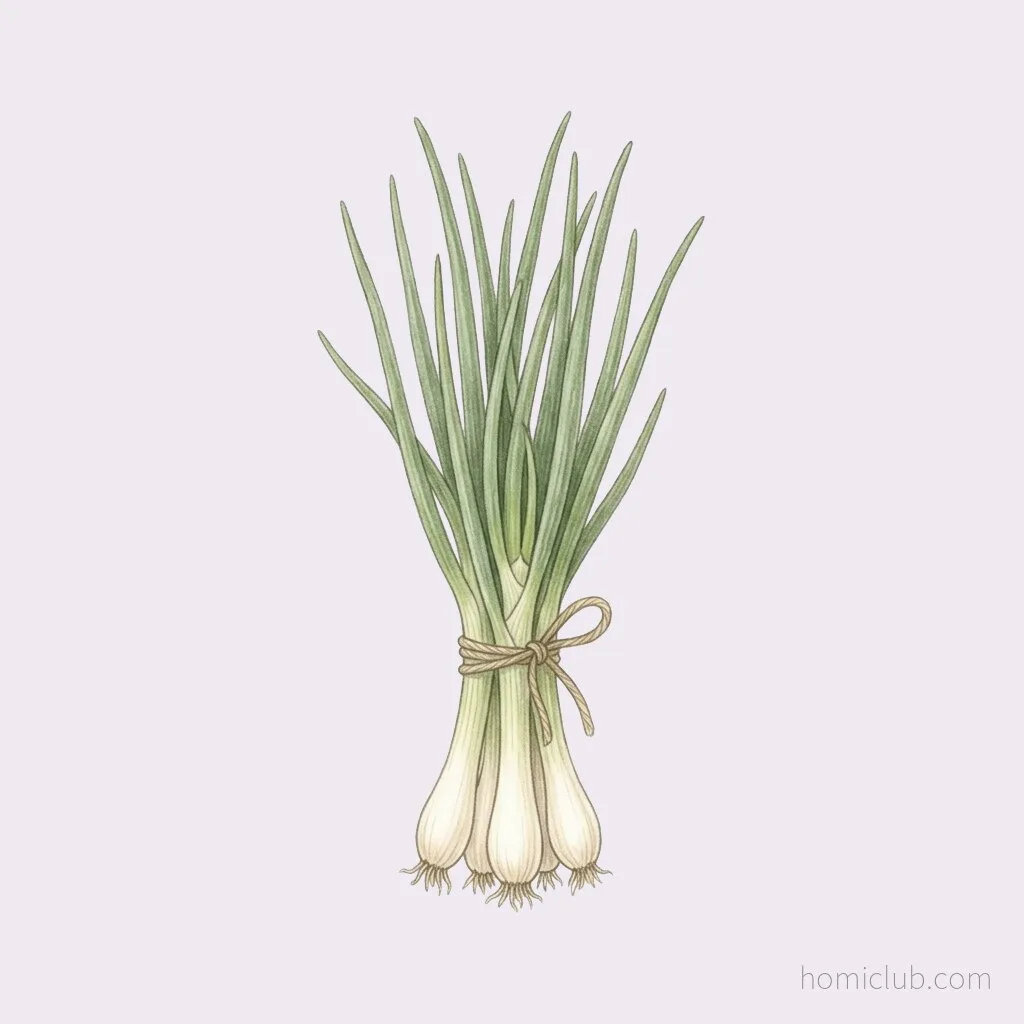
Jjokpa is a small Korean bunching onion that carries traits of both scallion and garlic, and its allicin-type sulfur compounds support antibacterial action and healthy circulation. The leaves are rich in vitamins A and C, which help immunity and eye health. It turns up everywhere in the Korean kitchen — in pajeon (savory scallion pancakes), kimchi, and seasoning sauces — so a patch in one corner of the garden always earns its keep. Plant the bulblets in fall and it needs little attention, making it a great pick for beginners.
Year-Round Calendar
- 1
- 2
- 3
- 4
- 5
- 6
- 7
- 8
- 9
- 10
- 11
- 12
- 9
- 3
- 11
Health Benefits
Cardiovascular and blood pressure. Allicin and sulfur compounds from allium vegetables such as garlic, onion, and Korean chive have been reported across multiple meta-analyses to lower blood pressure, reduce cholesterol, and inhibit platelet aggregation. More detailed evidence is collected in the garlic and Korean-chive entries of this series.
Antioxidant and anticancer. Allium vegetables are rich in sulfur compounds and flavonoids, and studies consistently report antioxidant, anticancer, and antibacterial activity. As a member of the same genus, jjokpa is expected to offer the same benefits.
Colds and immunity. In Korean and Japanese folk tradition, warm water boiled with the white stems of jjokpa (chongbaek, the white base of the stalk) has long been considered effective in the early stages of a wind-cold (pung-han) cold. This tradition aligns in direction with the antiviral and immune-stimulating activity of allium vegetables.
Tradition meets nutrition. In Korean food culture, adding a handful of jjokpa to kimchi, pajeon, or as a finishing touch to soups does more than remove fishy or off odors — it simultaneously reinforces nutrition and immunity. It is a case where aroma and nutrition work as a single package.
Cancer risk overview (genus-wide allium meta-analysis). A 2022 systematic review and meta-analysis pooling 22 studies found that high intake of allium genus vegetables (garlic, onion, jjokpa, chive, and others) showed neither a significant decrease nor increase in cancer risk (RR 0.97, 95% CI 0.92-1.03). The result is regarded as broadly confirming the dietary safety of allium vegetables.
Nutrition
- Allicin-type sulfur compounds (aroma compounds) — antibacterial; supports circulation
- Vitamins A and C (abundant in the leaves) — immunity and eye health
Pairings
○ Clams and seafood — The pairing of jjokpa and clams comes together best in haemul-pajeon (seafood scallion pancake) and seafood kalguksu (knife-cut noodle soup). Allicin and sulfur compounds clean up the fishy odor of clams and seafood while creating a nutritional synergy.
○ Pork and beef — The allicin in jjokpa binds with vitamin B1 to form allithiamine, a more readily absorbed form, so pairing it with B1-rich pork makes nutritional sense. It works on two fronts at once: cutting off-odors and aiding protein digestion.
○ Kimchi and stews — Scattering a handful of jjokpa over kimchi or a stew as a finishing touch is a familiar scene at the Korean table. The added aroma and freshness give even the same dish a more layered flavor.
○ Eggs — Jjokpa rolled into an omelet or pan-fried makes a balanced side dish of protein and aromatic greens. The softness of the egg cushions the sharp, spicy aroma of the jjokpa, creating an interesting contrast in texture and flavor.
○ Garlic and ginger — Used together with garlic and ginger, the warming character is reinforced. The traditional use of allium vegetables alongside ginger for wind-cold colds, stomachache, and indigestion illustrates this well.
○ Vinegar — Adding vinegar to a jjokpa salad lets the acidity balance the flavor and crisply tame the leaf's spicy edge. It is a frequent combination when spring appetites run low.
△ Large amounts with honey (traditional claim) — Some interpretations of the Donguibogam, the classic Korean medical text, advise against eating large amounts of jjokpa (Korean scallion) and honey at the same time. At everyday dietary levels, however, there's no real cause for concern—simply avoiding extreme combinations is enough.
△ Large amounts with jujube or jujube seed — Some views in the Donguibogam advise against consuming jjokpa in large quantities alongside jujubes or sanjoin (jujube seed, a traditional medicinal herb). At normal dietary levels this isn't a problem, but caution is recommended when taking these as concentrated herbal preparations.
△ Gastritis patients — For people with gastritis, spicy jjokpa kimchi can irritate the stomach lining. It's safer to go easy on heavily seasoned preparations in large amounts and instead eat it cooked, in moderate portions.
△ Anticoagulant users — The sulfur compounds and vitamin K in jjokpa may affect the potency of anticoagulants such as warfarin. Avoid large amounts, keep your intake consistent, and consult your healthcare provider to determine a safe serving size.
Source: Food and Nutrition Information