- Type
- Leafy Greens
- Difficulty
- Easy
- Season
- Spring·Fall
- Sowing
- From seed
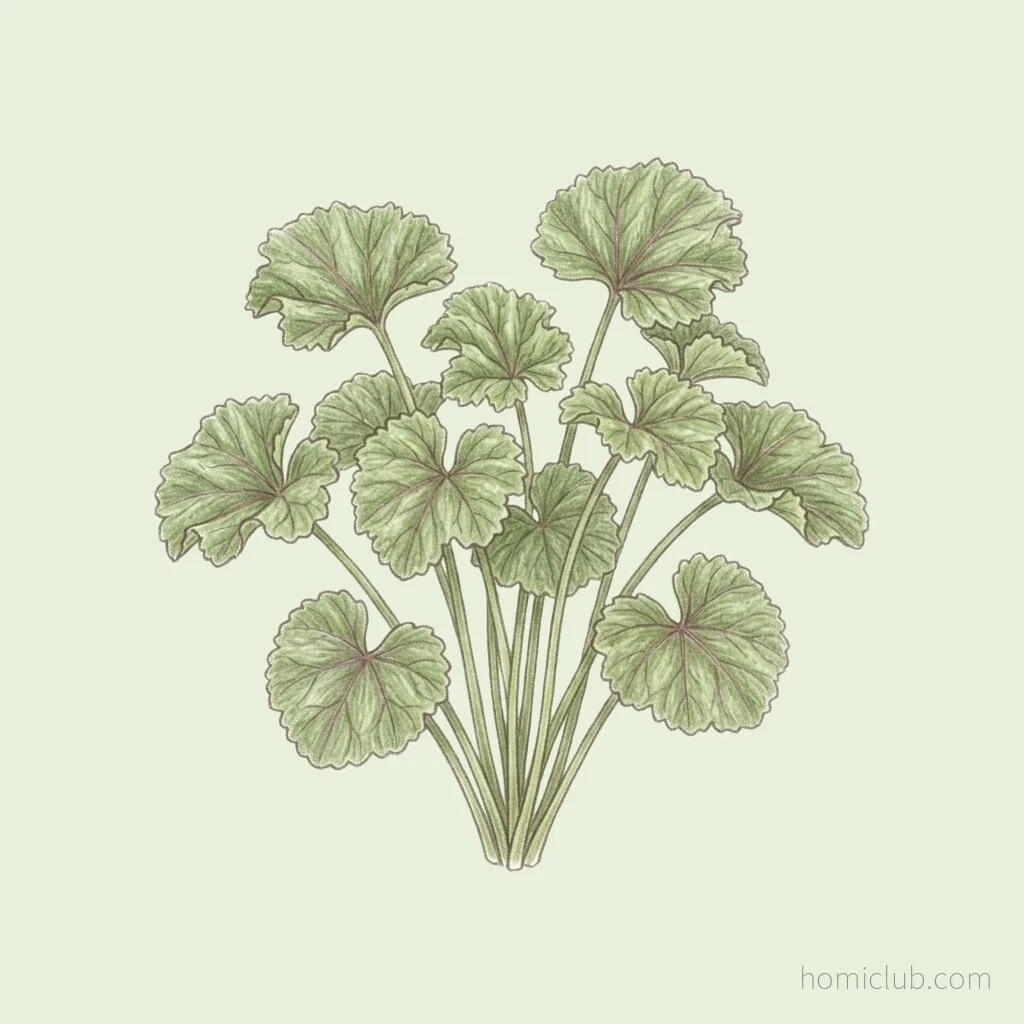
Curled Mallow (Auk)
Malva verticillata
Calcium and mucilage in a nourishing autumn green
Curled mallow (auk in Korean) is so prized as a nourishing autumn green that there's an old saying: "An autumn mallow soup is saved only for the son-in-law." It's rich in calcium for bone health, and its mucilage (mucin) coats the stomach lining and aids digestion. Simmered with doenjang (Korean fermented soybean paste) into auk-guk, a hearty soup, it turns silky and savory. Grow it in spring and fall; the cool-weather autumn crop is especially tender.
Year-Round Calendar
- 1
- 2
- 3
- 4
- 5
- 6
- 7
- 8
- 9
- 10
- 11
- 12
- 3
- 4
- 8
- 6
- 9
- 10
Health Benefits
Anti-inflammatory and antioxidant. Films containing extracts of common mallow (Malva sylvestris, a close relative of curled mallow) have shown antioxidant activity, and are being explored as topical wound-protectant materials. The basis is a versatile pharmacological profile in which mucilage and polyphenols work together.
Wound healing and mucosal protection. Malva sylvestris nanofiber dressings have been reported in clinical settings to promote wound healing in diabetic patients. This is a case of mucilage's mucosal- and wound-protective action being applied in advanced medical materials.
Pain relief and anti-pain activity. A relative within the mallow family, Waltheria viscosissima (known as Malva branca), has shown analgesic and anti-inflammatory activity in animal studies. This suggests that the pharmacological activity of mallow-family plants is shared broadly, beyond a single genus.
Comprehensive pharmacology review. A review summarizing the chemical composition and pharmacological applications of the Malva genus systematically organizes its versatile activity built on polysaccharides, flavonoids, and mucilage. Its potential for both food and medicinal use is examined together.
Human clinical trial in functional constipation (Malva sylvestris extract). In a 2024 human clinical investigation, 56 healthy adults took a dietary supplement (20 mL/day) containing 750 mg of Malva sylvestris extract for 20 days. Bowel movement frequency and stool consistency increased significantly, and abdominal pain decreased significantly (all p<0.001). The results point to a mucosa-soothing, laxative effect of mallow mucilage in humans.
Nutrition
- Calcium (High among leafy greens) — Bone and tooth health
- Mucilage (mucin) (Present) — Protects the stomach lining; aids digestion
- Vitamins A and C (Abundant) — Immune and eye health
Pairings
○ Doenjang — Simmering mallow soup with doenjang (Korean fermented soybean paste) is a classic of the Korean table. The salty, savory depth of doenjang melds with the natural sweetness and silkiness of mallow to make one of Korea's signature soups, while the fermented soy protein and the green's minerals round out the nutrition.
○ Dried shrimp and dried anchovies — Adding dried shrimp or dried anchovies to mallow soup creates a natural calcium synergy. A soup that brings together mallow, shrimp, and doenjang is the version most commonly made in Korean homes.
○ Barley and multigrain rice — Pairing mallow soup with barley or multigrain rice makes a fiber-rich meal. The fiber from both helps prevent constipation and softens the spike in blood sugar after eating.
○ Ginger — Mallow is considered somewhat 'cooling' in nature, so adding a slice of ginger can restore a warming balance. Simmering ginger into mallow soup is traditionally recommended for people with a weak stomach.
○ Postpartum recovery meals — The combination of mallow soup, seaweed soup (miyeok-guk), and multigrain rice has become a staple of postpartum recovery meals. Together they supply calcium, iron, fiber, and mucilage, supporting nutrition broadly during the recovery period after childbirth.
△ Weak digestion or loose stools — For people with a weak stomach or a tendency toward diarrhea, curled mallow—considered a 'cooling' food in traditional terms—can be hard on the system. Balancing it with warming seasonings such as ginger, doenjang (fermented soybean paste), or gochujang (red-pepper paste) is recommended.
△ Right after taking oral medication — The mucilage in curled mallow may slow drug absorption, so avoid eating large amounts immediately after taking oral medication. Leaving a gap of one to two hours is the safer approach.
Source: Food and Nutrition Information