
- Type
- Fruiting Vegetables
- Difficulty
- Moderate
- Season
- Summer
- Sowing
- Transplant
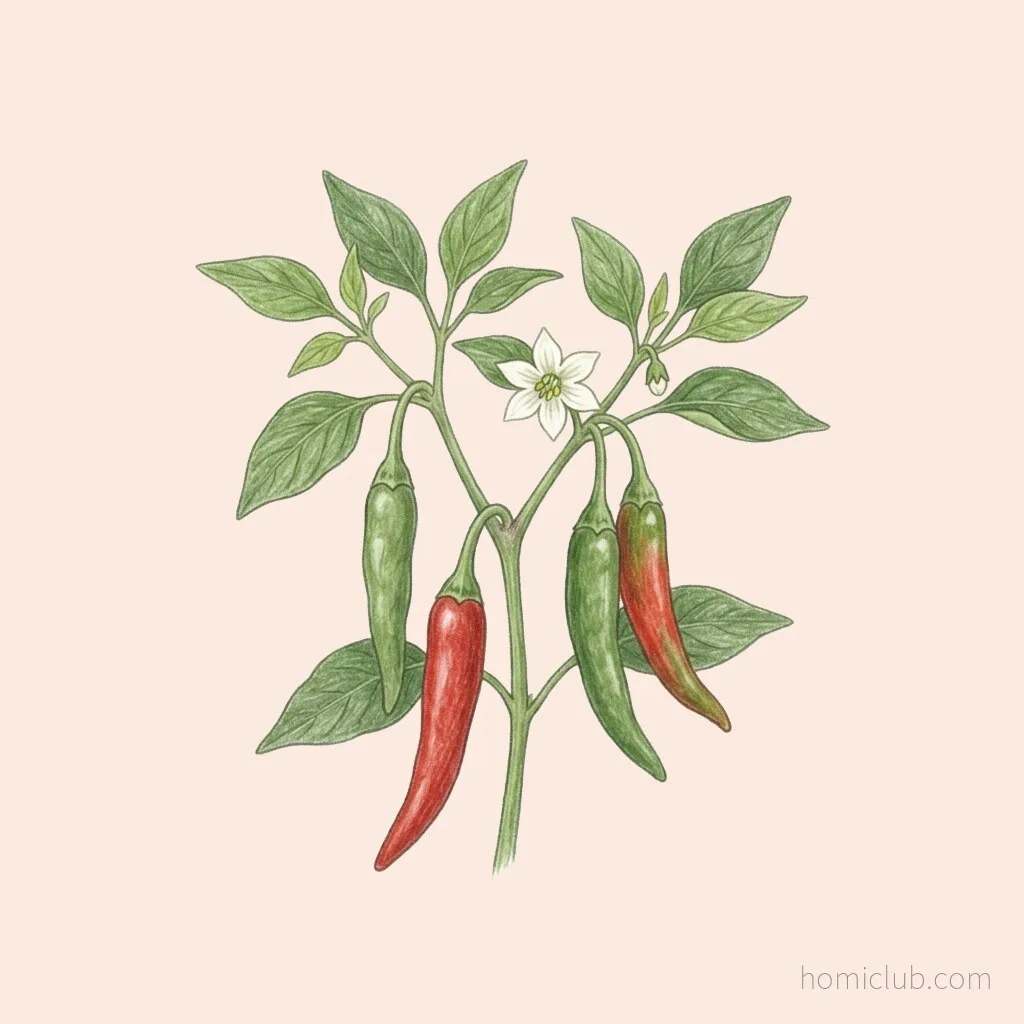
Chili Pepper (Gochu)
Capsicum annuum
Capsaicin for metabolism and digestion
The heat in chili peppers comes from capsaicin, a compound that stimulates the appetite while helping to block fat storage, which is why it has a reputation as a diet-friendly ingredient. It also encourages the secretion of digestive juices to improve digestion and absorption, and is known to help dissolve blood clots. Green (unripe) peppers are rich in vitamin C, making them a good immune booster as well. Set out transplants in May and you can keep harvesting well into early November.
Year-Round Calendar
- 1
- 2
- 3
- 4
- 5
- 6
- 7
- 8
- 9
- 10
- 11
- 12
- 5
- 7
- 8
- 9
- 10
Health Benefits
Cardiovascular risk and all-cause mortality. Several meta-analyses have consistently found that people who eat chili peppers frequently show roughly 25% lower all-cause mortality and about 26% lower cardiovascular mortality. Causation is hard to pin down, however; this is an observational association that should be weighed alongside overall dietary patterns.
Body weight and body fat. A 2023 meta-analysis of 15 randomized controlled trials covering 762 participants found that capsaicin supplementation produced meaningful reductions in BMI (0.25 kg/m2), body weight (0.51 kg), and waist circumference (1.12 cm). The effect sizes are small compared with medication, but they confirm capsaicin's potential as a dietary support.
Lipid metabolism and cholesterol lowering. A meta-analysis of 9 randomized controlled trials with 461 patients who had metabolic syndrome found that capsaicin significantly lowered total cholesterol and LDL cholesterol. It had no significant effect on triglycerides or HDL, suggesting an effect that is specific to lowering cholesterol.
Thermogenesis and energy expenditure. Meta-analyses have accumulated showing that capsaicinoid supplementation meaningfully increases resting metabolic rate and fat oxidation. Taking 2 mg or more before a meal has also been reported to curb appetite, cutting energy intake at the next meal by about 74 kcal.
Gastrointestinal cancer risk. A 2022 meta-analysis of gastrointestinal cancers found a signal that high chili intake raises esophageal cancer risk by roughly 2.7-fold, an effect that was especially pronounced in Asian populations. No significant association was found for stomach or colorectal cancer, but excessive intake can irritate the stomach lining, which warrants clinical caution.
Nutrition
- Capsaicin (the compound behind the heat) — fat burning, improved digestion, and clot dissolution
- Vitamin C (abundant) — immune support and antioxidant activity
Pairings
○ Garlic and ginger — Garlic, ginger, and chili are often called the holy trinity of spicy seasoning across Korea, China, and Southeast Asia. They turn up together in kimchi, stews, and stir-fries, where the allicin, gingerol, and capsaicin combine their antibacterial, sweat-inducing, and digestion-supporting effects into real synergy.
○ Olive oil and sesame oil — Because capsaicin is fat-soluble, cooking chili with oil increases its absorption while also spreading the heat evenly across the palate. Olive oil and sesame oil are among the best mediums for bringing out a chili's flavor.
○ Milk and yogurt — It is well established that the casein protein in milk and yogurt binds to capsaicin and neutralizes its heat. Reaching for a glass of milk after a spicy meal is the surest way to quickly calm the burn in your mouth.
○ Sugar and honey — The sweetness of sugar and honey tempers the heat somewhat while creating an intriguing contrast with the spicy flavor. A classic example is gochujang (fermented chili paste) seasoning, which is built on a balance of sweet, salty, and spicy.
○ Soybean sprouts and tofu — The calcium and protein in soybean sprouts and tofu balance out the bite of capsaicin, a tried-and-true pairing in Korean spicy cooking. In dishes like kongnamul-guk (soybean sprout soup) and braised tofu, they gently cushion the heat.
△ Gastritis or acid reflux (GERD) — For people with gastritis or reflux esophagitis, capsaicin can further irritate the stomach lining. Cut back on how often and how much spicy food you eat, and avoid eating it on an empty stomach.
△ Large amounts on an empty stomach — Eating a lot of spicy food on an empty stomach directly irritates the stomach lining and can cause pain, reflux, and abdominal discomfort. Whenever possible, eat spicy food in moderation and alongside other foods.
△ Water — Capsaicin is fat-soluble, so rinsing your mouth with water does almost nothing to tame the heat. It's well established that casein-rich milk or yogurt, or fatty foods, are far more effective at cooling the burn quickly.
Varieties
- Cheongyang chili — the benchmark for heat in Korea
- Asagi chili — mild and crisp
- Oi-gochu (cucumber chili) — long and gentle in flavor
- Kkwari-gochu (shishito-type) — small and wrinkled, used for stir-frying
- Ttaengcho — a very hot native landrace
Source: Rural Development Administration · Food and Nutrition Information