- Type
- Leafy Greens
- Difficulty
- Hard
- Season
- Spring
- Sowing
- Transplant
Asparagus
Asparagus officinalis
Folate and asparagine in tender spring spears
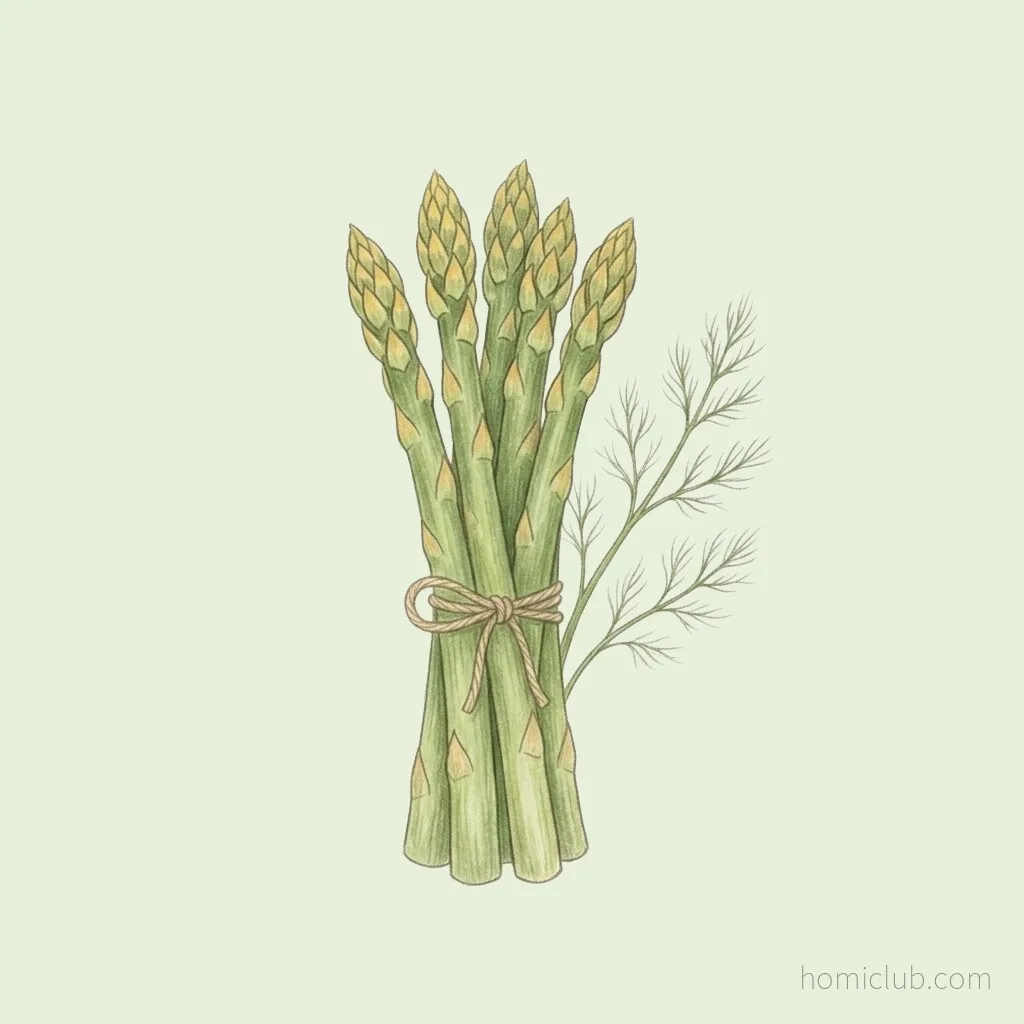
Asparagus is a perennial vegetable grown for the young spears that push up in spring, and once a planting is established it produces for many years. The spears carry folate, the amino acid asparagine, and the flavonoid rutin, and they're best blanched or grilled. One thing worth noting: asparagus shares a genus with cheonmun-dong (Asparagus cochinchinensis), a plant used in traditional Korean herbal medicine, but it is a different species. It's more accurate not to assume that edible asparagus carries the same medicinal effects attributed to cheonmun-dong.
Year-Round Calendar
- 1
- 2
- 3
- 4
- 5
- 6
- 7
- 8
- 9
- 10
- 11
- 12
- 3
- 4
- 4
- 5
Health Benefits
Nutrition (modern). Asparagus is a spring vegetable rich in folate, the amino acid asparagine, and the flavonoid rutin.
Distinct from the herb. The traditional Korean herbal medicine cheonmun-dong is a different species within the same genus and should not be confused with edible asparagus.
Nutrition
- Folate (Vitamin B9) — Supports blood formation and cell function
- Asparagine and rutin (Amino acid and flavonoid) — Help with fatigue and provide antioxidant action
Pairings
○ Olive oil (grilled) — Brushing the spears with oil and grilling them brings out their sweetness and aroma.
○ Bacon and eggs — Wrapped in bacon or served alongside eggs, it makes a satisfying breakfast.
○ Blanched in salads — A quick blanch keeps the spears crisp and adds a crunchy texture to salads.
Source: Rural Development Administration (Nongsaro)