- Type
- Leafy Greens
- Difficulty
- Easy
- Season
- Spring·Fall
- Sowing
- From seed
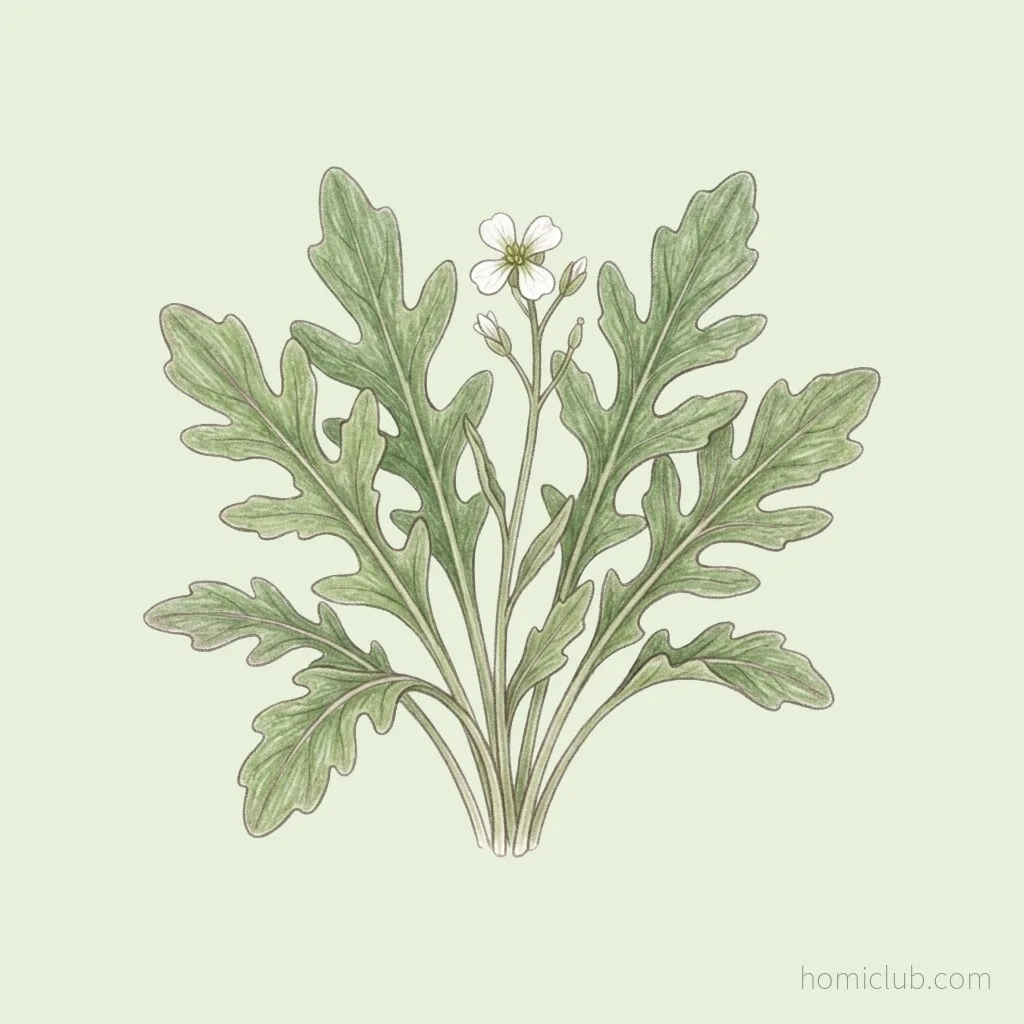
Arugula (Rocket)
Eruca vesicaria
Glucosinolates for a peppery, antioxidant-rich salad green
Arugula, also known as rocket, gets its bright, peppery bite from glucosinolates, compounds that support the body's antioxidant and detox pathways. It's rich in vitamin K and folate, making it a friend to bone health and healthy blood. Low in calories, it's a favorite in diet-conscious salads, and a handful tossed onto pizza or pasta really wakes up the flavor. Best of all, it grows fast: direct-sow in spring or fall and you'll be harvesting in no time.
Year-Round Calendar
- 1
- 2
- 3
- 4
- 5
- 6
- 7
- 8
- 9
- 10
- 11
- 12
- 3
- 4
- 9
- 5
- 10
Health Benefits
Erucin and isothiocyanates. Erucin, the signature active compound in arugula (Eruca sativa), belongs to the cruciferous isothiocyanate family. In test-tube and animal models it has shown signals of inhibiting breast and prostate cancer cell proliferation and disrupting microtubule dynamics. That said, human RCT data is lacking, so it's too early to claim a standalone clinical benefit.
Cruciferous-vegetable signal and cancer risk. Meta-analyses of cruciferous vegetables from 2024 and 2025 have consistently reported an inverse association, with higher intake linked to meaningfully lower risk of lung, stomach, esophageal, colorectal, prostate, breast, and ovarian cancers. As a cruciferous green high in glucosinolates, arugula shares in part of this signal.
Limited standalone human trials. On ClinicalTrials.gov, there is just a single trial of arugula on its own, compared with 290 for broccoli. Human data at the single-crop level is very limited, so arugula's nutritional standing rests mainly on its carotenoid, vitamin K, and nitrate content.
Nitrates and vascular health. Like beets and spinach, arugula is a leafy green that contains roughly 480 mg of dietary nitrate per 100 g. Through the nitrate-to-nitric-oxide pathway, improvements in vascular endothelial function have been consistently reported in meta-analyses of cruciferous and leafy greens, making arugula a candidate food for vascular-friendly eating.
Preclinical and antioxidant activity. Arugula leaf extract has shown antiplatelet and cardioprotective activity at the test-tube level, and its vitamin C, carotenoids, and flavonoids are reported to help ease oxidative stress. Extending these findings into human clinical trials remains a task for future research.
Nutrition
- Glucosinolates (source of the peppery bite) — antioxidant, detox, and cancer research
- Vitamin K and folate (abundant) — bone health and healthy blood formation
Pairings
○ Olive oil, balsamic vinegar, and Parmesan — This is the classic Italian arugula salad. The fat in olive oil boosts carotenoid absorption, the acidity of balsamic softens the rough edge of the peppery leaves, and the savory depth of Parmesan rounds out the flavor.
○ Prosciutto and feta — Peppery, pungent leaves find their balance against salty cured meats and cheese. The saltiness, protein, and fat of prosciutto and feta tame arugula's bite while raising the overall nutritional density of the meal.
○ Tomato and mozzarella — A twist on Caprese that swaps arugula for the basil, or adds it alongside. The lycopene in tomato and the protein in mozzarella pair with arugula's carotenoids and isothiocyanates to create a textbook Mediterranean plate.
○ Pine nuts and other nuts — Stir pine nuts, walnuts, or almonds into an arugula pesto or scatter them over a salad. The unsaturated fats in nuts aid the absorption of fat-soluble nutrients, and their nutty richness balances the peppery leaves.
○ Lemon and orange — A squeeze of lemon or orange juice boosts vitamin C and brightens the impression of the peppery leaves. It also helps slow oxidation, keeping the salad from discoloring as quickly.
○ Watermelon — It sounds unlikely, but a summer salad of peppery arugula, sweet watermelon, and salty feta is a Western favorite. The sweet-salty-spicy trio plays off one another on the palate, sparking an appetite that summer heat can easily dull.
△ Anticoagulants — Arugula is high in vitamin K, so for people on anticoagulants like warfarin, suddenly eating much more or much less can destabilize the medication's effect. Rather than avoiding it entirely, the safe approach is to keep your intake steady and consistent.
△ Hypothyroidism — The glucosinolates in cruciferous vegetables are known to partially interfere with thyroid hormone synthesis when eaten raw and in large amounts. People with hypothyroidism should eat arugula cooked rather than raw and avoid consuming large quantities in a single meal.
△ Long storage: wilting kills the aroma and peppery bite — The thin leaves wilt quickly in storage, losing their signature aroma and peppery kick. Even refrigerated, the flavor fades within days, so it's best enjoyed fresh, soon after purchase.
Source: Food and Nutrition Information