- Type
- Fruiting Vegetables
- Difficulty
- Moderate
- Season
- Summer
- Sowing
- Transplant
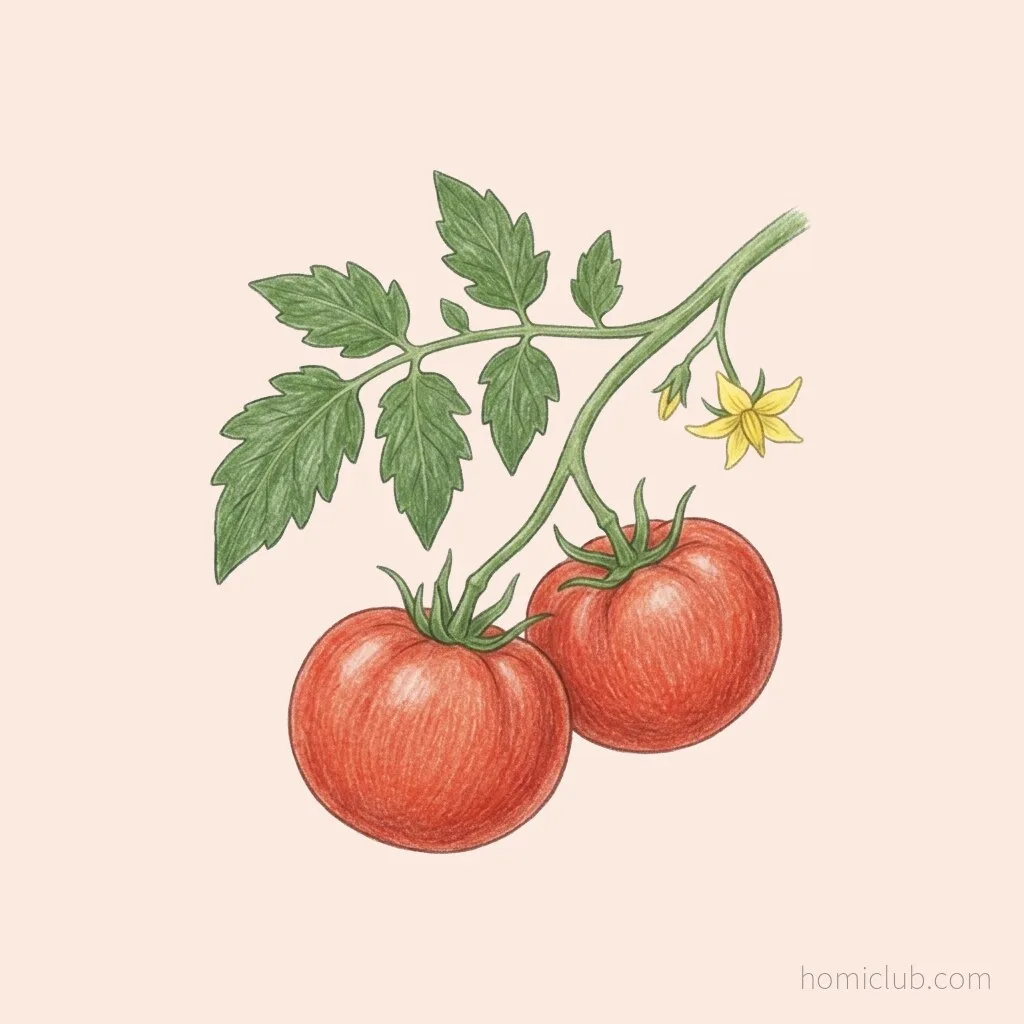
Tomato
Solanum lycopersicum
Loaded with lycopene, the antioxidant fruit that's better cooked
The standard slicing tomato is larger than a cherry tomato, which makes it a versatile, antioxidant-rich fruit for sauces, soups, and salads alike. Its red pigment, lycopene, becomes far more absorbable when cooked in oil, so a tomato sauce actually delivers more of it than a raw tomato does. Tomatoes are also rich in vitamin C and potassium, supporting immunity and blood-pressure management. Set out transplants in May and stake the plants as they grow.
Year-Round Calendar
- 1
- 2
- 3
- 4
- 5
- 6
- 7
- 8
- 9
- 10
- 11
- 12
- 5
- 7
- 8
- 9
- 10
Health Benefits
Heart Health and Blood Pressure. A 2026 umbrella review synthesized multiple meta-analyses showing that tomato-derived lycopene supplementation consistently lowers LDL cholesterol and systolic blood pressure. The effect was most pronounced in people with a baseline systolic pressure of 130 mmHg or higher, or who supplemented for at least eight weeks, establishing tomatoes as a dietary option for managing borderline hypertension.
Prostate Cancer Risk. Prospective cohort meta-analyses have found a weak inverse association between lycopene intake and prostate cancer risk, though the effect size differed between processed tomato products and raw tomatoes, pointing to a difference based on how the tomato is eaten. It is hard to call tomatoes a stand-alone preventive food; they are best viewed as one part of an overall dietary pattern.
Overall Cancer Risk. A 2025 dose-response cohort meta-analysis reported that overall cancer risk was about 11% lower in the high-lycopene group and about 5% lower in the high-tomato-intake group. The effect was not uniform across all cancer types, with more consistent signals seen at specific sites such as the stomach, lung, and prostate.
Blood Sugar Metabolism. A 2022 systematic review found that lycopene supplementation had no significant effect on fasting blood glucose in the general adult population, but did meaningfully lower it in people with type 2 diabetes. The effect was stronger the higher the baseline glucose, suggesting potential as a complementary dietary measure.
IGF-1 and Hormones. A meta-analysis of lycopene supplementation's effect on insulin-like growth factor 1 (IGF-1) levels found no significant change. Although IGF-1 has been proposed as a key mediator of the anti-cancer hypothesis, the clinical data show effects that are small or inconsistent.
Nutrition
- Lycopene (red pigment; fruit larger than a cherry tomato) — antioxidant; prostate and heart health (absorption rises with cooking)
- Vitamin C and potassium (abundant) — immunity and blood pressure
Pairings
○ Olive Oil — Adding olive oil to tomatoes maximizes lycopene absorption. That is exactly why Mediterranean tomato pasta and Caprese are nutritionally ideal pairings; the combination is simple, but the benefit is clear.
○ Mozzarella and Basil — Caprese is the classic trio that showcases the synergy of tomato, mozzarella, and basil, balancing protein, fat, and antioxidants. The colors of the three ingredients come together for visual appeal and nutritional balance at once.
○ Garlic and Onion — The foundation of any tomato sauce is its pairing with garlic and onion. It's a universal combination found across cuisines, from Italian ragu to salsa to Korean kimchi-jjigae (kimchi stew), with sulfur compounds and lycopene working together.
○ Eggs — Chinese-style tomato and egg stir-fry and Israeli shakshuka are signature dishes that pair tomatoes with eggs. The egg's protein and fat help with lycopene absorption while rounding out the flavor of the dish.
○ Beef and Pork — Adding meat to tomatoes brings together protein, lycopene, and umami. The synergy shows up best in long-simmered dishes such as ragu sauce or tomato stew.
○ Cooking — When tomatoes are cooked, their cell walls break down and lycopene absorption rises substantially. It's worth noting that sauce, paste, and soup forms are nutritionally more advantageous than a raw tomato salad.
△ Acid reflux (GERD) — People with acid reflux are better off limiting tomatoes—especially on an empty stomach or right before bed. Tomatoes' acidity can irritate the lining of the esophagus and make reflux symptoms worse.
△ Migraine sufferers — Some migraine sufferers react strongly to tyramine-containing foods like tomatoes, cheese, and chocolate. Knowing your personal trigger foods and avoiding them accordingly is the foundation of migraine management.
△ Green unripe fruit, leaves, and stems — Never eat green, unripe tomatoes or the plant's leaves and stems—they contain solanine and tomatine. Fully ripened fruit is safe, so the food-safety basics are simple: eat only tomatoes that have turned red and ripe.
Varieties
- Standard slicing tomato (ilban tomato) — large fruit, good for sauces and cooking
- Date tomato (daechu tomato) — date-shaped, firm and sweet
- Chal tomato — a Korean variety with a dense, chewy texture
- Cherry tomato — dozens per cluster; can even be grown on a balcony
Source: Rural Development Administration (Nongsaro)