- Type
- Grains
- Difficulty
- Easy
- Season
- Spring
- Sowing
- From seed
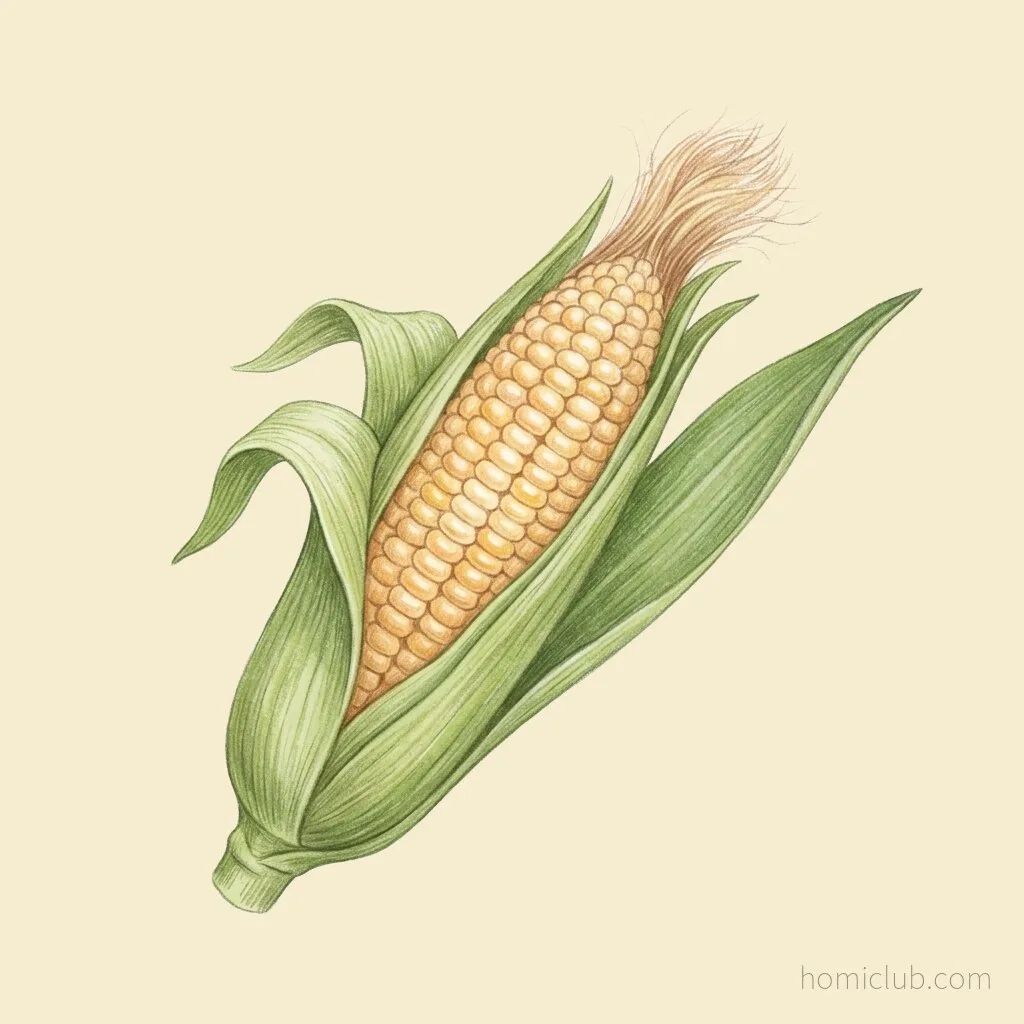
Corn (Sweet Corn)
Zea mays
Fiber and lutein in a hearty summer snack
Corn is rich in dietary fiber that supports gut health and keeps you feeling full, while the lutein and zeaxanthin in its golden kernels help protect the macula of the eye. Its B vitamins also assist with energy metabolism. Freshly picked corn is at its sweetest, so it tastes best boiled the moment it comes off the stalk. Sow the seed in spring for a summer harvest; the plants grow tall.
Year-Round Calendar
- 1
- 2
- 3
- 4
- 5
- 6
- 7
- 8
- 9
- 10
- 11
- 12
- 4
- 5
- 7
- 8
Health Benefits
Eye health. Numerous meta-analyses of carotenoid-rich diets that include leafy greens and corn consistently report that the lutein and zeaxanthin found in corn may help lower the risk of macular degeneration and cataracts. Corn stands out as one of the few grain sources of these macular pigments.
Gut health. Corn's generous dietary fiber and resistant starch help diversify the gut microbiome and promote the production of short-chain fatty acids. It is one strand of a whole-grain diet that broadly supports the prevention of constipation.
Cardiovascular health. The ferulic acid in corn's outer layers has strong antioxidant and anti-inflammatory activity, while its potassium helps flush out sodium to support blood pressure control. Working together, these two components lower cardiovascular risk on several fronts.
Diuretic and kidney support (corn silk tea). The diuretic and kidney-stone-preventing effects of corn silk extract have been reported across a number of preclinical and clinical studies. This pharmacological evidence underpins the long-standing tradition of drinking corn silk tea (oksusu-suyeom-cha) as a diuretic beverage in Korea.
Allergy and nutrition note (beware pellagra). It is a historically well-established fact that relying on corn as a sole staple can lead to pellagra, caused by a deficiency of niacin (vitamin B3). Eating corn as part of a varied diet is the way to stay safe.
Nutrition
- Dietary fiber (Abundant) — Gut health and satiety
- Lutein and zeaxanthin (Yellow pigments) — Eye health and macular protection
- B vitamins (Present) — Energy metabolism
Pairings
○ Beans — Beans supply the lysine and tryptophan that corn lacks, so together they form a complete protein. Pairing beans with corn is a time-honored cornerstone of traditional Latin American and African diets.
○ Butter, cheese, and milk — Because corn's carotenoids are fat-soluble, eating them alongside the fat in dairy boosts absorption. Grilled corn, corn chowder, and corn-and-cheese gratin are classic examples.
○ Olive oil and avocado — The monounsaturated fats in olive oil and avocado aid the absorption of corn's carotenoids. In Mexican cooking, serving corn with avocado and olive oil has become a well-established pairing.
○ Chili and lime — Grilled corn dusted with chili powder and a squeeze of lime is the hallmark of the Mexican street food elote. The capsaicin and bright acidity give corn's sweetness a more layered, dimensional flavor.
○ Corn silk tea — Brewing corn silk into a tea is a beloved traditional Korean beverage prized for its diuretic and urinary-tract benefits. Its potassium and flavonoids are often cited as the basis for helping ease swelling and support kidney health.
△ As a sole staple food — History offers a well-known warning here: relying on corn as your only staple can cause pellagra, a disease driven by niacin (vitamin B3) deficiency. The safe approach is to eat corn as part of a varied diet.
△ Kidney failure — Because people with kidney failure need to manage their potassium and phosphorus intake, it's safer to avoid eating large amounts of corn, which is rich in both. Work with your medical team to set a safe serving size.
△ Corn syrup — High-fructose corn syrup is a processed form widely linked to higher risks of obesity and fatty liver disease. Corn itself is a healthy ingredient — overconsumption of processed foods sweetened with corn syrup is a separate issue and should be treated as one.
Source: Food and nutrition references