
- Type
- Leafy Greens
- Difficulty
- Moderate
- Season
- Spring·Fall
- Sowing
- Transplant
Cauliflower
Brassica oleracea var. botrytis
Sulforaphane and vitamin C from a white cruciferous vegetable.
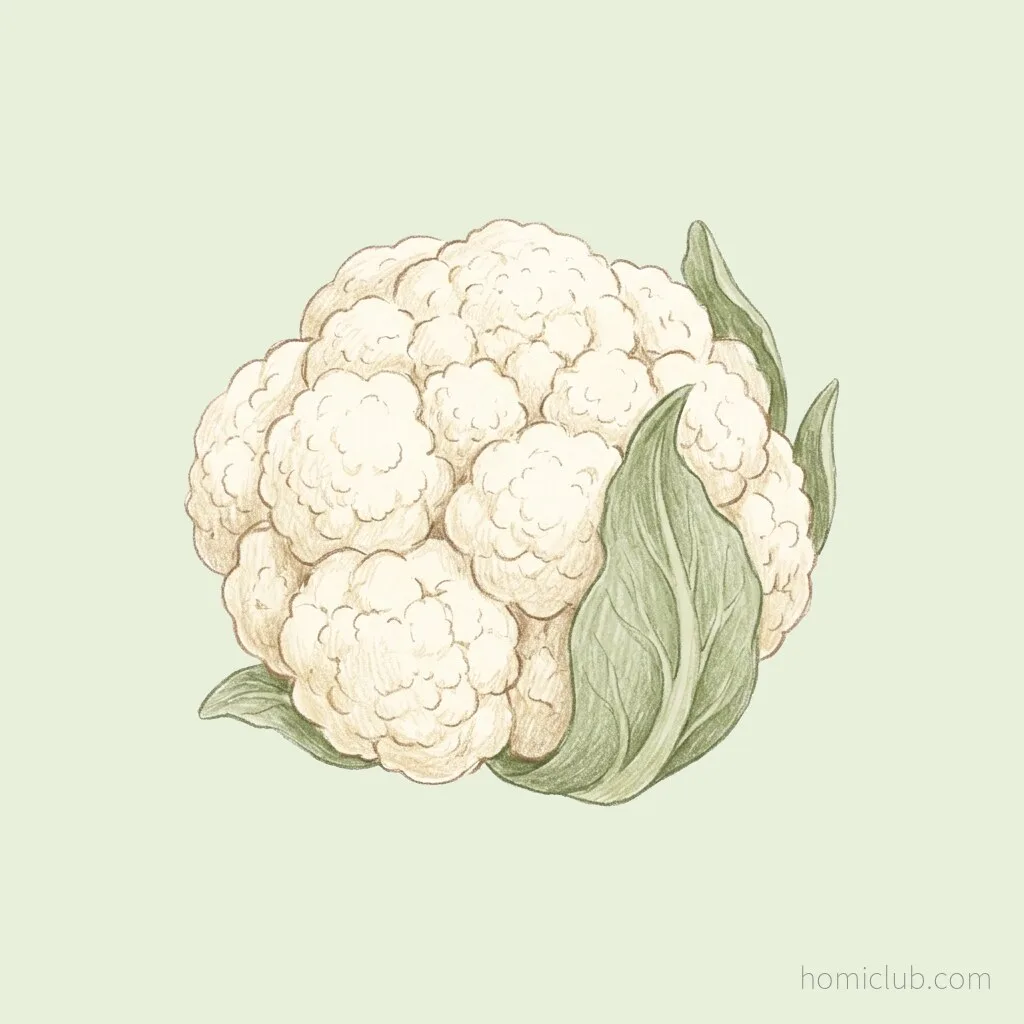
Cauliflower is a flower-bud vegetable in the cabbage family, the same group as broccoli, but because it lacks chlorophyll, its heads stay white. It supplies cruciferous compounds such as sulforaphane along with vitamin C, and it has become a favorite low-carb stand-in for rice and potatoes. For the research behind the cruciferous family's anti-cancer reputation, see the broccoli entry.
Year-Round Calendar
- 1
- 2
- 3
- 4
- 5
- 6
- 7
- 8
- 9
- 10
- 11
- 12
- 3
- 8
- 6
- 11
Health Benefits
Shares its evidence base with broccoli. Cauliflower is a variety of the same species as broccoli, Brassica oleracea, so it shares the same body of evidence for cruciferous compounds. For a detailed look at the nutrients, health effects, and the underlying research, see the broccoli entry.
Nutrition
- Sulforaphane and glucosinolates (Cruciferous compounds) — Antioxidant and detoxification support (noted)
- Vitamin C and dietary fiber — Immune support and gut health
Pairings
○ Olive oil (roasted) — Brushed with oil and roasted, cauliflower turns nutty and brings out its natural sweetness.
○ Curry — Added to curry, it lends extra texture and pairs well with the spices.
○ Mashed or riced (a rice substitute) — Finely chopped or mashed, it works in place of rice to cut down on carbohydrates.
Source: Rural Development Administration (Nongsaro)