- Type
- Root Vegetables
- Difficulty
- Easy
- Season
- Spring·Fall
- Sowing
- From seed
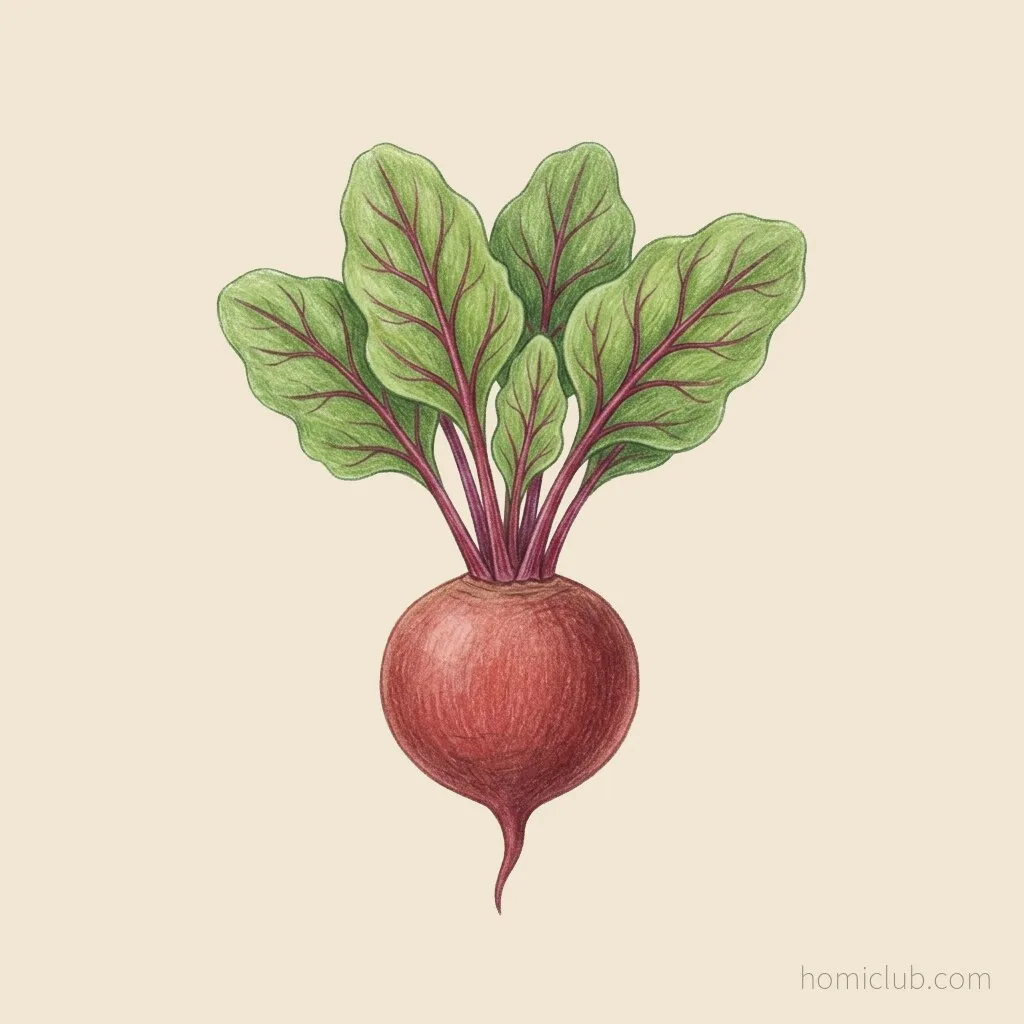
Beet
Beta vulgaris
Rich in betaine and nitrates — a red root that supports blood pressure and athletic performance.
The beet is a red root vegetable loaded with natural nitrates, which the body converts into a compound that widens blood vessels, helping to regulate blood pressure and boost exercise performance. Its deep-red pigment, betaine, is good for liver health and acts as an antioxidant. Enjoy beets juiced, in salads, or roasted — their intense color lends dishes a naturally vivid red. Sow seeds directly in spring or fall.
Year-Round Calendar
- 1
- 2
- 3
- 4
- 5
- 6
- 7
- 8
- 9
- 10
- 11
- 12
- 4
- 8
- 6
- 10
Health Benefits
Lowers Blood Pressure. A 2017 meta-analysis confirmed that supplementing with beet juice significantly lowered systolic blood pressure by an average of 3.55 mmHg and diastolic by 1.32 mmHg. The effect was greater with longer-term intake (14 days or more) and higher doses (500 mL per day), and the data suggest that active compounds beyond nitrate may also contribute.
Vascular Endothelial Function. A 2021 meta-analysis pooling 43 studies found that supplementing with beet or inorganic nitrate significantly improved flow-mediated dilation (FMD) — endothelium-dependent vascular widening — by an average of 0.62%. This clinically validates the vessel-relaxation mechanism that works through the nitrate-to-nitric-oxide pathway.
Exercise Performance and Endurance. A 2025 umbrella review synthesizing 20 meta-analyses consistently reported that beet juice supplementation extends endurance time and improves performance in time trials under 40 minutes. The International Olympic Committee also officially endorses high-nitrate foods and juices as exercise supplements.
High-Intensity Intervals and Muscle Damage. A 2021 meta-analysis of high-intensity interval training (HIIT) confirmed that beet intake significantly shortened the time to reach peak power during cycling sprints. For recovery from post-exercise muscle damage, signs were reported of significantly faster recovery of isometric strength and jump performance within 24 to 72 hours.
Overall Cardiovascular Risk. Beets show consistent improvement signals across three fronts — blood pressure, endothelial function, and exercise performance — thanks to their betaine, nitrates, and antioxidant polyphenols, establishing them as a leading example of a dietary supplement for cardiovascular health. That said, people with reduced kidney function or sensitivity to oxalates should be cautious about excessive intake.
Nutrition
- Nitrate (Abundant) — Widens blood vessels, regulates blood pressure, and improves exercise performance
- Betaine (Red pigment) — Liver health and antioxidant activity
- Folate and Iron (Present) — Supports red blood cell production
Pairings
○ Apple and Carrot — ABC juice — apple, beet, and carrot blended together — is a classic detox drink. All three are rich in antioxidants, and their sweet, tart, and mellow flavors blend naturally into something easy to drink.
○ Yogurt, Feta, and Goat Cheese — A salad of roasted beets with yogurt, feta, and goat cheese is a classic combination that balances sweet and salty. The added probiotics and protein round out the nutrition, while the vivid betalain color leaves a striking visual impression.
○ Walnuts and Pine Nuts — When the unsaturated fats and polyphenols of nuts like walnuts and pine nuts meet betalains, an antioxidant synergy is expected. The toasty flavor of the nuts softens the earthy note of beets and brings the flavors into balance.
○ Lemon and Balsamic — The acidity of lemon and balsamic stabilizes betalains, slowing the browning of the color while brightening the flavor. Adding a touch of acid to a beet salad is almost a given.
○ Sour Cream and Dill — In Eastern European borscht, the classic approach is to top the soup with a spoonful of sour cream and some dill. The tang of the fermented dairy and the aroma of the dill gently wrap around the earthy note of the beet, creating a deep, layered flavor.
○ Olive Oil — The fat in olive oil enhances the absorption of fat-soluble carotenoids such as beta-carotene. Coating beets in olive oil before roasting deepens their flavor and offers a nutritional advantage as well.
○ Pre-Workout Drink — Drinking beet juice one to two hours before exercise improves the efficiency of oxygen consumption through the nitric oxide pathway, enhancing endurance and high-intensity performance — a finding consistently confirmed across numerous randomized controlled trials.
△ Kidney stones — Beets are relatively high in oxalates, so anyone with a history of calcium oxalate stones should avoid eating them in large amounts. Cooking beets, or pairing them with calcium-rich foods, can reduce oxalate absorption.
△ Low blood pressure and PDE5 inhibitors — The nitrates in beets are potent vasodilators that lower blood pressure, so people who already run low or who take PDE5 inhibitors such as Viagra may see their blood pressure drop too far. Get medical advice and adjust your intake accordingly.
△ Kidney failure — Because people with kidney failure need to manage potassium and phosphorus, they should avoid large amounts of potassium-rich beets. The safe move is to set an appropriate serving size with your medical team.
Source: Food and nutrition references