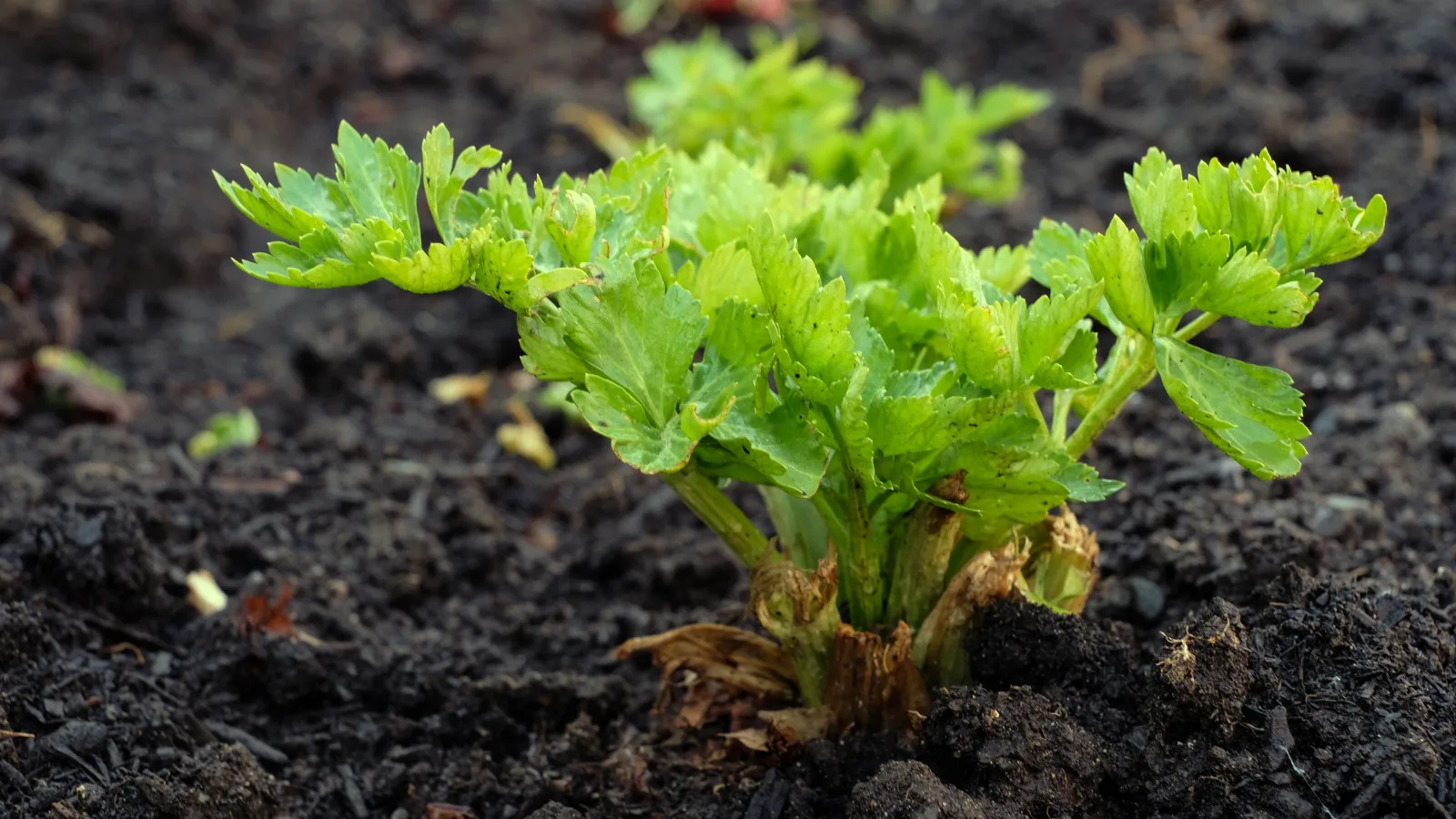
Gardeners who love celery often keep it in the same spot for years on end. It smells wonderful and asks little of you, so giving up its place feels like a waste. But after three or four seasons, the leaves aren't as full as they once were, the roots start to soften, and whole plants begin to wilt. The soil looks the same—yet the crop keeps losing its vigor.
Planting the Same Crop in the Same Spot Wears Out the Soil
When you grow one crop in the same ground over and over, the nutrients that crop draws on most heavily are the first to run out, while root secretions and certain pathogens build up in the soil. Celery is no exception. In places like the mountainous southern reaches of Ningxia, China, where celery has been grown in the same fields for years, the soil has grown depleted and harvests have dropped noticeably. This is what's known as replant failure, or continuous-cropping stress.
The fix is simple: move the crop, or give the soil a rest by rotating in a different plant between plantings. But results vary a great deal depending on which crop you choose.
Green Onion Roots Revive Exhausted Soil
One Chinese agricultural research team added the root compounds of several vegetables to celery beds and watched how the soil responded. They worked in root extracts from Brussels sprouts, chili peppers, green onions, and broccoli, then compared the soil's nutrients and microbes.
Every vegetable lifted the soil's nutrients and enzyme activity to some degree, but green onion roots stood out from the rest. Nitrogen and phosphorus rose, beneficial soil microbes multiplied, and the pathogenic fungi that soften celery roots declined. As a result, celery disease dropped by about 64% and yields climbed more than 30%. Chili pepper roots offered similar help in reducing disease.
Green onion roots appear to shift the microbial balance—increasing the beneficial bacteria in the soil while holding harmful fungi in check. In effect, they enrich the soil while making it harder for pathogens to take hold.
Try Planting Green Onions After Your Celery
What the research suggests you do is easy enough. In the bed where you harvested celery, plant green onions the following year, then come back to celery the year after—a simple rotation. Green onions are easy to grow and fit in just about anywhere in the garden, so you can slip them in as an in-between crop without a second thought.
- If you've planted celery in the same spot for more than three years, put green onions in that row this year and let the soil rest.
- If green onions aren't practical, working chili peppers in between helps cut disease too.
- Adding well-finished compost alongside the rotation helps tired soil bounce back even faster.
Rather than stubbornly holding to the same spot, simply slipping in a single season of green onions can leave next year's celery growing far more robust. As you clear out your celery this fall, set aside that spot for a few green onion seedlings.
Reference: Chinese Journal of Applied Ecology, study on continuous-cropping celery soil and vegetable root extracts