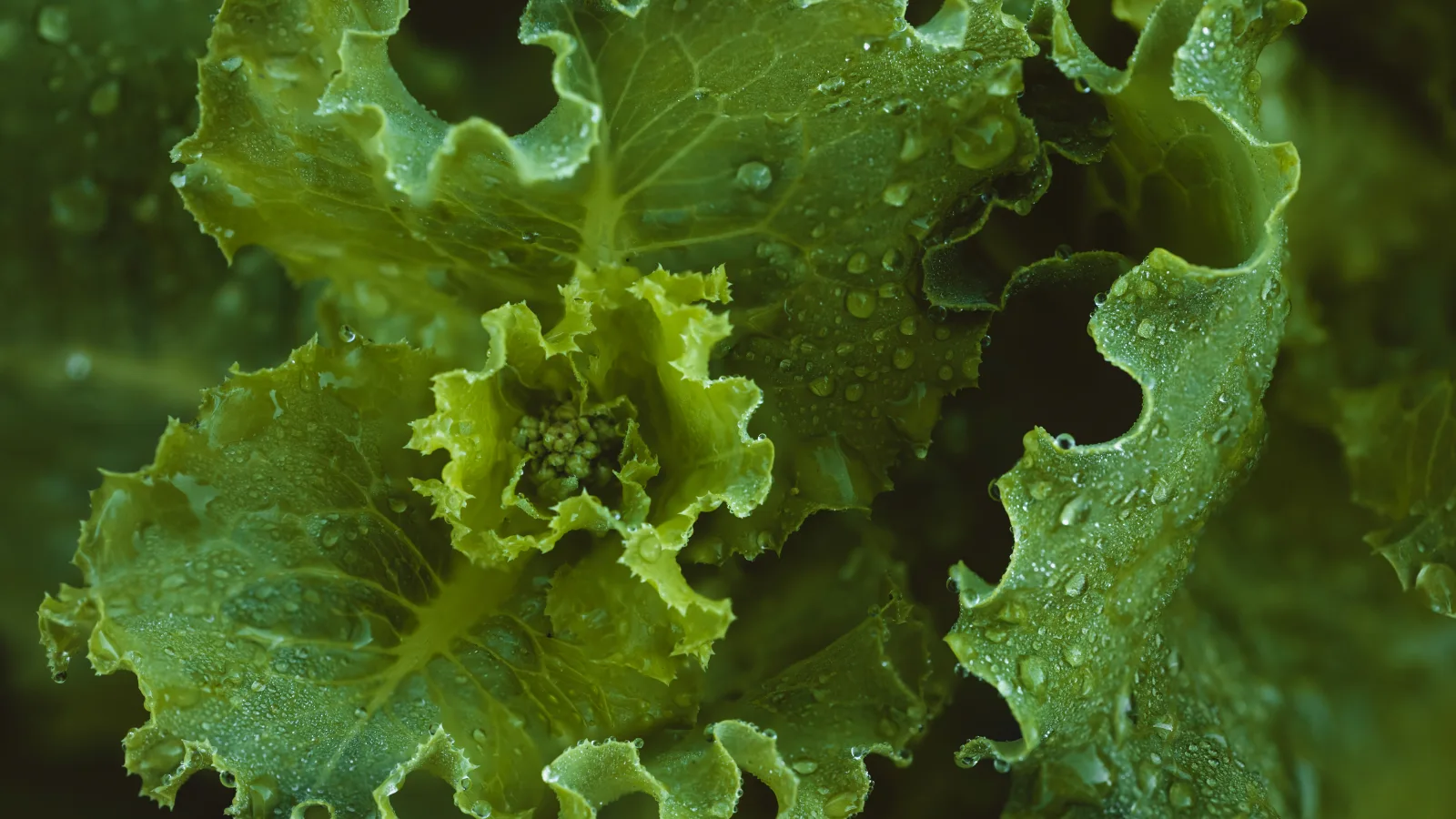
Step out to the garden in the early evening, pick a few lettuce leaves, and one spot on the dinner table fills itself. Wrapped around rice as ssam (Korean leaf wraps), tossed into a quick fresh kimchi-style salad, or piled into a green salad, lettuce never asks much of the cook. But the old saying that eating lettuce helps you sleep is so familiar that it's worth asking: is it actually true? The truth is that lettuce's benefits rest on very different levels of evidence. Some are backed by clinical studies in humans; others are educated guesses based on what's in the leaf. Let's walk through them honestly, one by one.
Better sleep — the best-supported claim
Of all the benefits attributed to lettuce, sleep is the one with the most human research behind it. In a clinical study of Korean adults with poor sleep, people who took a lettuce extract for four weeks slept longer overall than those who didn't, and the time they spent lying awake after falling asleep dropped by roughly half. Their sleep-quality scores improved as well.
Researchers also have a partial explanation for why. Lactucin, the compound that gives lettuce its bitter edge, appears to act on receptors in the body involved in sedation and sleep. In animal studies, lettuce extract shortened the time it took to fall asleep and kept sleep going longer. A Korean variety called Heukharang, registered by the Jeollanam-do Agricultural Research and Extension Services after years of breeding work, is reported to contain more than 100 times the lactucin of ordinary lettuce.
One caveat belongs alongside all of this. Most of these studies used concentrated extracts or seed preparations, not fresh leaves. So it's too early to assume that the lettuce from your garden bed delivers the same effect as a capsule. A habit of adding lettuce to your evening meal is well worth recommending — just treat it as part of a calm, pleasant dinner rather than a medicine for sleep problems.
Antioxidant pigments in red lettuce — solid evidence
Red-tinged lettuce varieties are rich in antioxidants such as anthocyanins and phenolic compounds. In compositional studies, red lettuce measured high in antioxidant capacity thanks to these pigments. But darker color doesn't automatically mean more antioxidant power: in the same research, some green varieties actually came out ahead in total polyphenols and overall antioxidant capacity. The balanced move is to serve red and green lettuce together.
A source of folate and vitamins — backed by nutritional analysis
Lettuce is a good source of folate. One cup of shredded romaine provides about 16% of the daily recommended amount. Folate content varies severalfold by variety, with dark leafy types carrying more than pale ones like iceberg.
Lettuce also offers generous vitamin K, beta-carotene, and lutein, which supports eye health. Green and red leaf lettuces have been measured at roughly twenty times the beta-carotene of iceberg. Beta-carotene converts to vitamin A in the body, supporting vision and immunity. Even within the same crop, choosing darker-leaved varieties gets you more nutrition per serving.
Benefits it's too early to call
Adding lettuce to a meal may slow the rise in blood sugar afterward. In a study of healthy men, eating lettuce alongside a fatty meal was associated with lower post-meal blood glucose. The usual explanation is that lettuce's fiber slows sugar absorption, but whether this applies equally to all leafy greens hasn't been settled.
You'll also hear that red varieties lower the risk of cancer or cardiovascular disease. So far, though, that possibility has only been suggested at the level of compounds and test tubes — it hasn't been directly shown to prevent disease in people. The claim that eating lettuce with perilla oil (a nutty Korean pressed-seed oil) improves absorption of fat-soluble nutrients leans on a general principle of nutrition; no study has tested it with lettuce specifically. Take these as long-standing folk wisdom — worth respecting, but not worth over-believing.
How to enjoy it
Lettuce is delicate under heat and loses little nutrition to washing, so it's at its best raw — in ssam wraps or salads. Mix green and red varieties for color, and dress them lightly with perilla oil or sesame oil to help your body take up those fat-soluble nutrients while making everything taste better. Try adding a plate to your dinner table tonight. Keep the darker-leaved varieties on hand and the same serving will do more for you.
Lettuce is as easy to grow as its benefits are modest — but those benefits are honest ones, and they quietly do the body good.
Sources: clinical research on Heukharang lettuce and sleep; Jeollanam-do Agricultural Research and Extension Services; U.S. National Institutes of Health nutrition data; Tufts Health & Nutrition Letter.