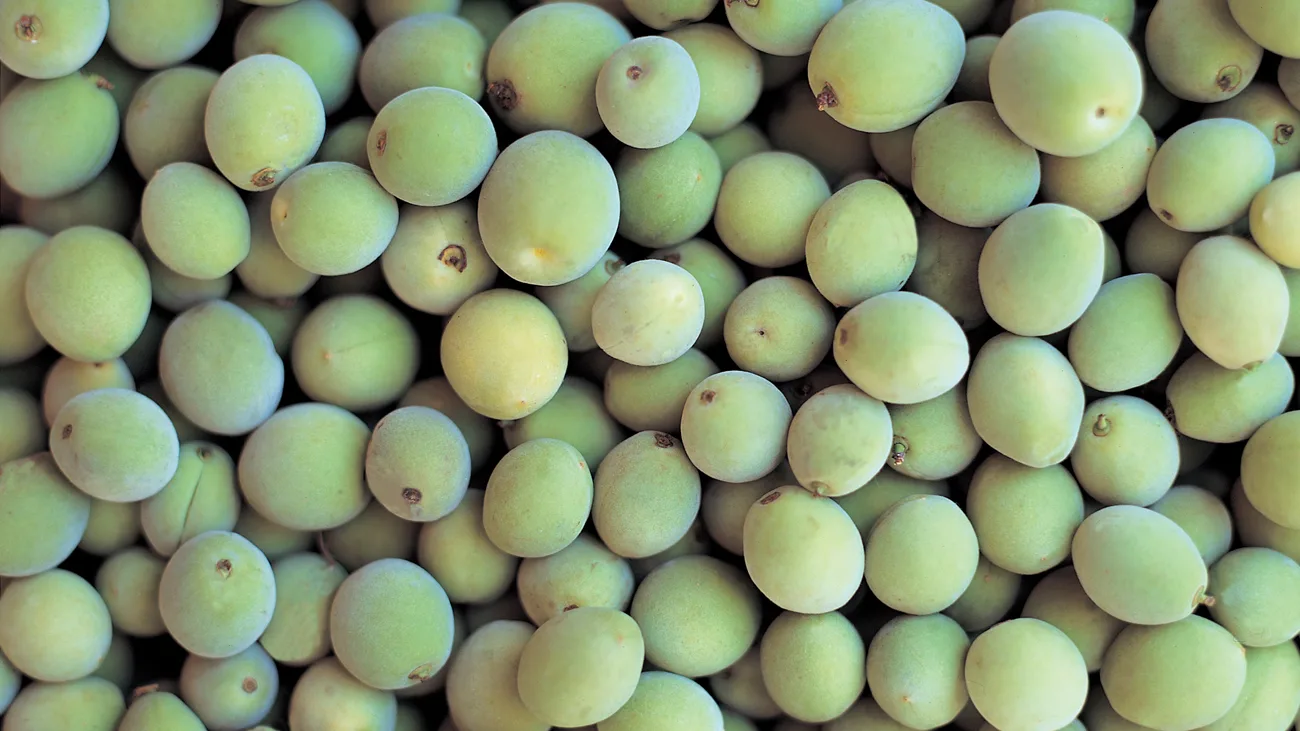
When June arrives, boxes of green plums start stacking up outside the produce stalls. The window for firm, fragrant unripe plums is short. As a rule, the good ones show up only from early to late June, just over a month. Miss it and you'll be waiting until next year, so June is the month to clear a little space on the calendar for making green-plum syrup.
When to make it, and which plums to choose
How you use a plum depends on how ripe it is. For maesil-cheong (green-plum syrup), you want green plums that haven't yet turned yellow. Look for a deep green skin and a firm feel in the hand. Yellow plums that have started to ripen smell wonderful, but their flesh is soft, and it falls apart easily once you steep it in sugar. Pass over any that are mushy like an apricot, or that have nicks in the skin or spreading black spots.
As for size, the bigger and more uniform the plums, the easier the prep. To put up one jar of syrup, you generally match plums and sugar at a 1-to-1 ratio by weight. A good baseline is 1 kg of sugar for every 1 kg of plums. Too little sugar and the mix ferments too far, turning sour or growing mold, so for your first batch it's safest to stick to this ratio.
Prepping and packing
Rinse the plums several times under running water, then fill a large bowl with water and let them soak for an hour or two. This draws out the astringency and floats off any surface grit. Once you've drained them, the plums need to dry completely. Wipe each one with a dry towel, or spread them on a flat basket to dry in the shade. Leftover moisture is the single biggest reason syrup grows mold in storage.
Next, use a toothpick to pry out the little stem nub lodged at the top of each plum. Leave it in and it tends to lend a bitter taste. Once the prep is done, pack the plums and sugar in alternating layers into a sterilized, dried glass jar or crock. Spread a layer of sugar on the bottom, add a layer of plums, and repeat, finishing with a thick blanket of sugar on top so no plums peek through. Sealing the top with sugar means fewer plums touch the air, which helps slow spoilage.
Storing and straining
Set the packed jar somewhere cool and out of direct sunlight. For the first few days, give it a shake once a day, or stir it top to bottom, so the sugar dissolves evenly. If sugar settles and hardens at the bottom, only that part ferments slowly. Over time the plums release their juice, it blends with the sugar, and the fruit shrivels and rises to the surface.
After about 100 days, lift out the plums. Leave them in too long and the pits can lend a bitter edge, so strain the syrup and store it separately. Strain it once more, transfer it to a clean bottle, and keep it refrigerated; it will last a good long while.
Enjoying the finished syrup
Stir two or three tablespoons of the finished syrup into cold water or sparkling water for a summer drink. It's just the thing when the heat kills your appetite. It earns its keep in cooking, too. Use it in place of sugar in a quick dressed salad or a jangajji (soy-pickle) and you get sweetness plus a bright, fresh aroma; add a spoonful to a meat marinade and it helps tame any gaminess. A little stirred in with vinegar when dressing greens lightens up the dish, too.
Don't toss the strained plum flesh, either. Pit it, mince it fine, and fold it into gochujang (red-pepper paste) or a batch of jangajji for another little side dish.
Stop by the market today, pick up 1 kg of firm green plums and 1 kg of sugar, dry the fruit well, and pack your first jar. A hundred days from now, in the heat of summer, you can pour yourself a glass of green-plum syrup you strained by hand.