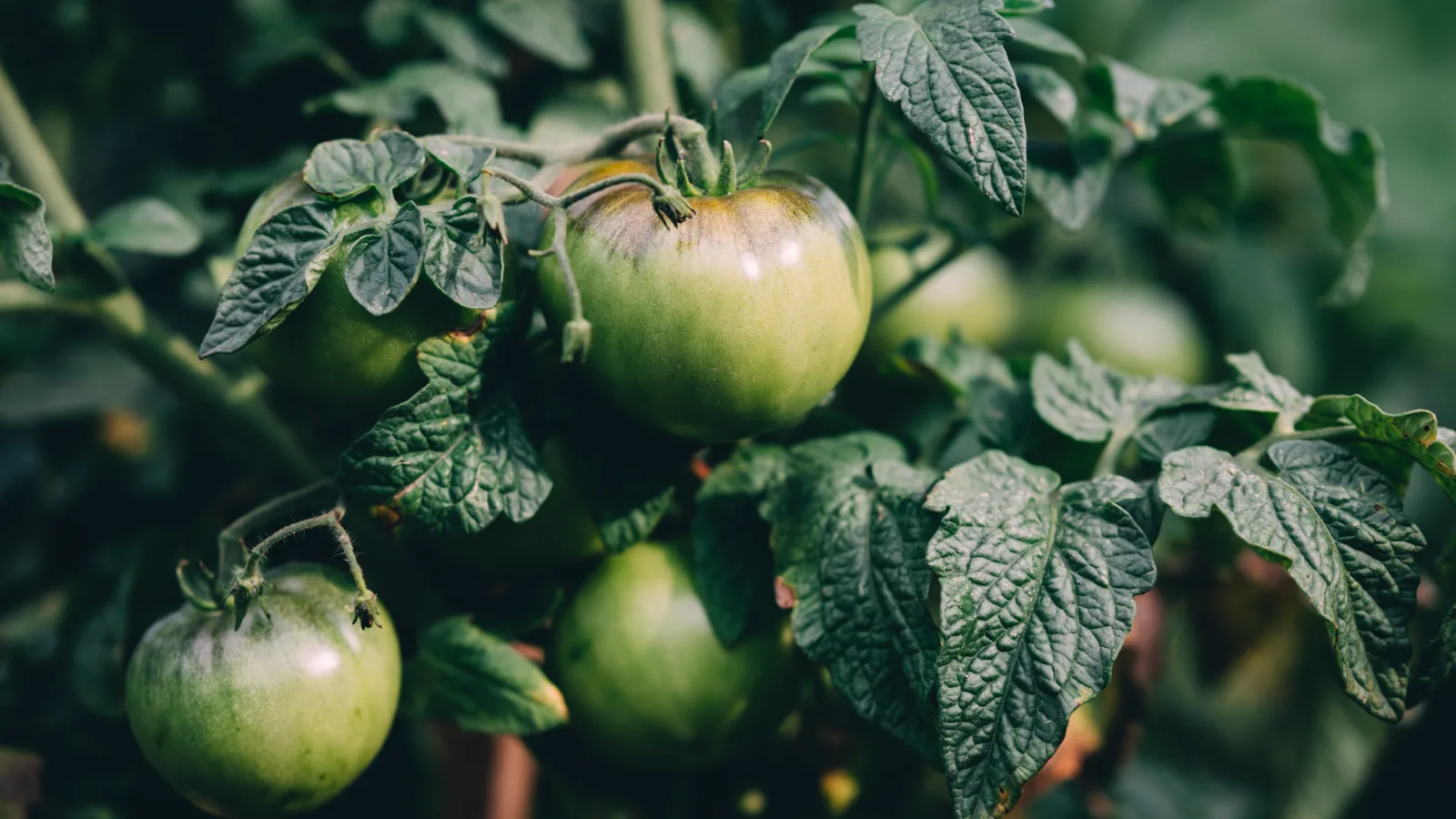
Head out to the garden in midsummer and you may find your tomato leaves yellowing from the bottom up, with a chalky white film settling on the surface of the potting soil. If the leaf tips are drying out and the fruit is slow to fill in even though you've watered faithfully, there's a good chance that salt has built up in the soil. The more often a pot has been fed with fertilizer, the more common this becomes.
What Happens When Salt Builds Up in the Soil
Tomatoes are a crop that struggles especially with salty soil. In one plant study, researchers grew a single tomato variety across a range of soils, from low salt concentrations up to high ones. As the concentration rose, the leaves lost chlorophyll and their color faded. Chlorophyll is what turns leaves green and lets them convert sunlight into food, so when it declines, the nourishment headed for the fruit declines right along with it. In the same study, a marker that reveals how badly the leaf cells have been damaged also climbed as salt levels went up. Behind those visibly yellow leaves, the cells themselves were genuinely being harmed.
How Tomatoes Fight Back on Their Own
A tomato sitting in salty soil doesn't simply wilt and give up. In both the roots and the leaves, several responses kick in at once to counter the salt. Antioxidant enzymes that neutralize the free radicals damaging the cells ramp up, and the machinery that balances water and ions inside and outside the cells switches on. When the researchers looked at genes tied to salt stress, they found that those involved in antioxidant defense, water regulation, ion balance, and damage repair turned their activity up or down depending on the salt concentration. In its own way, the tomato was building up its capacity to endure.
The Longer It Lasts, the Weaker That Endurance Gets
What stood out most was how the response shifted over time. The researchers examined the plants at 15 days and again at 45 days into the salt stress, and the higher the salt concentration and the longer the exposure, the more those defenses actually lost their strength. A tomato that held its own at first grew weaker on every front—chlorophyll, protective enzymes, and the activity of the related genes all faded together—once it had sat in salty soil for too long. Salt doesn't drain away on its own once it accumulates; it only makes life harder for the roots as time goes on. That's why it's better to tend the soil before salt builds up than to scramble for a fix after the leaves are already damaged.
Reducing the salt isn't complicated. Start today by checking just a few of your pots.
- If you see a white, chalky film on the soil surface, water deeply to flush it downward, and empty any water that pools in the saucer.
- Mix liquid fertilizer more dilute than the label recommends, and feed less often. A good soak now and then beats small doses given constantly.
- For older pots, replace the top 2–3 cm (about an inch) of soil with fresh soil.
- As a rule, water thoroughly once the soil dries out; the habit of watering a little and often leaves salt behind.
Making a habit of checking the soil before the leaves turn yellow is what will protect your tomatoes this summer.
Reference: a study on salt stress in tomatoes published in BMC Plant Biology.