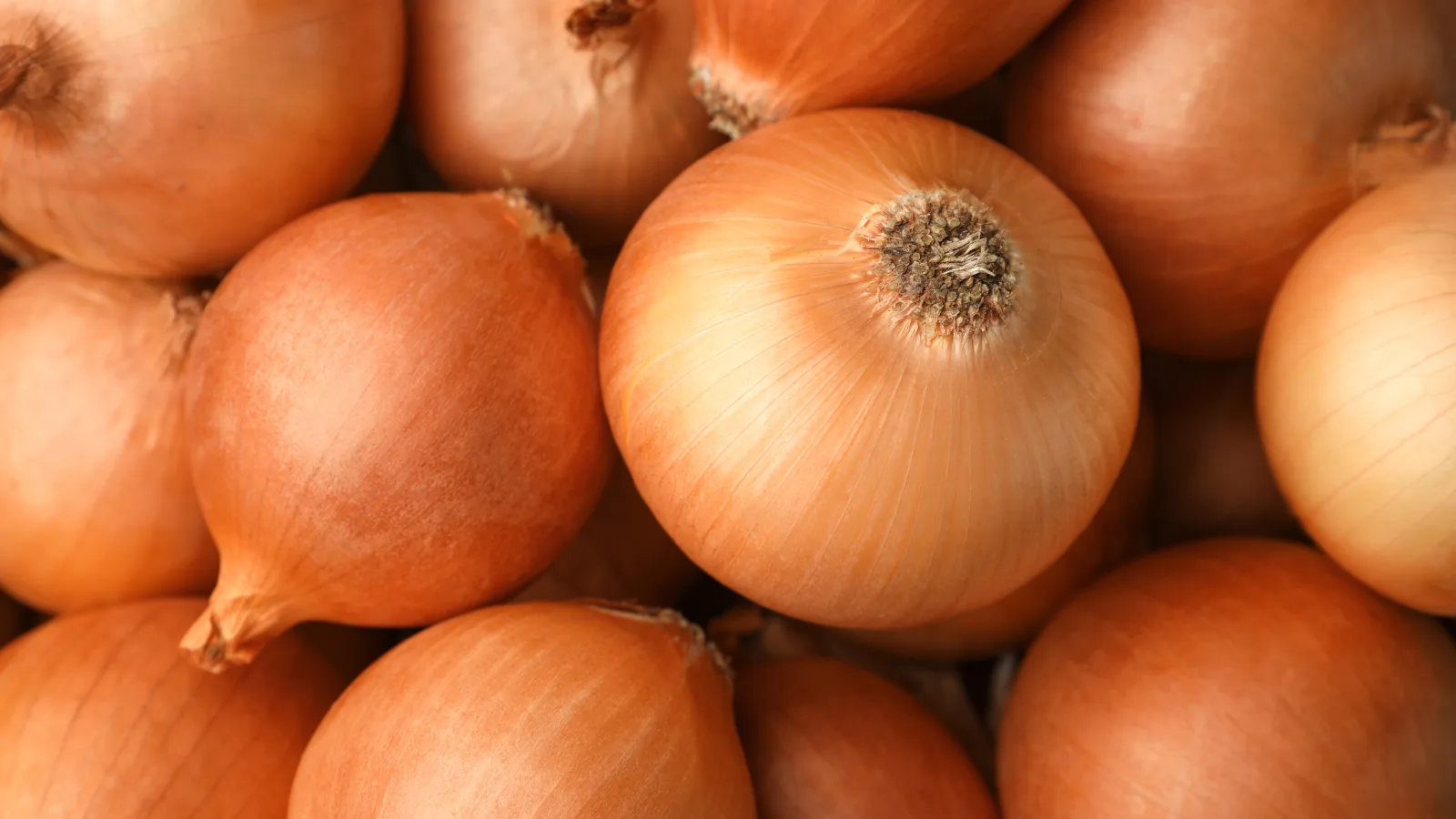
Pull your onions, hang them in the shade, and the outer skins dry down until they rustle. When the onions come into the kitchen, those brown skins get peeled off and dropped in the compost bin. The tough outer leaves of kale, the ones nobody reaches for, get stripped away. Squash loses its stem end and any soft patches of peel. By the end of a season's harvest, the pile of what you've trimmed off is bigger than you'd think.
A study published recently in a food science journal looked at all three of these together. Researchers took onion skins, kale leaves, and Korean summer squash (aehobak, a tender squash close to zucchini) — the kind pushed out of markets for not looking the part — extracted each with alcohol and with water, then analyzed the liquid and the leftover solids separately.
The brown skins hold more antioxidants than the onion itself
An onion's dry outer skin contains far more phenolic compounds than the white flesh inside. Lined up against the other two, onion skin also showed the strongest capacity to slow oxidation.
It was onion skin, too, that did the most to slow the digestive enzymes that break carbohydrates down into sugar after a bowl of rice or noodles. You could read that as easing the sharp rise in blood sugar after a meal, but it hasn't been confirmed in people actually eating it. It does not mean any of this substitutes for medication.
Extracts from onion skin and kale also held back the growth of several bacteria. These are results from a laboratory dish, though, and using them to preserve food would take more work to confirm.
The numbers on what's left behind
What makes this study interesting is that it didn't stop at the extracts. The researchers dried the solids left over after extraction and measured those, too.
- The spent onion skin came in at 69g of dietary fiber per 100g dry weight — the highest fiber share of the three.
- The spent squash held 30.7g of protein per 100g dry weight, including essential amino acids, the ones the body can't make and has to get from food.
- The spent kale kept a balanced mix of minerals and fiber.
Split the work — extracts as functional ingredients, spent solids as a raw material for fiber and protein — and almost nothing has to be thrown out. That's what the researchers meant by a zero-waste approach.
What you can do in a garden kitchen today
You can't run an extraction at home, but getting one more use out of something before it hits the bin is entirely doable today.
- Brush the dirt off onion skins, dry them thoroughly, then tie them into a stock bag and simmer for 20 to 30 minutes. The broth turns a pale brown and picks up a faint sweetness.
- For tough outer kale leaves, shave out just the thick center rib, chop the rest fine, and add it to doenjang-guk (soybean paste soup) or fried rice.
- Julienne the trimmings from the stem end of the squash and fold them into pancake batter — the batter comes out less watery that way.
- Don't steep skins from a plot that's been sprayed. Pesticide residue tends to concentrate in the peel.
When you're trimming onions this summer, set aside a handful of the outer skins and let them dry. Next time you make stock, you'll have one more thing to reach for.
Source: a study on the composition of vegetable byproducts, published in the journal Food & Function