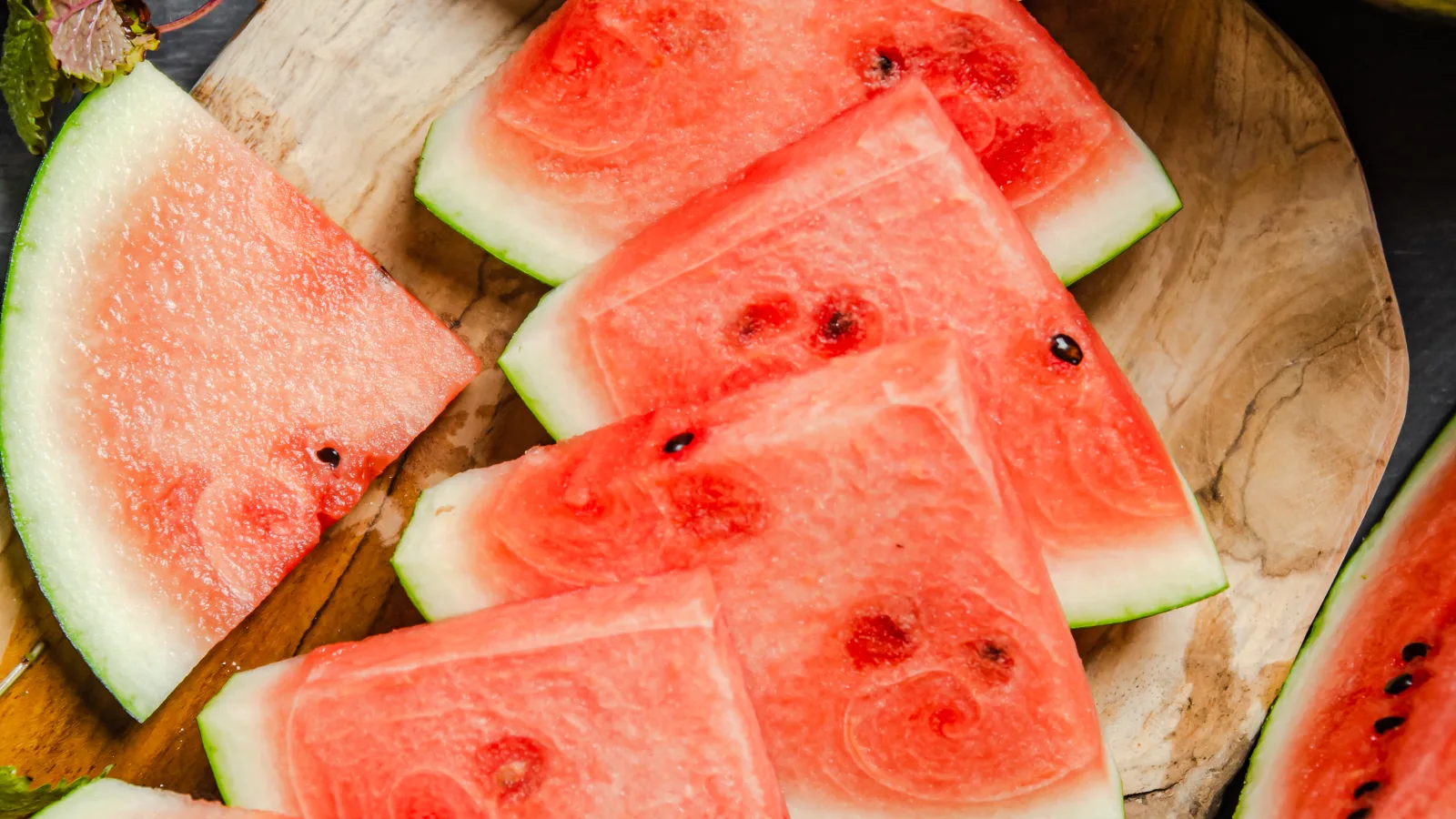
Split open a watermelon in the backyard on a hot summer day and the whole family gathers around to bite into the red flesh—while the white rind goes straight to the compost bin. Yet that pale layer between the red flesh and the green skin actually holds more of a compound that supports healthy blood vessels. If you grew the watermelon yourself, try making the most of every last bit.
The white layer has more citrulline
A watermelon's red flesh is rich in lycopene and water, but the white rind contains citrulline at a higher concentration than the flesh does. In the body, citrulline converts to arginine and produces nitric oxide, which widens blood vessels and lowers blood pressure. A meta-analysis of L-citrulline supplements found that systolic blood pressure dropped by an average of 7.54 mmHg and diastolic by 3.77 mmHg. In a clinical trial that gave postmenopausal women 100% watermelon juice, markers of vascular function improved as well. It's a shame that this compound is most abundant in the very part we usually throw away.
Start with careful prep
Making good use of the white layer is half preparation. First, use a vegetable peeler to shave off the dark green outer skin in a thin layer—it's tough and grassy-tasting, so it's best removed. Cut the remaining white flesh into 5 mm matchsticks or small cubes. Sprinkle the pieces with a tablespoon of coarse salt and let them sit for about 20 minutes; this draws out the moisture and brings out a crisp texture. Rinse lightly and squeeze out the water. The steps are much like prepping radish or cucumber for pickling.
Make the most of it in salads, stir-fries, and soups
The easiest dish is a tangy muchim (a seasoned, lightly dressed salad). Toss the salted white flesh with one part vinegar, one part sugar, one part Korean chili flakes (gochugaru), and a little minced garlic, and you have a side dish that wakes up the appetite in midsummer. Finish with toasted sesame salt and sesame oil. It works just as well as a stir-fry: sauté garlic in a pan with perilla oil, add the white flesh, stir-fry quickly over high heat, and season with soy sauce for a flavor much like sautéed zucchini.
Drop a handful into doenjang jjigae (fermented soybean-paste stew) and it stands in for radish, giving the broth a clean, refreshing edge. In Southeast Asia it's common to simmer it with salted shrimp and ginger into a soup, so it's worth a try. Cube it, mix it with fish sauce and chili flakes, let it ferment for a day, and you get a summer specialty kimchi.
Pairings and storage
Watermelon's white flesh is only faintly sweet, so it pairs well with salty and sour flavors. Following an old habit of the Korean table, a pinch of salt makes its sweetness more distinct while naturally replenishing the sodium you lose to summer sweat. A spoonful of lemon or lime juice adds vitamin C and a bright lift. Serve it with feta cheese and balsamic and it becomes a Mediterranean-style salad, balancing sweet, salty, and sour.
- Refrigerated: store prepped white flesh in an airtight container and eat within 2–3 days.
- Frozen: blanch it once and portion it into single servings to keep for about a week.
- Before prepping: leave the melon whole in a cool spot to keep the white layer's texture intact.
When you cut into a watermelon from your garden this summer, set the white part aside. Put a plate of the muchim on the dinner table and you'll have turned a discarded scrap into one more side dish.