
Tangaek — Decoctions · Vegetables
香薷 Noyagi (Elsholtzia)
 Related Crop · Noyagi (Elsholtzia) →
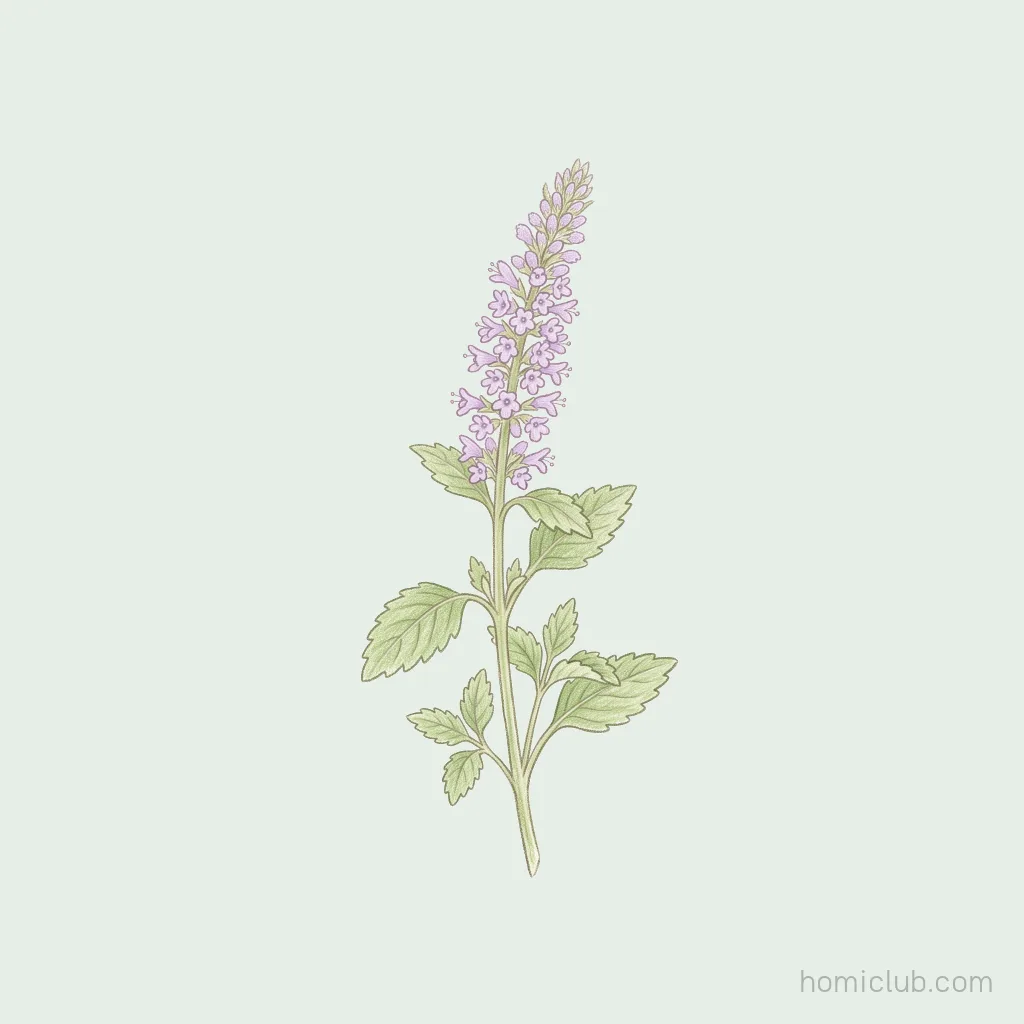
Hyangyu is an aromatic annual in the mint family, the noyagi of the crop guide. The Donguibogam says every household grew it, ate it as a summer green, and cut it for drying once it had headed in the ninth or tenth month. Its other name, hyangyeo, marks it simply as a herb fit for the table.
Original, read line by line 東醫寶鑑 · Tangaek — Decoctions vol. 2
-
性微溫, 味辛, 無毒.
Its nature is slightly warm, its taste pungent, and it is not toxic.
-
主霍亂腹痛吐下.
It chiefly treats gwangnan (霍亂, sudden vomiting and purging) with abdominal pain, vomiting and diarrhoea.
-
散水腫, 消暑濕, 煖胃氣, 除煩熱.
It scatters sujong (水腫, water swelling), disperses summer-heat and damp, warms stomach qi, and clears beonyeol (煩熱, vexing heat).
-
家家皆種, 暑月亦作蔬菜食之, 九十月作穗後採, 乾之. 《本草》
Every household plants it; in the hot months it is also made into a vegetable dish, and in the ninth and tenth months, after it has come into ear, it is gathered and dried. 《Boncho》
HomiclubAn annual of the mint family, it carries small purple flowers on a one-sided spike from late summer into autumn. Today it is more often called hyangyu in Korean.
-
一名香茹, 言可作菜茹也. 《入門》
It is also called hyangyeo (香茹); the name says that it can be made into a namul (나물, a dressed vegetable dish). 《Ipmun》
HomiclubThe character 茹 denotes greens that are picked and eaten. The name itself records that this was a plant of the table.
Related Crop
Noyagi (Elsholtzia) →
Vegetables — more entries
This is a cultural and historical record from a classical text, not a claim about any food’s effects. Nothing here is a health supplement or intended to prevent or treat disease. Consult a medical professional about health concerns. · Text: Korean Medicine Classics DB · Reading: Homiclub