Cockscomb
Type
Herbs & Aromatics
Difficulty
Easy
Season
Summer·Fall
Sowing
From seed
Herbs & Aromatics

Cockscomb

Celosia cristata

Betacyanin pigment · a summer flower shaped like a rooster's comb


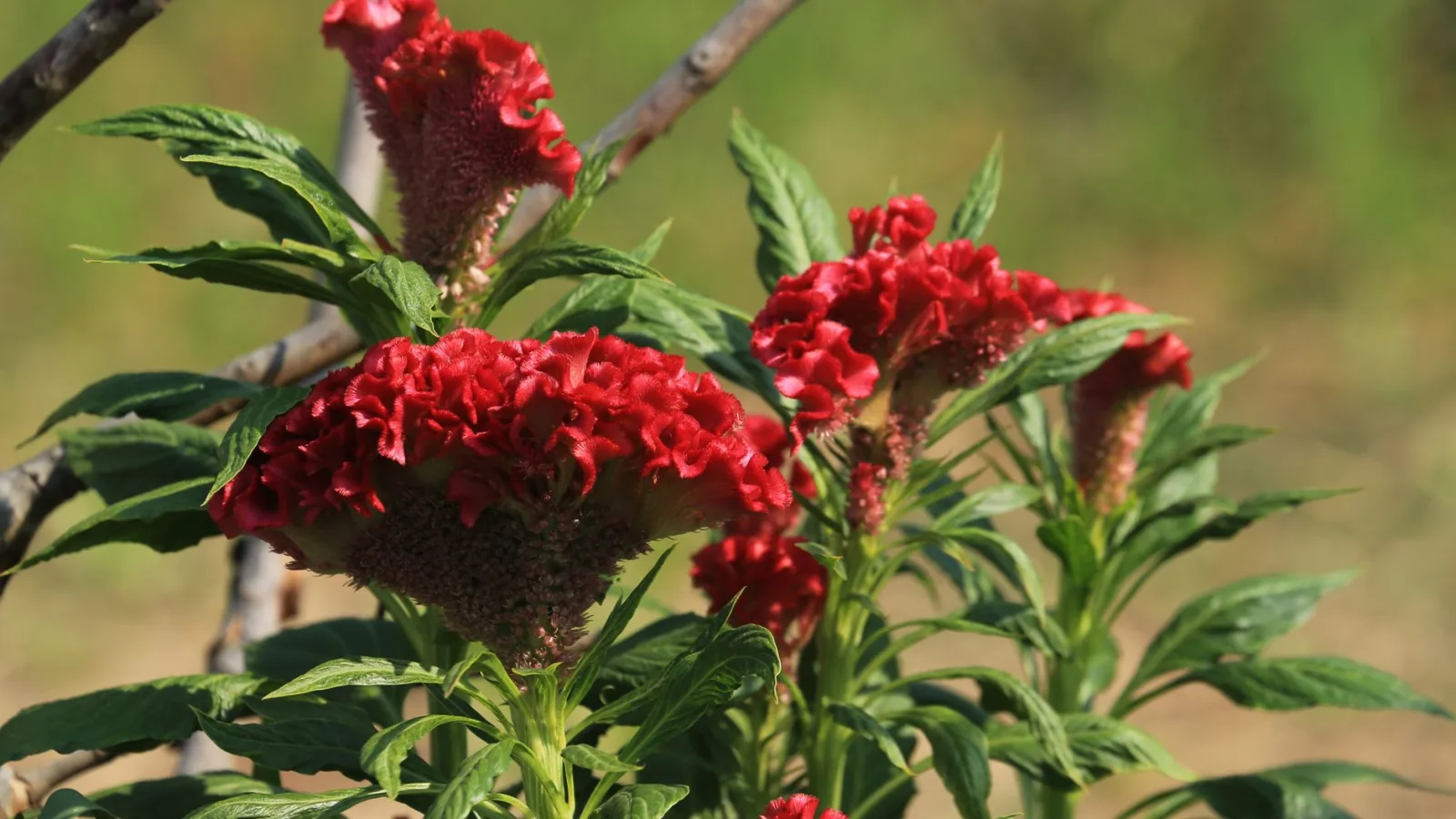
Cockscomb is an annual sown in spring that throws red flower heads all summer. The head folds into thick ridges like a rooster's comb, and the Herb section of the Donguibogam says its name 雞冠花 came from exactly that resemblance. An old Korean name for it survives in the same entry, its nature is set down as cool with no toxicity, and the text notes that it was roasted before going into a preparation. Today the flower is dried for tea or laid on rice cakes and pancakes for colour. The red is a betacyanin, the pigment class the amaranth family carries, so it sharpens in acid and fades to brown under long boiling. A close relative in the same genus, Celosia argentea, is grown widely in West Africa as a leaf vegetable. It wants sun and heat and asks for almost nothing once the rainy season passes, which makes it a natural row along a bed edge or a plot boundary. Bear in mind that plants and seed sold for the flower bed are not handled as food, so anything destined for tea or cooking has to be grown separately for that purpose from the start.

Where It Grows

ChinaIndiaNigeria
Main producer Wild population Latitudes at 20–30℃ Zoom and pan to explore · temperatures are rough zonal averages
  • Main producer It is widely planted under the name jiguanhua ("rooster's-comb flower"), and the flower spikes and seeds are harvested from fields.
  • Wild population It lies within the tropical Asia counted as the plant's homeland, and the wild form is common in open country and along field edges.
  • Wild population This is the tropical African side of the range, where the wild form is common.

Cockscomb is a cultivated form that branched off from the wild cockscomb (Celosia argentea), so its wild range spans tropical Africa and tropical Asia, and no single country can be pinned down as its place of origin. Because it is an ornamental flower there are no country-by-country production statistics, and apart from China, where the flower spikes and seeds are harvested from fields, there is no data by which to compare scale.

Optimum
20~30℃
Range
15~35℃
Hardiness
Not hardy
Day length
Short-day

This is an annual that stands up well to heat but dies at the first frost. It is treated as a short-day flower, forming its flower spikes as the days grow shorter, and with too little sun the spikes stay small and pale in colour.

In Korea Nationwide

A frost-killed annual flower, it is planted in flower beds and along field edges throughout the country. Seed is sown in spring, and the flower spikes are enjoyed from summer through autumn.

How to grow

Light
Six hours of sun or more. In shade the heads come small and the colour thin
Soil and depth
Not fussy, as long as it drains. Too much feeding builds leaf and delays the flower
Spacing
20 to 30cm between plants. Give the tall spiked types 30cm or more
Watering
Water when the surface dries. Once rooted it takes drought well, but standing water rots the base
Feeding
A base dressing is enough. One top dressing as the flower stalks rise will do; heavy nitrogen pushes flowering later
Harvest
July to October, cut when the head is at its deepest colour. Cut on a dry morning and spread them in the shade to dry hard

What makes the difference. Leave one head to dry brown if you want seed. Shaken over paper, the small black seeds fall out on their own

Why this one is harder. It dies at the first frost, so it has to be sown again each year. Fallen seed does come up on its own the following spring, but never where you want it, so save seed and sow it in April or May in the spot you have chosen

Common problems

  • Aphids You will see Colonies on new growth and stalk tips, turning sticky What to do Wash them off with a jet of water; if they return, use an egg-yolk oil spray. On plants whose flowers you intend to use, strip them off by hand instead
  • Spider mites You will see Leaves go rough and fine speckling with webbing shows underneath What to do They build up hot and dry. Spray water on the undersides to raise humidity and remove badly affected leaves
  • Damping off You will see Seedlings pinch at the base and topple after germinating What to do Sow thinly and cover the seed shallowly. Pull collapsed seedlings straight away and water less often

This page describes how a crop is grown and used. It does not claim health effects for any food, nor is it intended to prevent or treat disease. Component and study notes are references only and do not mean the same result occurs in people. Consult a medical professional about health concerns.

Health Benefits

The old record — gyegwanhwa (雞冠花). The Donguibogam lists it in the Herb section as 雞冠花 and gives an old Korean name for it. Its nature is set down as cool, with no toxicity. The entry explains the name directly, that the flower resembles a rooster's comb, and records that it was roasted before being used in a preparation. What an old medical text wrote differs from how it is judged today.

Betacyanins of the amaranth family. Pigment analysis confirms that the red of amaranth-family plants comes from betacyanins rather than anthocyanins. The same work reports that they hold up comparatively well in acid and break down under prolonged heat. These concern composition and appearance.

A leaf vegetable within the genus. Crop records confirm that Celosia argentea, in the same genus, is cultivated as a leaf vegetable in West Africa. This is a record of how it is eaten and nothing beyond that.

Nutrition

  • Betacyanins (the pigment of the red flower head) — the nitrogen-bearing pigment class of the amaranth family
  • Flavonoids (present in flowers and leaves) — glycoside-form compounds reported in the genus Celosia
  • Seed oil and protein (gathered in the ripe seed) — the composition typical of amaranth-family seeds

The red is betacyanin The red of cockscomb is a betacyanin, the pigment class carried by the amaranth family. It is a different group from the anthocyanins and holds nitrogen in the molecule. Colour sharpens in acid and fades brown under long boiling, so for tea pour on boiling water, cover, and leave it only three to five minutes.

The head and the seed Tiny black seeds pack the flower head. To save them, leave one head until it dries brown, then shake it over paper and they fall on their own. Heads for tea are cut before the seed sets, at the deepest colour, and dried in the shade.

Flavonoids Glycoside-form flavonoids are reported in the genus Celosia. This entry stays with the compositional record.

A leaf vegetable in the same genus Celosia argentea, in the same genus, is grown widely in West Africa as a leaf vegetable. Young cockscomb leaves can also be blanched and eaten, but plants and seed sold for the flower bed are not handled as food.

Pairings

○ Dried for tea — Cut the heads at their deepest colour, dry them hard in the shade and seal them in a container. Boiling water and three to five minutes draw a clear red. Boiled longer, the colour turns brown.

○ Colour on rice cakes and pancakes — Petals laid on a flower pancake or a steamed rice cake hold their red through cooking. Shave thin slices from the outer edge of the thick head rather than using it whole.

○ Lemon juice or vinegar — A few drops of lemon juice in the brew sharpen the colour. It works because betacyanins hold up better on the acid side.

△ Do not eat plants or seed sold for the flower bed — Cockscomb from a garden centre or florist was raised to be looked at, and there is no telling what was applied to it or when. Anything for tea or cooking is sown and grown separately for that purpose. Do not pick from roadsides or public flower beds either.

△ Amaranth pollen — Cockscomb belongs to the amaranth family and its pollen carries. Anyone who has reacted to amaranth pollen should shake and dry the heads outdoors rather than inside, and handle dried heads inside a bag.

△ The old use is not this use — The Donguibogam records that the flower was roasted before going into a preparation. What an old medical text used it for and drinking it as a flower tea today differ in both purpose and quantity, so do not scale the amount up on the strength of the old record. If you are pregnant or taking medication, keep even the tea to a modest amount.

Varieties

  • Crested type (seed) — The flattened, ridged head that gave the plant its old name
  • Plumed type (seed) — Feathery heads standing in a point. Comes in a range of colours
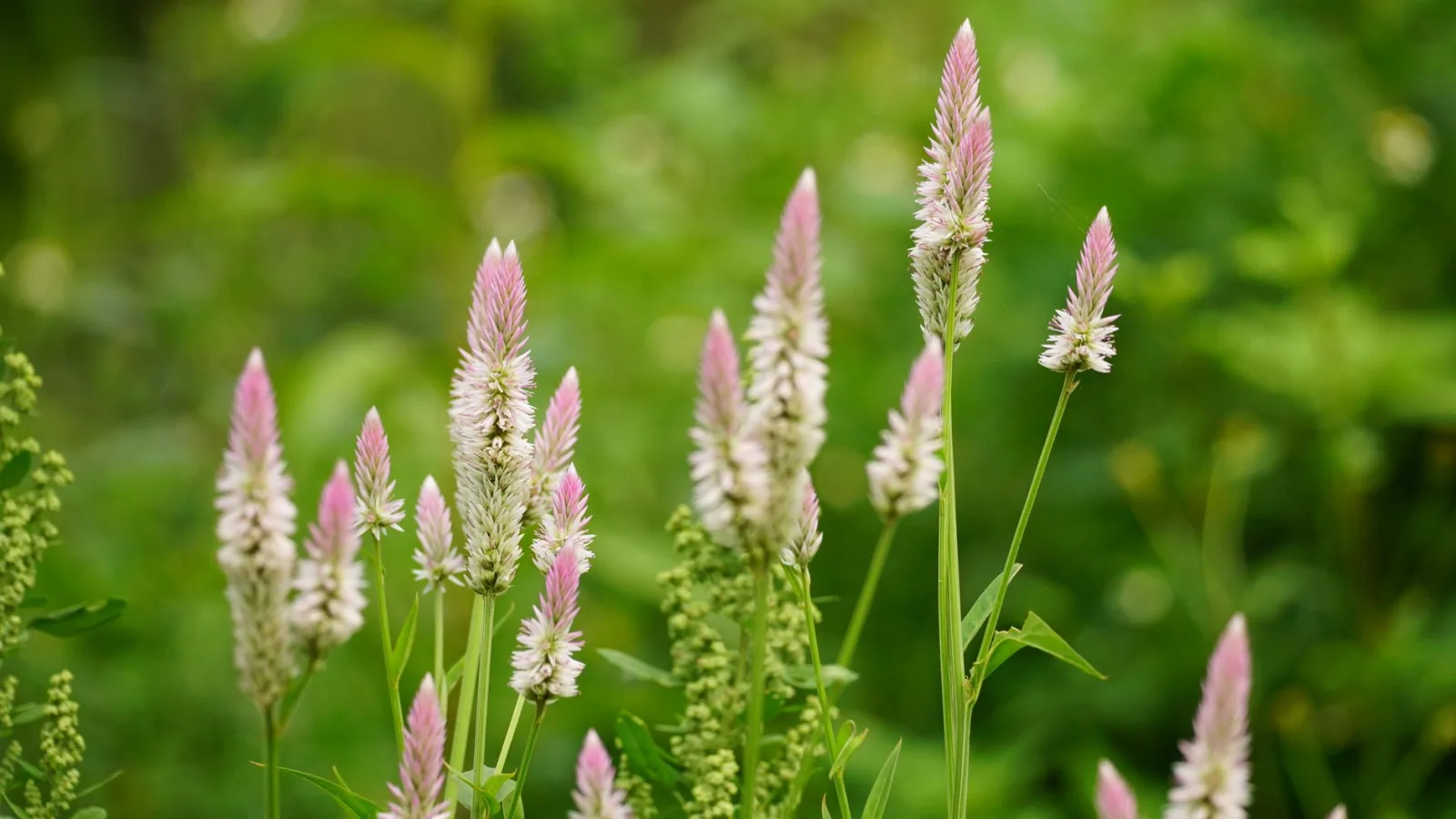
  • Spiked type (seed) — Slender spikes standing straight like candles. The tallest of the three

Source: Donguibogam, Herb Section 雞冠花 · Rural Development Administration (Nongsaro)