In the height of summer, no crop pulls a gardener back to the bed more often than tomatoes. You check the vines each morning and find that fruit which was still green yesterday has turned red overnight. The pigment behind that red is lycopene — the compound that earned tomatoes their reputation as a health food. But even with the same tomato, how much lycopene actually reaches your body depends a great deal on how you eat it.
The red pigment is linked to lower cancer risk
Among lycopene's reported benefits, the evidence is strongest for overall cancer risk. Pooled analyses of long-term studies following tens of thousands of people consistently show that those with higher blood levels of lycopene tend to have a lower overall cancer risk. Notably, the amount circulating in the blood — what the body actually absorbed — showed a clearer association than the amount of tomatoes eaten. In other words, two people can eat the same tomato and get very different results if one absorbs it poorly.
There are also reports that people who eat tomatoes regularly have a lower risk of prostate cancer. Findings vary by study design, though, so it is too early to call this settled. The arrow points the right way, but it is more honest to say the effect is modest than to oversell it.
It also helps with blood pressure and cholesterol
Clinical trials suggest that consistently consuming a meaningful amount of lycopene can produce small reductions in systolic blood pressure and LDL ("bad") cholesterol. The effect was clearest in people whose blood pressure was already running a bit high and who kept it up for eight weeks or more. Diastolic pressure, on the other hand, did not budge noticeably. So rather than expecting a tomato or two to drop your numbers overnight, it makes more sense to treat tomatoes as a vegetable worth weaving steadily into your everyday cooking.
Lycopene is a powerful antioxidant
Among the carotenoids found in nature, lycopene stands out for its ability to neutralize free radicals — reportedly about twice as strong as beta-carotene, the orange pigment in carrots. That is the basis for the idea that it helps reduce oxidative damage in the body. On top of that, a Korean review notes that heating tomatoes raises both their lycopene content and their antioxidant capacity. In one report, the lycopene in 100 g of fresh tomato more than doubled after 30 minutes of cooking.
Cook them in a little oil for better absorption
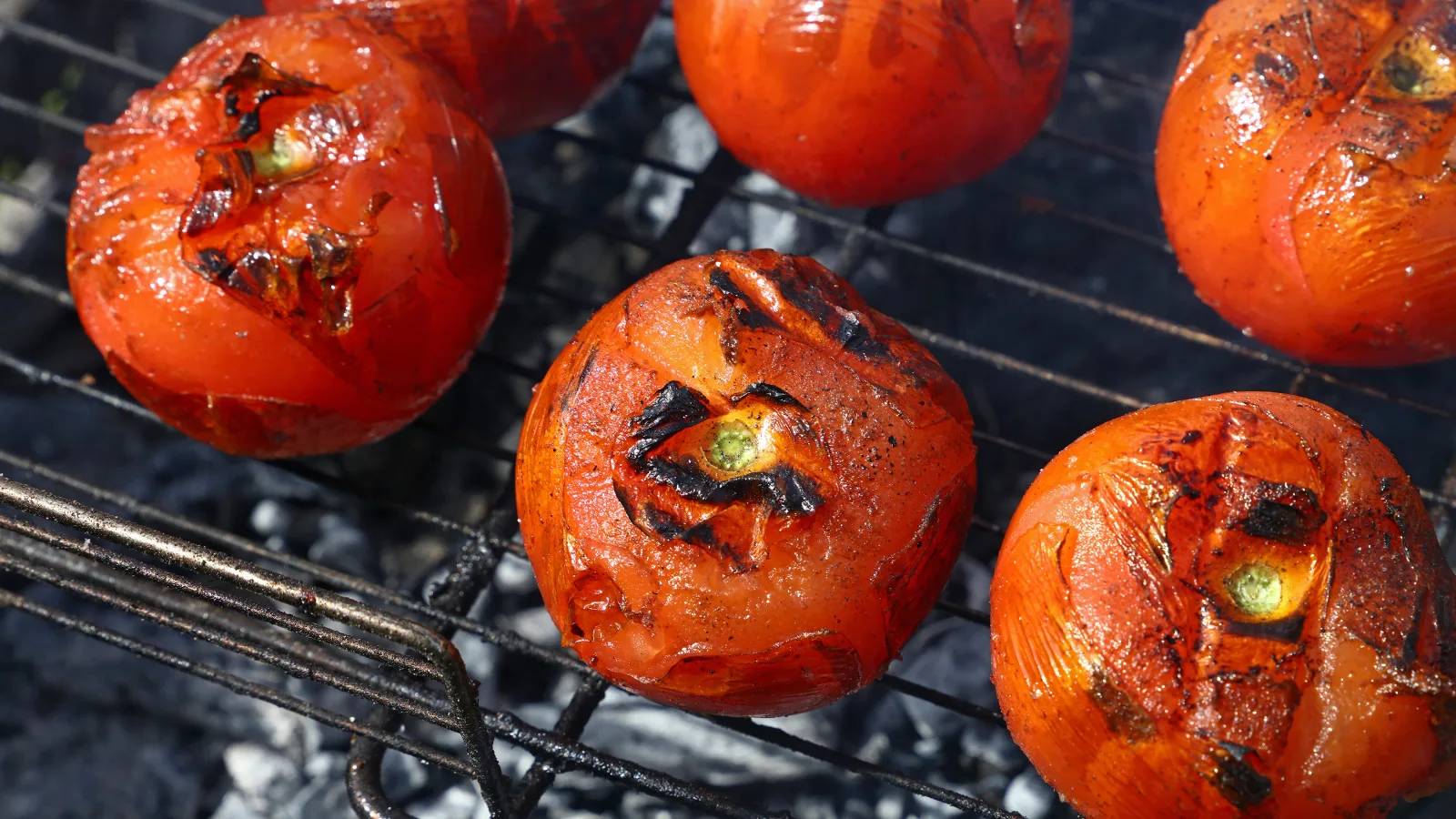
When it comes to eating tomatoes, the two things worth remembering are heat and fat. Heat converts lycopene into a form the body absorbs more readily. In one human trial, a tomato sauce cooked long enough for this change to take place was absorbed roughly 50 percent better than a sauce that was not. Lycopene is also fat-soluble, so without some fat in the meal, the gut struggles to take it up. That is why a quick sauté in a little olive oil is the most effective way to prepare them.
The practice could not be simpler. Sauté tomatoes from your garden in a little olive oil and toss them with pasta or fold them into scrambled eggs. Or simmer a generous batch of tomato sauce and work your way through it over several days. There is real pleasure in eating tomatoes raw, of course, but when it comes to lycopene alone, cooking them with a little fat is the better deal for your body. A single tomato also delivers vitamin C and potassium with very few calories, which makes it easy to put on the table again and again.
The claim that black tomatoes have triple the lycopene isn't settled
You may hear that black tomatoes — the dusky purple-black varieties — contain roughly three times the lycopene of regular tomatoes. That figure circulates as secondhand information, though, without a clearly verifiable original source. It is fine to keep in mind when choosing what to plant, but the evidence is not yet strong enough to treat as settled fact.
If you have brought in a basket of deep-red, ripe tomatoes, try giving them a turn tonight in an oiled pan before they hit the plate.
References: meta-analysis of lycopene and cancer in Frontiers in Nutrition; blood pressure study in Phytomedicine; absorption study in the British Journal of Nutrition; Seoul National University Health Knowledge Center.