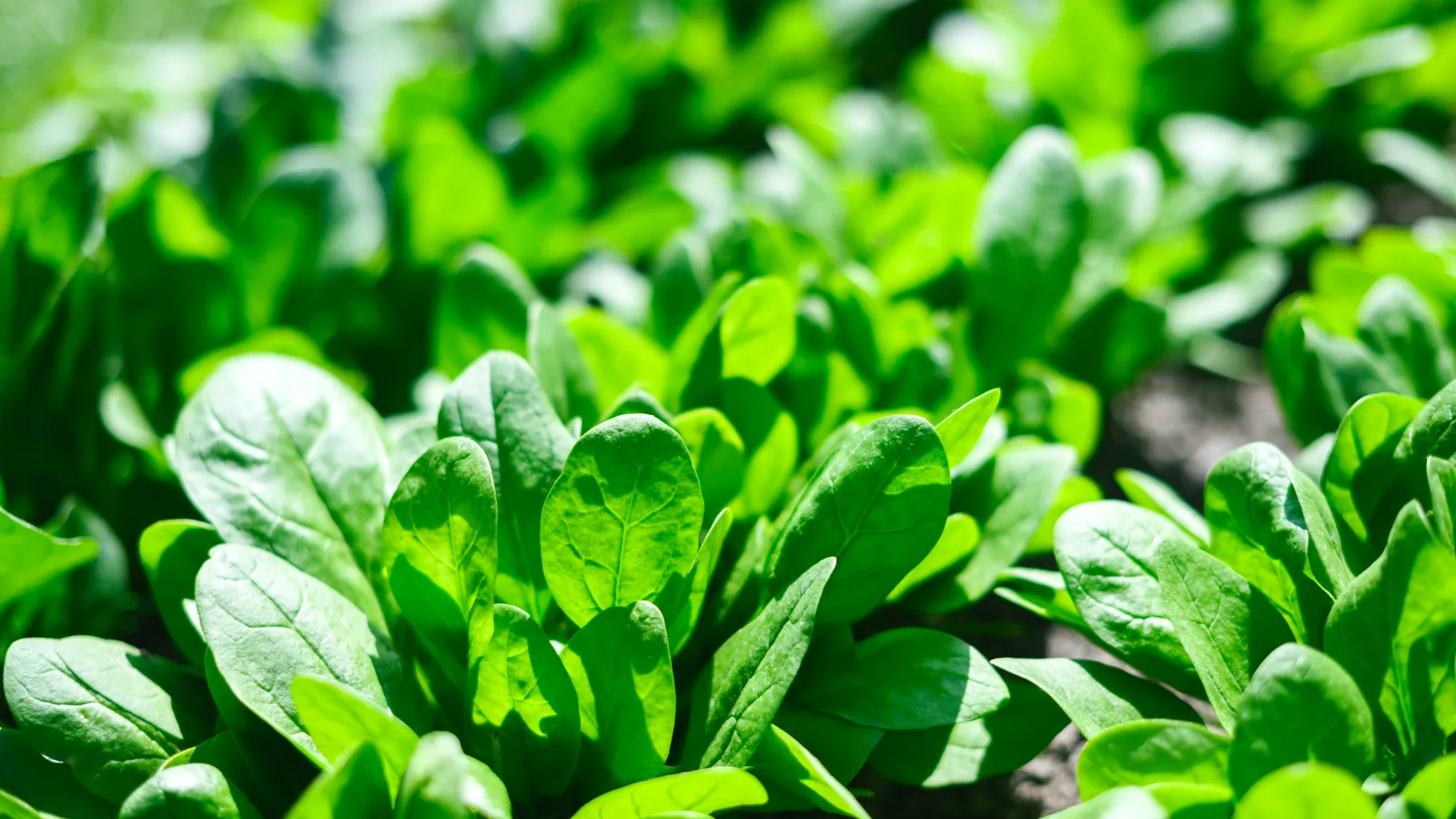
If you've been using the same container for a few seasons, or watering with well water, you may have noticed a white crust forming on the soil surface. That's mineral salt left behind as water evaporates. Spinach grown in that soil tends to produce smaller leaves and sluggish growth. It's a more common problem in urban gardens than most people realize.
A 2026 study published in Scientific Reports took a close look at what happens when you spray selenium on spinach leaves under exactly those conditions. The headline finding: even in high-salinity soil, yields held steady — and the leaves actually became richer in antioxidants.
Salt Stress and Spinach
Spinach (Spinacia oleracea) is one of the more salt-tolerant vegetables you can grow. Even so, once soil electrical conductivity climbs past a certain threshold, the roots start pulling in too much sodium. That throws off the ion balance inside the cells — photosynthesis slows, and so does growth.
The researchers grew the 'Matador' variety under two salinity levels: roughly 2.88 dS/m and 3.79 dS/m. The higher level is well above what you'd find in typical garden soil, and it produces measurable stress on the plant.
What Selenium Changes
The team applied sodium selenate at two concentrations directly onto the leaf surface — a technique called foliar application, where nutrients are absorbed through the leaves rather than the roots. After treatment, selenium levels inside the plant climbed to nearly ten times their pre-treatment concentration.
Even at high salinity, yields didn't drop. Phenol content in the leaves increased, and so did overall antioxidant levels. The working theory is that selenium, as it helps the plant push back against salt stress, also triggers the production of more of the plant's own protective compounds.
Selenium uptake is closely tied to how plants process sulfur — the two elements have similar chemical structures and share the same absorption pathway. Sulfur is also a raw material for cell-protective proteins. When the two work in tandem, sodium toxicity decreases and dry-weight growth improves. The study also found that zinc and manganese levels rose alongside selenium.
What Selenium Does for the Body
Selenium is a trace mineral the body can't do without. It's a key component of enzymes that neutralize cell-damaging free radicals, and it plays a role in immune function and thyroid health. Adults need roughly 55 to 70 micrograms (μg) per day. In parts of the world where soils are naturally selenium-poor, hitting that target through diet alone can be a genuine challenge.
Selenium-enriched vegetables are one of the more promising ways to close that gap. If a foliar spray can raise a plant's selenium content nearly tenfold, a serving of that spinach delivers meaningfully more of the mineral than conventional spinach would. That said, selenium is toxic in excess, so the sensible approach is a varied, balanced diet — not seeking out any single concentrated source.
Notes for the Home Garden
This study was conducted in controlled pot trials, so conditions at home will naturally vary. More importantly, selenium fertilizers can cause toxicity if misapplied, so DIY foliar spraying is not something to experiment with on your own.
Still, the research offers a reassuring takeaway for container growers. In pots with poor drainage, or in beds that have been in use for years, salt builds up slowly and silently. Even so, spinach can soldier through — and its antioxidant content may hold steady or even climb under those conditions. Smaller leaves don't necessarily mean less nutritious ones.
If you're working with old potting mix, swap it for fresh soil before you sow. If you rely primarily on well water, occasionally supplementing with collected rainwater helps flush accumulated salts. Small habits, consistent payoff.
Source: Scientific Reports, 2026, selenium biofortification and spinach nutritional quality under soil salinity stress.