In the Northern Hemisphere, October is when luffa vines trained over balconies and rooftop shade trellises start to yellow and dry out from the leaf edges in. When the last gourds are picked and the vines come down, more gardeners decide to cut a stem and collect the liquid that drips out. Just as many ask the same questions: Is it safe to drink, and does it do anything for you?
What's in the Liquid from the Stem
Luffa (Luffa aegyptiaca), also called sponge gourd, is an annual climbing vine in the gourd family. In the Northern Hemisphere it's sown in April or May and harvested from July through October. It's grown widely in China, India, Vietnam, Guatemala, and Egypt. Planting months, key compounds, and good pairings are all collected in the luffa entry in the Homiclub Crop Guide. Cut the stem of a mature vine and liquid starts seeping from the cut right away. Collected in a bottle, that liquid is luffa sap.
The compound most often mentioned with this sap is mucilaginous polysaccharide, a sticky, gel-like carbohydrate that has long been used as a base for skin toners. It's probably why the sap leaves a faintly slippery feel on the back of your hand.
The same plant also contains bitter compounds. Triterpenoid saponins build up as the fruit ripens and are concentrated in the seeds. Fruits in the gourd family also occasionally accumulate high levels of cucurbitacins, which are bitter as well. Eating a lot of gourd-family fruit that tastes bitter can cause vomiting and diarrhea. It's hard to find any data on how much of these compounds ends up in the sap, or whether the amount is safe to drink.
Made for the Skin, Not for Drinking
Traditionally, luffa sap has been applied to the skin rather than taken by mouth. Some urban gardeners still collect it in the fall to use as a toner. We don't recommend drinking it, though. The plant contains bitter compounds, and no human studies show what the sap does in the body once swallowed.
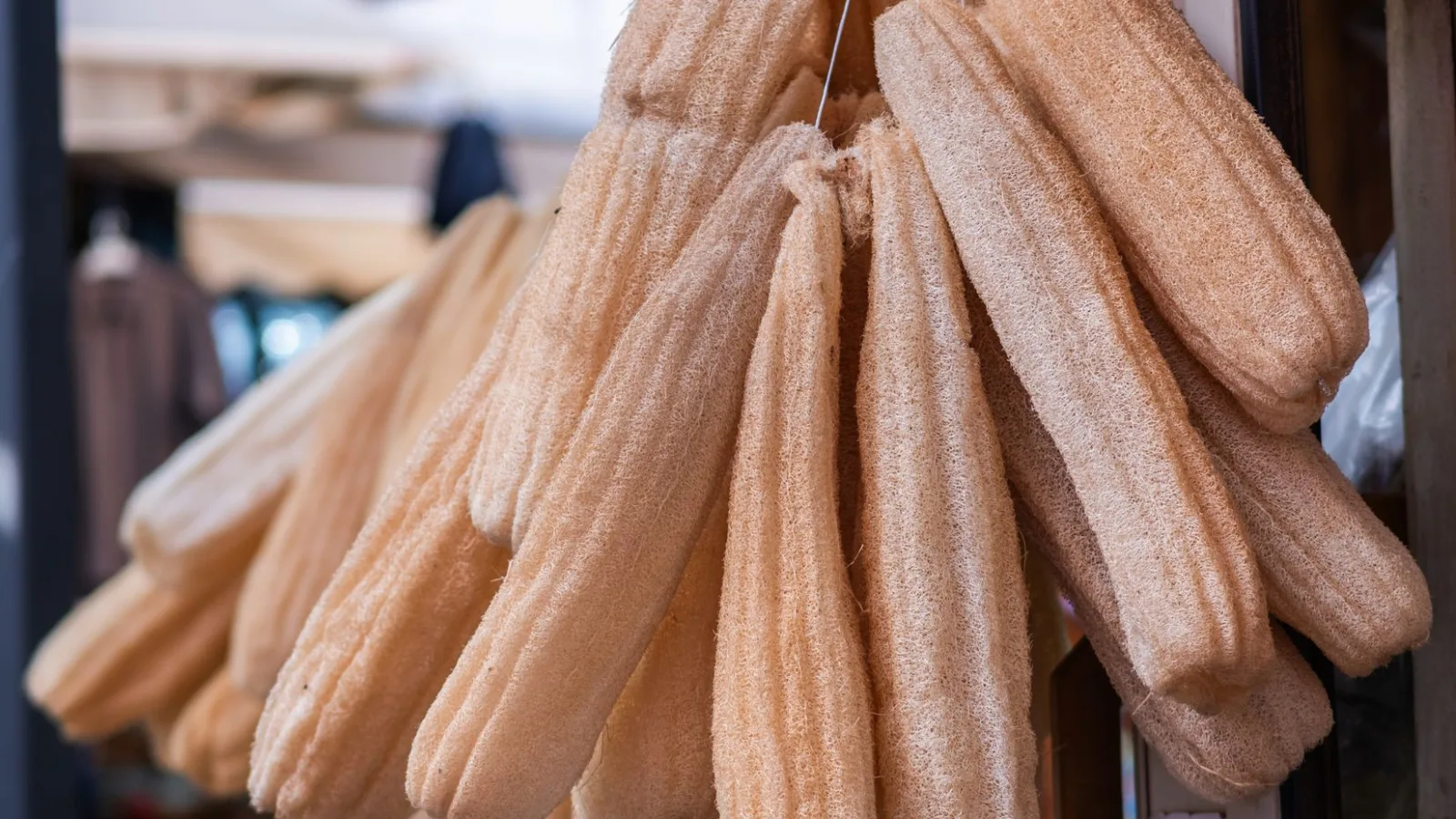
What people actually ate was the fruit, not the sap. The Dongui Bogam, Korea's classic 17th-century medical compendium, records the vine as sagwa (絲瓜, "silk gourd") and lists two other names for it, cheolla (天羅) and cheollaksa (天絡絲). It says young gourds were boiled and eaten with ginger and vinegar. Dried ones had their skin and seeds removed, and the fibrous core was used to scrub dishes (枯者去皮及子, 用瓤滌器). That's the record of an old medical text, not current medical advice. Still, the part people ate was the young fruit, just as it is today.
Young luffa is still cooked in plenty of ways. In Chinese cooking, a quick, high-heat stir-fry with eggs or shrimp is a common choice. Sliced thin, it can also stand in for Korean zucchini in doenjang (fermented soybean paste) soup, where it soaks up the broth nicely. If a bite tastes strongly bitter, spit it out and throw that gourd away.
Source: Dongui Bogam, entry on sagwa (絲瓜).
What the Research Has Confirmed
So how much of the idea that luffa sap is good for your skin has actually been confirmed? Some studies have analyzed luffa's saponins and mucilaginous polysaccharides and measured their antioxidant activity. But most of these results come from the lab, and no effect has yet been confirmed in people.
So the most you can expect from the sap is what people have long used it for: a toner. Claims that it heals skin conditions or erases wrinkles have no confirmed evidence behind them, so it's best not to rely on them. Antioxidant activity measured in a lab doesn't mean the same thing happens in your body when you apply it or swallow it.
Collecting Sap at Home: What to Keep in Mind
Once you cut a stem to collect sap, the vine above the cut can't keep growing. That's why most people collect it while clearing the vines after the last gourds are in. In the Northern Hemisphere, that's around September or October, when the harvest wraps up. Here's what to check while you collect and afterward.
- Use a bottle and cap that have been washed and dried thoroughly.
- Wrap the gap between the bottle's mouth and the stem so rain and insects can't get in.
- Homemade sap has no preservatives, so keep it in the refrigerator and use it as soon as you can. If the smell changes or it turns cloudy, throw it out.
- The first time you use it, dab a little on the inside of your arm and wait about a day. If the skin turns red or itchy, don't use it.
- Label the bottle "for skin use only" and keep it out of children's reach.
It also helps to sort the gourds the same day so nothing gets mixed up. Any gourd longer than 20 cm (about 8 inches) has inner fibers that are starting to toughen, so don't eat it. Dry it and use it as a sponge instead. Bring only the younger ones into the kitchen, and if the seeds have hardened, scrape them out before cooking.
If you're taking down your vines today, start by labeling the sap bottle with what it's for. Sap goes on the skin and young gourds go in the pot. Keep the two separate, and you can use the whole vine safely, from start to finish.