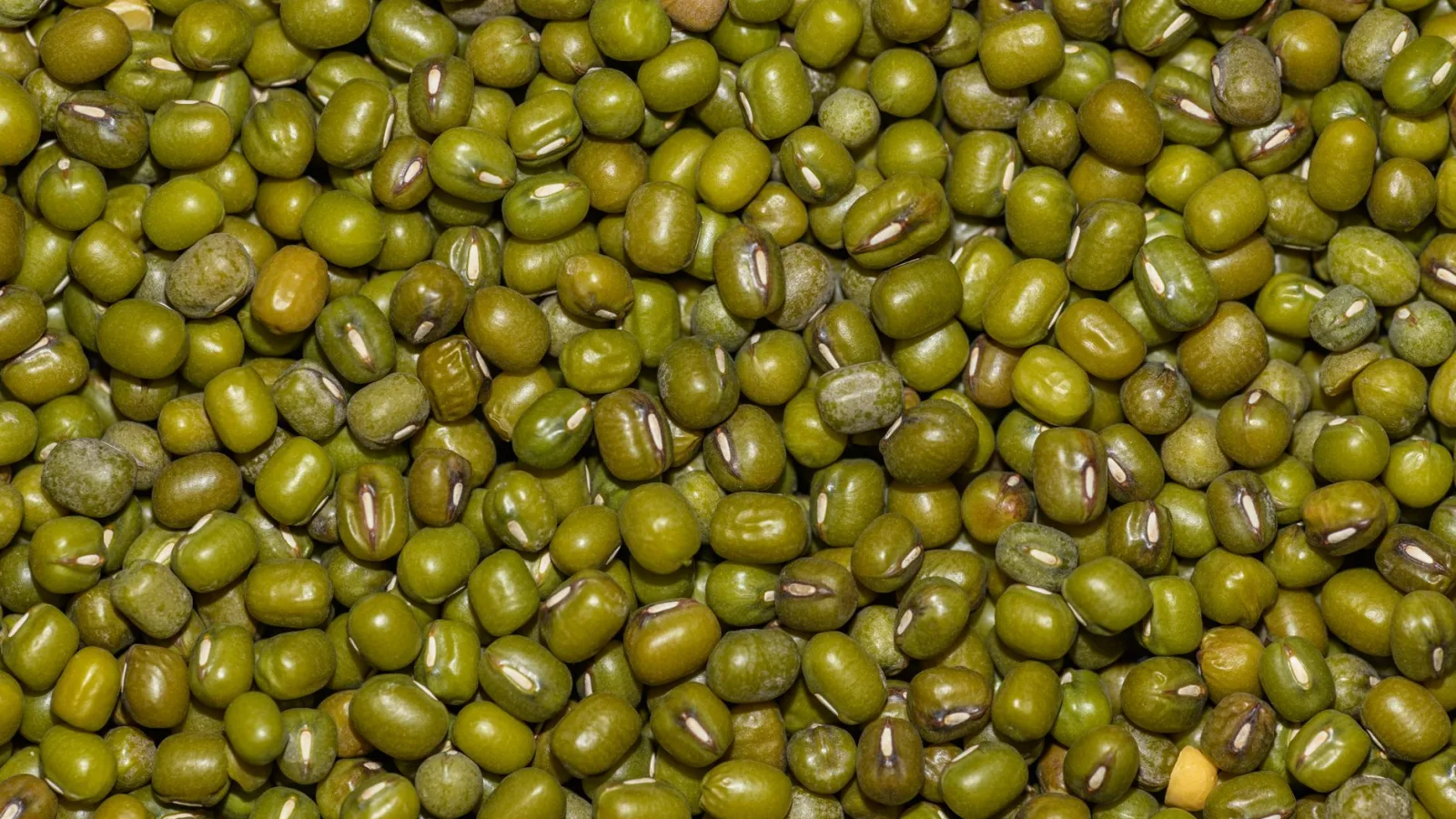
In late September, as fall settles over Northern Hemisphere gardens, mung bean pods start turning black one by one. The pods don't ripen all at once, so you pick them in rounds every few days, taking the dark ones first. Leave them too long and the dried pods split open on their own and scatter their beans across the bed. The small green beans in your palm can become sukju (mung bean sprouts), muk (a silky starch jelly), or bindaetteok (savory mung bean pancakes). So how did a medical text written some 400 years ago describe this bean?
What the Donguibogam Says About Mung Beans
The Donguibogam, compiled by the royal physician Heo Jun in the early 17th century, lists the mung bean (菉豆) in its section on grains (穀部). The text calls the bean cold in nature (性寒) and adds that some consider it neutral. It describes the flavor as sweet and says the bean is not toxic (味甘 無毒). It also treats the hull and the kernel separately: the hull is cold and the kernel is neutral (皮寒肉平). The best mung beans, according to the text, are green, round, and small.
The text also explains how the bean was used. Mung beans were soaked in water, ground, and strained, and the starch that settled out was dried into a powder. The original text calls this powder nokdubun (菉豆粉), or mung bean starch, and gives it its own discussion. It even mentions pillows stuffed with mung beans. These are records from a historical medical text, though, and they are not the conclusions of modern medicine. You can read the original text and a commentary in Homiclub's Donguibogam entry on mung beans.
Hull and Kernel: Where the Old Record and Modern Analysis Overlap
The old record's split between hull and kernel is worth comparing with modern nutritional analysis. Several studies have found flavonoids such as vitexin and isovitexin in mung bean hulls. Much of the bean's dietary fiber is in the hull as well. As a result, hulled mung beans, sold with their skins removed, contain far less of these compounds. The kernel is rich in protein, as you'd expect from a legume, and its folate content is relatively high even among beans and pulses.
Still, the standard the old text used to sort foods into "cold" and "neutral" is not the one scientists use to measure compounds. The Donguibogam's idea of a food's nature can't be turned into numbers on a nutrition label. The two records agree on only one point: even in a single mung bean, the hull and the kernel should be considered separately. And the lab results do not mean that mung beans prevent or cure disease.
What Changes When They Sprout: Vitamin C in Mung Bean Sprouts
Part of the story isn't in the old record at all. Dried mung beans contain almost no vitamin C, yet analyses have detected vitamin C in the sprouts. The usual explanation is that a seed's composition changes as it germinates. This was beyond the reach of the Donguibogam, which was compiled centuries before the concept of vitamins existed.
You don't need a garden to grow mung bean sprouts; a kitchen will do. Put soaked mung beans in a container that keeps out the light, pour water over them a few times a day and drain it off, and within a few days white shoots will appear. You can do this even in winter, after the garden work is done.
Sow in Summer, Harvest in Fall
The mung bean (Vigna radiata) is an annual legume that thrives in warm climates. It is widely grown in India, China, and Southeast Asia. In the Northern Hemisphere, sow in June–July and harvest in September–October. Because you sow only after the weather has turned properly hot, it makes a good follow-up crop for beds where spring vegetables have been harvested.
- Sow the seeds directly in the garden. As a legume, the mung bean doesn't need much fertilizer.
- Too much nitrogen fertilizer gives you lush leaves but fewer pods.
- Dry the picked pods somewhere with good airflow, then beat them to knock the beans loose.
You'll find planting months and nutrition information in our mung bean crop guide.
Whole Beans in Rice, Just the Starch in Jelly
Mung bean dishes can be sorted by how they handle the hull. If you want the vitexin and fiber in the hull, rice cooked with whole, unhulled mung beans is the way to go. Dried mung beans take longer to cook than rice, so soak them for two to three hours or boil them once before mixing them in. A ratio of about 8 parts rice to 2 parts mung beans is a good place to start.
Bindaetteok is usually made by soaking and grinding hulled mung beans, then pan-frying the batter in oil. The beans taste mild on their own, and pork fat plus the tang of sour, well-fermented kimchi rounds out the flavor. Add mung bean sprouts for a pleasant crunch.
Mung bean jelly (cheongpomuk) takes nothing but mung beans and water. Soaked beans are ground and strained through a sieve, and only the starch that settles out is collected and cooked while you stir constantly. Up to the point of collecting the starch, the steps are the same as the Donguibogam's method for making mung bean powder. The sieve catches the hulls, so this jelly isn't about the hull's compounds. People eat it for the silky texture of the mung bean starch.
If you harvested mung beans this fall, try stirring a handful into your rice, hulls and all, and soaking another handful to sprout.
Source: Heo Jun, Donguibogam, Tangaek (Materia Medica) volume, Grains section, "Mung Bean (菉豆)."