Photo by Eli Pluma on Pexels

Growing

Dirt Under Their Fingernails

A season in Gyeryong City's preschool garden-ecology program, from seed to harvest

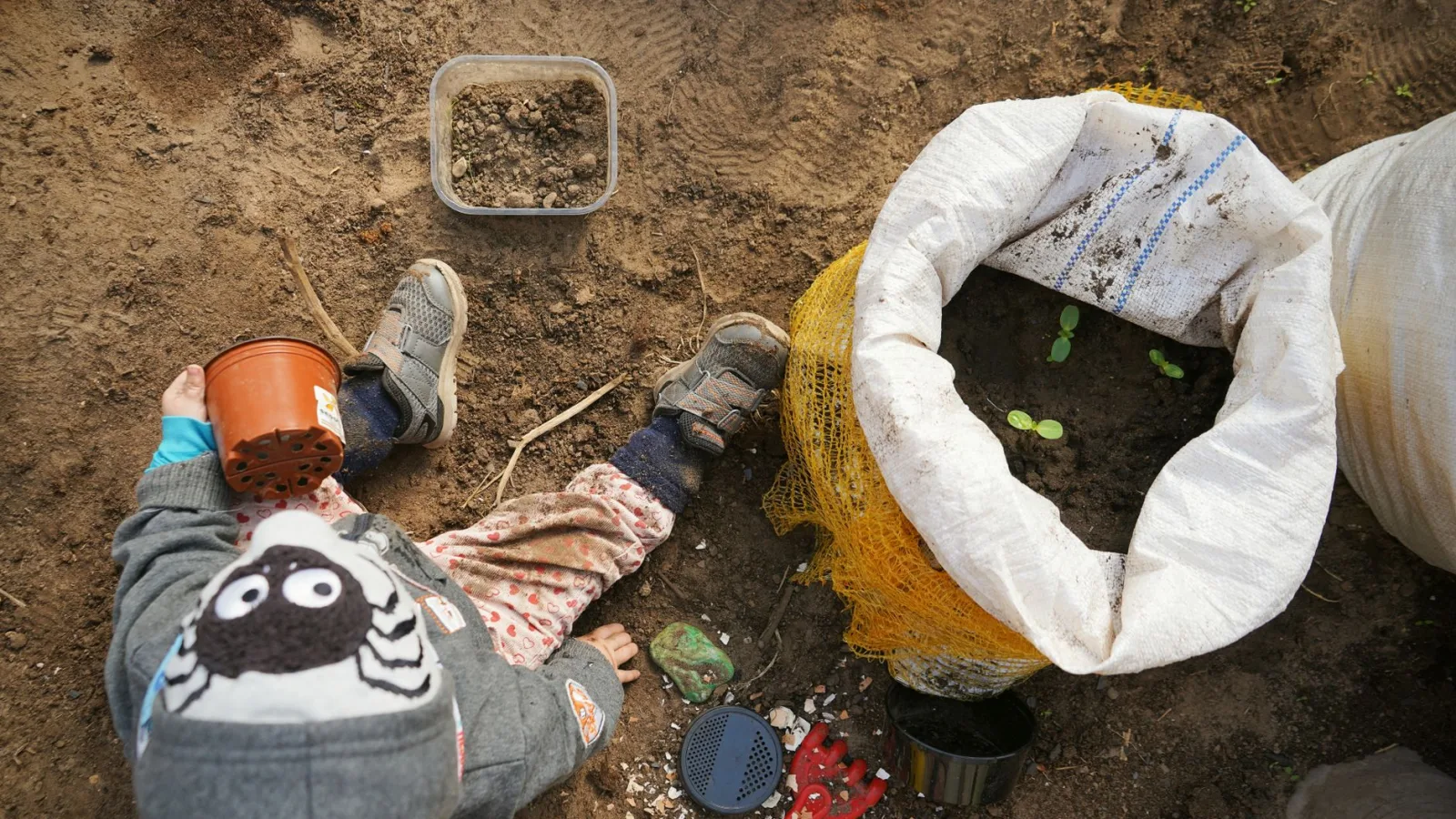
As spring gets going, children from daycare centers in Gyeryong City gather at the edge of a garden plot. At first, most of them pick up the soil gingerly. The way a handful crumbles apart in the palm, how much smaller a seed is than they expected, how the dirt turns dark when you water it—none of it quite matches the pictures they've been studying in the classroom.

Gyeryong City runs an urban-agriculture garden and ecology program for young children. Kids from local daycare centers and kindergartens come out to the plots to plant seeds themselves, water them, follow the growing along, and eventually harvest. It isn't a one-off field trip, either: the same group comes back to the same plot again and again over a single season.

Planting One Seed

The first crops the children plant are fast growers—lettuce, cherry tomatoes. They hold a seed in the palm to see how big it is, poke a hole in the soil, drop the seed in, cover it over, and water.

About a week later, a small sprout pushes up. What matters is that it came from a seed the children planted themselves. "The one I planted" lands differently for a child than "a plant that was already there." Counting how many leaves have opened, measuring how much taller it's gotten—those activities follow on their own.

Cherry tomatoes make the changes especially easy to read: flowers open, then small fruit sets. Over several weeks, the children can watch green fruit turn yellow and then red. The fact that results don't come quickly is part of the experience too.

More Than What Was Planted

A garden holds more than the crops in it. Earthworms, ladybugs, aphids, and weeds nobody can name all live there too. Instead of sorting them into "pests" and "weeds" from the start, the program lets the children touch them and look closely.

Hearing that earthworms move the soil around is one thing; letting one sit in your hand is another. And when aphids turn up, the connection—ladybugs eat aphids, so leave the ladybugs alone—comes across far better standing in the garden than it does in a classroom.

Educators who work in urban agriculture say that the more often children return to a plot, the more their observations change. At first they look for whatever is most obvious. After several visits, they start checking the undersides of leaves and whatever comes up out of the soil.

Keeping It Going at Home

If a child comes home from the program announcing that they want to plant tomatoes, start with one small pot. A pot of lettuce on the balcony, or scallions rooted in a cut plastic bottle, is plenty. Plant the seeds together, pick the days you'll water, count the leaves as they open.

Sooner or later comes the moment at the dinner table when a child says, "I grew that." Garden educators hear the same story constantly: a child who refuses an unfamiliar vegetable will try one they raised themselves.

More local governments are running community urban-agriculture programs like Gyeryong's. Most take applications by daycare center or kindergarten, but some are open to families. Check the schedule ahead of time on the website of your local agricultural technology center or an urban-agriculture organization near you.

Sources: Gyeryong City Agricultural Technology Center; Korea Agency of Education, Promotion and Information Service in Food, Agriculture, Forestry and Fisheries (nmn.ff.or.kr)

Share this story
0% read