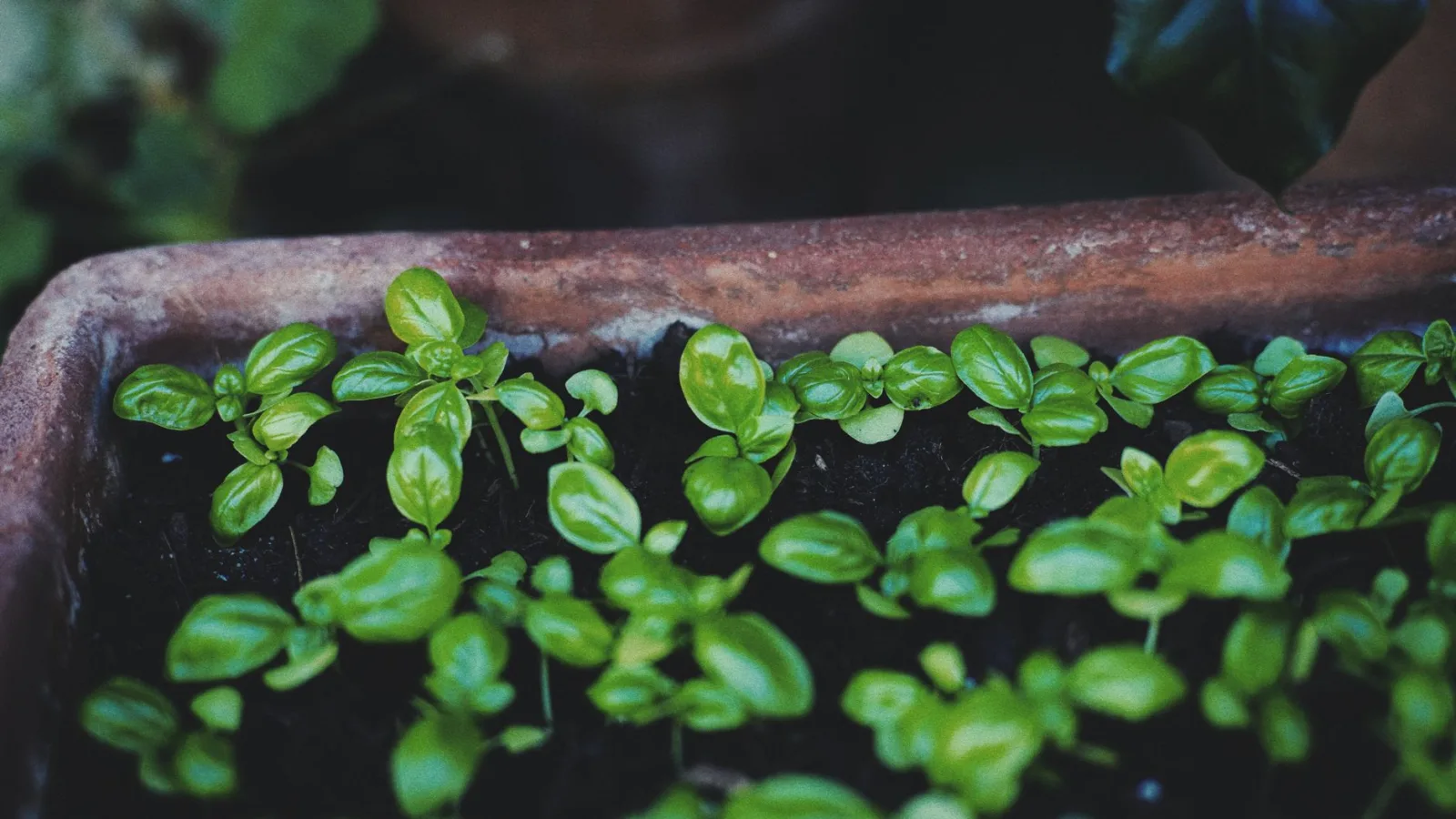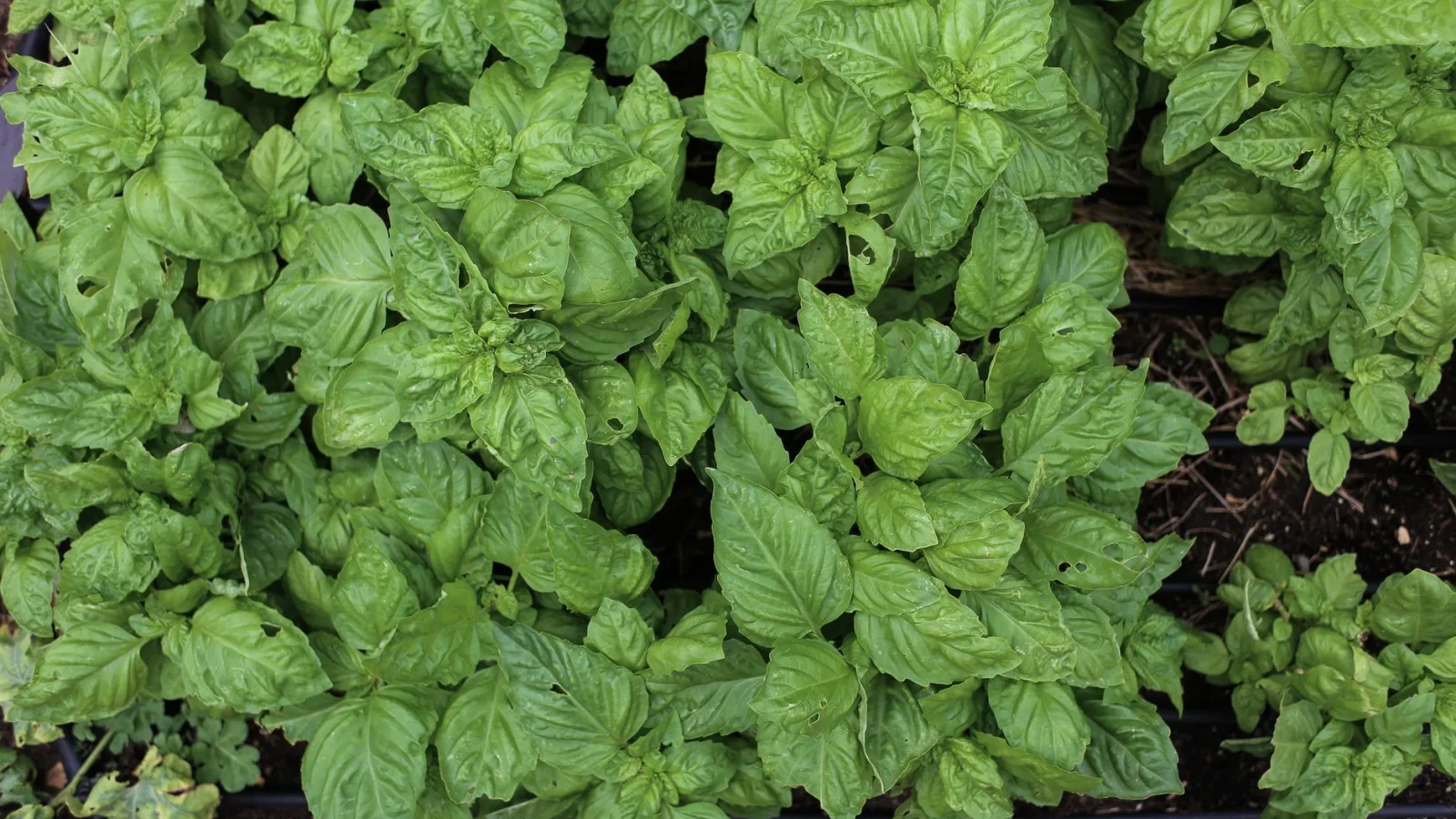
In July, the basil in the balcony pot puts out leaves faster than you can keep up. Pinch back a tip and two side shoots climb from the spot; pick ten or twelve leaves every evening and by the next day you'd never know. And still there are nights you set down your chopsticks in front of a plate of pasta topped with those very leaves. Nights when the inside of your cheek has gone white and raw, and anything salty or spicy stings the moment it touches. When the lining of the mouth breaks down, chewing and talking both turn awkward. It's common enough that we wave it off, but for a few days eating is a trial.
What's Inside a Basil Leaf
Basil contains rosmarinic acid along with aromatic compounds such as eugenol and linalool. They're the ones behind the smell that rises when you rub a leaf between your fingers. In cell and animal studies, these compounds have quieted inflammatory responses and reduced the damage that comes from oxidation. A healing wound needs two things at once — inflammation settling down and new tissue going up — and report after report has suggested that basil's compounds have a hand in both.
Chewing a leaf whole, though, won't keep those compounds on the sore for long. Aromatic compounds dissolve readily in oil, but saliva rinses them away in no time. That goes double inside the mouth, where the lining is never dry.
When You Pack It Into Very Small Particles
To get around this, researchers sealed basil extract inside minute fatty beads called solid lipid nanoparticles, then worked them into a gel that clings to mucous membranes. The point is to keep the compounds sitting on the surface of the sore before they can wash off.
The team created ulcers inside the cheeks of fifty-four adult male rats and sorted the animals into three groups. One group was left alone; the other two had either the basil gel or a commercial canker-sore gel applied three times a day. When the tissue was examined on days three, five, and seven, the ulcers in the basil-gel group had shrunk faster. The signaling molecules that build new blood vessels, and the body's own antioxidant enzymes, ran higher; the signaling molecules that fuel inflammation, and the markers showing cell membranes had been damaged, ran lower. Measured against the commercial-gel group, the numbers came out better as well.
This was observed inside the cheeks of rats. Whether the same thing happens in a human mouth is too early to say. And chewing a leaf off the plant on your balcony is a different matter from applying a gel built in a laboratory. Still, piece by piece, we're learning how an herb people have cooked with for centuries lends a hand in healing.
Using Basil at the Summer Table
- The aromatic compounds are fragile in heat. Rather than adding basil partway through sautéing or simmering, take the pan off the burner and scatter it on top.
- Ten leaves blended with a little olive oil makes pesto. No pine nuts? Toasted sesame seeds stand in, and the aroma still carries.
- When your mouth is sore, ease off salty and sour seasonings for a few days, and try steeping two or three leaves in lukewarm water and holding sips in your mouth slowly.
- Cut the flower stalks the moment they appear. That's what keeps the leaves coming.
If a canker sore doesn't clear up within two weeks, or keeps returning to the same spot, see a dentist. Basil can help the healing along; it can't stand in for treatment.
Tonight, snip off one flower stalk and pick five leaves. Pasta or a leaf tea — whichever sits easier on a sore mouth, set the table with that.
Reference — a study in the Journal of Molecular Histology comparing a basil solid lipid nanoparticle oral gel with Oracure gel